Seoul Weather by Month and What to Pack
Average highs, lows, rainfall and rainy days for every month, when the monsoon and typhoons arrive, when yellow dust and fine dust peak, and what to wear.
Seoul has four sharp seasons. January is the coldest month, with an average high of 2.1°C (36°F) and low of -5.5°C (22°F). August is the hottest, at 30.0°C (86°F) by day and 22.9°C (73°F) at night. Most of the year’s rain falls in summer: the monsoon (jangma) usually runs from about June 25 to July 26, and July alone averages 414 mm. Spring and autumn are mild and dry, but spring brings yellow dust, and December to March has the most fine-dust days. Pack a heavy coat for December to February, rain gear and light clothes for July and August, and layers for everything in between.
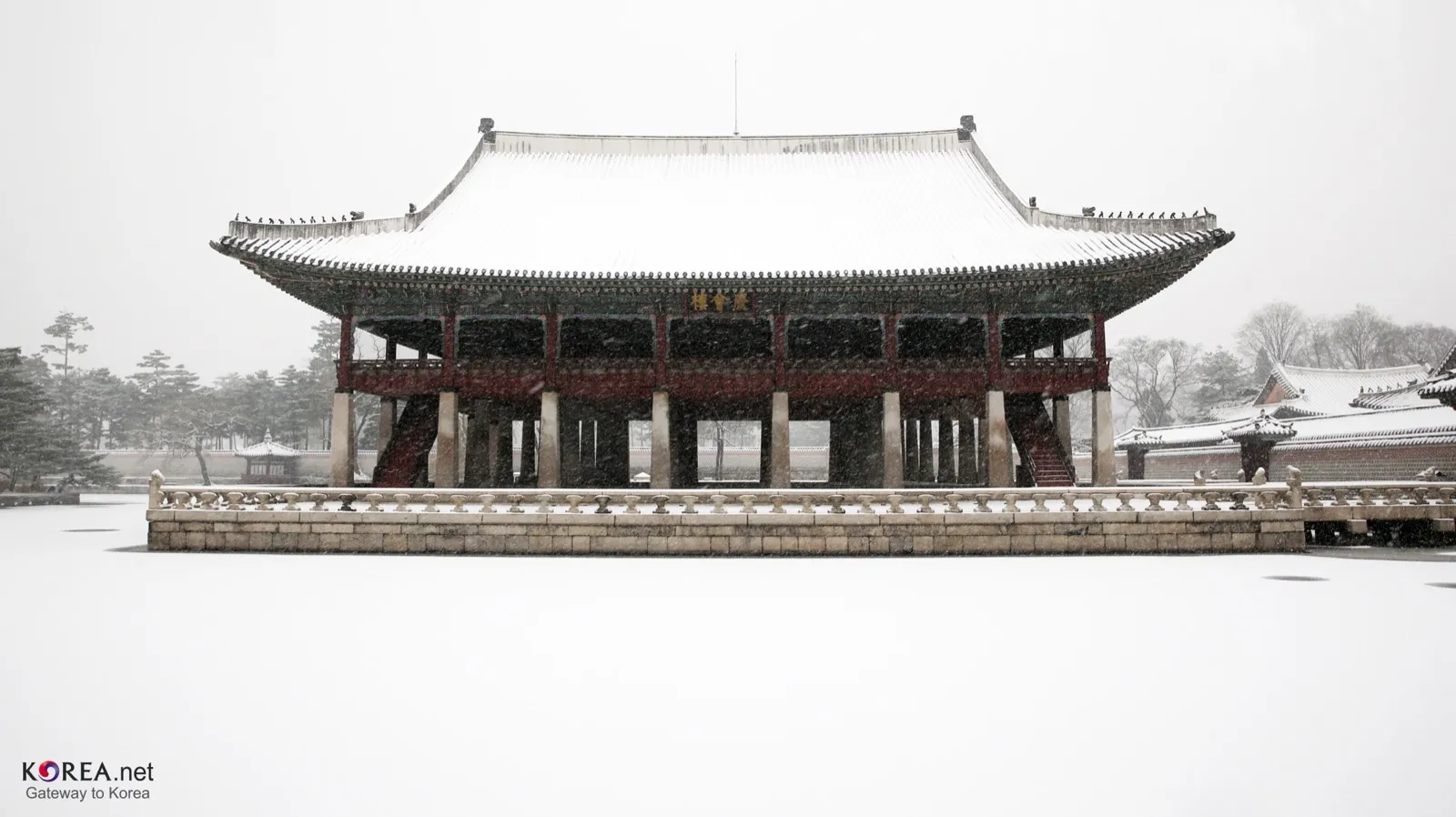
What is the weather in Seoul each month?
The table gives the Korea Meteorological Administration’s (KMA) 30-year averages (1991–2020) for the Seoul weather station: the daily high and low, total precipitation, and the number of days with at least 0.1 mm of rain or snow. Any year can run warmer, colder or wetter.
| Month | Avg high | Avg low | Precipitation | Rain or snow days |
|---|---|---|---|---|
| January | 2.1°C (36°F) | -5.5°C (22°F) | 16.8 mm (0.7 in) | 6.1 |
| February | 5.1°C (41°F) | -3.2°C (26°F) | 28.2 mm (1.1 in) | 5.8 |
| March | 11.0°C (52°F) | 1.9°C (35°F) | 36.9 mm (1.5 in) | 7.0 |
| April | 17.9°C (64°F) | 8.0°C (46°F) | 72.9 mm (2.9 in) | 8.4 |
| May | 23.6°C (74°F) | 13.5°C (56°F) | 103.6 mm (4.1 in) | 8.6 |
| June | 27.6°C (82°F) | 18.7°C (66°F) | 129.5 mm (5.1 in) | 9.9 |
| July | 29.0°C (84°F) | 22.3°C (72°F) | 414.4 mm (16.3 in) | 16.3 |
| August | 30.0°C (86°F) | 22.9°C (73°F) | 348.2 mm (13.7 in) | 14.7 |
| September | 26.2°C (79°F) | 17.7°C (64°F) | 141.5 mm (5.6 in) | 9.1 |
| October | 20.2°C (68°F) | 10.6°C (51°F) | 52.2 mm (2.1 in) | 6.1 |
| November | 11.9°C (53°F) | 3.5°C (38°F) | 51.1 mm (2.0 in) | 8.8 |
| December | 4.2°C (40°F) | -3.4°C (26°F) | 22.6 mm (0.9 in) | 7.8 |
Seoul gets 1,417.9 mm of precipitation a year. June to August brings 892.1 mm of it, about 63 percent, while December to February brings only 67.6 mm, about 5 percent. Average humidity peaks at 76 percent in July and drops to about 55 percent in February and March, so summer feels sticky and late winter and spring feel dry.
What should I wear in Seoul in each season?
Dress for the low as well as the high: Seoul’s day-to-night swing is about 8 to 10°C in spring and autumn, so a day that starts cold can end in a T-shirt.
- December to February: a warm, windproof coat (padded or down), a hat, gloves, scarf, thermal layers and shoes with grip. Indoors is heated, so wear layers you can take off.
- March: a winter coat at the start of the month, a lighter coat by the end. Mornings are still near freezing (average low 1.9°C).
- April and May: a light jacket or sweater over a T-shirt. May’s average high is about 24°C.
- June to August: breathable short sleeves, a compact umbrella, sandals or quick-drying shoes, and sun protection. Carry a light layer for strongly air-conditioned subways, shops and cafés.
- September: summer clothes for the first half, with a light layer for evenings later in the month.
- October: a light jacket or cardigan; the average low for the month is about 11°C, and late-October nights get colder (first frost averages October 28).
- November: a warm jacket or light coat. The average low is 3.5°C; first ice comes about November 3 and first snow about November 20 on average.
How cold does Seoul get in winter?
Below freezing for much of January: the average low is -5.5°C, the high stays below 0°C on about 9 days, and about 5 nights fall to -10°C or lower. Wind makes it feel colder still, especially by the Han River, so cover your ears and hands, and expect open riverside parks and bridges to feel colder than shopping streets.
If KMA issues a cold wave advisory (한파주의보) for your dates, expect a sharp drop or mornings of -12°C or lower: add a thermal base layer and plan indoor stops. Snow days are few and winter precipitation is low: snow falls on about 7 days in January and 6 in December. Expect dry, bright, cold days more than snowy ones.
When is the monsoon (jangma) season in Seoul?
The rainy season in central Korea, which includes Seoul, begins around June 25 and ends around July 26 on average, lasting about 31 days. In that period it rains on about 18 days and drops 378 mm on average. Even in jangma it does not rain every day, but rain days come in runs and can be heavy. Start and end dates move by a week or more from year to year.
August stays wet after jangma ends, with 348 mm and about 15 rain days, as showers and thunderstorms come with the heat. It is also the most uncomfortable month: the high reaches 30°C or more on 16 days, 33°C or more on 5 days, and on about 8 nights it stays above 25°C. KMA issues a heat wave advisory when the “feels-like” high is expected to reach 33°C for two days running.
In July and August, keep outdoor sightseeing to mornings and evenings, carry an umbrella, and if KMA issues a heat wave advisory (폭염주의보) spend midday indoors.
When is typhoon season in Korea?
July to September. About 3 typhoons a year affect Korea, most in August, then July and September. Typhoons are tracked for days before they arrive, so watch KMA’s English forecast in the week before you travel and move outdoor and island plans away from the forecast days. A typhoon warning is issued when a storm is expected to bring 200 mm of rain or more, or warning-level winds.
When is yellow dust and fine dust worst in Seoul?
Yellow dust peaks in March to May; fine dust is worst from December to March.
Yellow dust (hwangsa, Asian dust) is sand blown from the Gobi Desert, the Inner Mongolian plateau, deserts in northeastern China and the Loess Plateau. Seoul averages 2.2 yellow dust days in March, 3.1 in April and 1.5 in May, and almost none from June to October. KMA issues an Asian dust warning when hourly fine dust (PM10) is expected to reach 800 μg/m³ for two hours or more.
Fine dust (PM2.5 and PM10 from domestic and overseas sources) is a separate problem and can be bad on calm winter days without any yellow dust. Nationwide, average PM2.5 from December to March is about 45 percent higher than in April to November, so the government runs extra pollution controls in those months every year.
How do I check Seoul’s air quality?
Use AirKorea, the government’s air quality network. Its English current air quality page shows real-time PM2.5 and PM10 readings for Seoul and each monitoring station. Korean forecasts and apps use four grades:
| Grade | PM10 (μg/m³) | PM2.5 (μg/m³) |
|---|---|---|
| Good | 0–30 | 0–15 |
| Moderate | 31–80 | 16–35 |
| Bad (Unhealthy) | 81–150 | 36–75 |
| Very bad (Very unhealthy) | 151 or more | 76 or more |
When the grade is “bad”, AirKorea advises everyone to cut back long or strenuous time outdoors. Children, older people, pregnant women and anyone with a heart or lung condition should avoid strenuous outdoor activity. On those days, wear a KF-rated mask outdoors (a higher KF number filters more), and move palace walks and hikes to a clearer day. From December to May, pack a few KF-rated masks.
What is the best month to visit Seoul for weather?
May and October. Both have afternoons around 20 to 24°C, cool nights, few rain days, no monsoon and very little typhoon risk. May has a little more rain and some late yellow dust; October has the fewest rain days of any month from April to November. For when the leaves turn and where to see them, see Seoul autumn foliage.
April and late September are close behind. July and August are the hardest months to plan around, and January is cold but dry and clear. KMA’s English forecast covers the next 10 days; check it before you pack.
More Practical Seoul
Practical Seoul
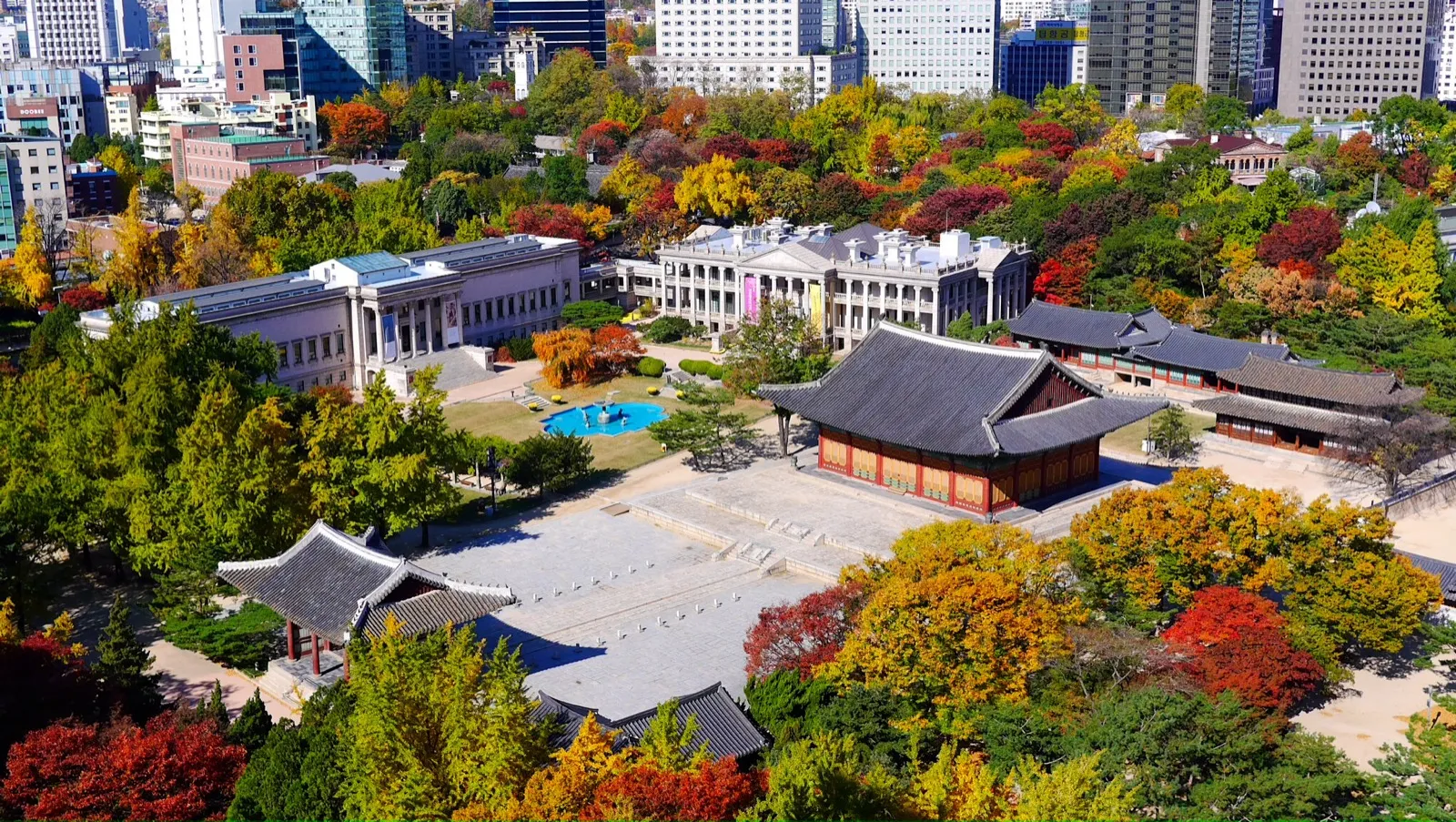
Seoul Autumn Foliage: When It Peaks and Where to Go
When Seoul's leaves turn this year, and a one-day route through free palaces and ginkgo streets you can reach by subway.
Practical Seoul
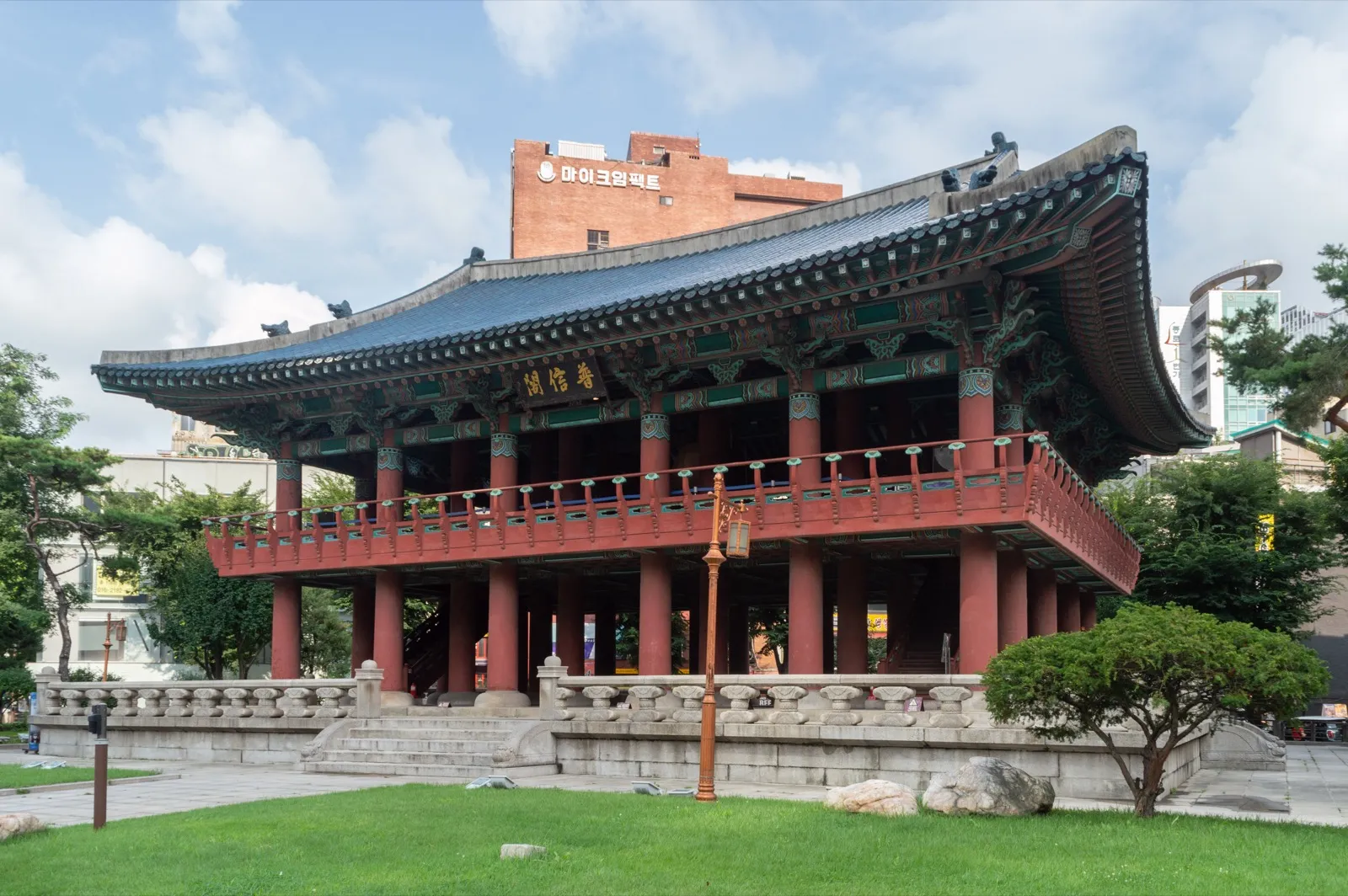
Seoul in December 2026: Lanterns, a ₩1,000 Ice Rink and the Midnight Bell
The Seoul Winter Festival opens on December 11 with lanterns on Cheonggyecheon and a Christmas market at Gwanghwamun, the Seoul Plaza ice rink opens on December 18, Christmas Day is a Friday holiday, and Bosingak's bell rings 33 times at midnight on December 31. Dates, hours, prices and how to get home after the countdown.
Practical Seoul
Seoul in November 2026: Free Palaces, Peak Foliage and CSAT Day
The palaces and Jongmyo are free until November 15, the leaves on Bukhansan have been at peak since October 26, and flights will be adjusted during the exam's English listening test on November 19. Dates, hours and the big exhibitions on.
Steve OH edits Seoulpin. Steve runs Standardpin, a Seoul-based web studio that also builds websites for clinics; that work has no effect on whether or how any clinic appears here. Articles are drafted with AI assistance from the sources listed and reviewed by Steve before publishing. How we work