Buying Korean Sunscreen in Seoul: SPF, PA and the Label
What SPF50+ and PA++++ mean under Korean rules, how to spot the functional-cosmetic mark, mineral versus chemical filters in Korean, cream versus stick versus serum, and what a tube costs at Olive Young and Daiso.
To buy a Korean sunscreen in Seoul, look for three things on the box: the word 기능성화장품 (functional cosmetic), which means Korea’s cosmetics regulator, MFDS, has reviewed or received a report on its UV protection; the SPF number, where SPF50+ is the highest label Korea allows; and the PA grade, where PA++++ is the top of four. Then choose a texture: a cream for the morning, a stick for topping up during the day. On October 17, 2026, three 50 ml sun creams on Olive Young’s website listed at ₩25,000 to ₩32,000 before discounts, and two 19 g sticks at ₩22,000 to ₩24,000. The three VPROVE sun products on Daiso Mall, two 50 ml creams and a 16 g stick, were ₩5,000 each.
This guide covers sunscreen sold as a cosmetic in Korea and follows MFDS rules as of October 17, 2026.
What do SPF50+ and PA++++ mean on a Korean sunscreen?
SPF measures protection from UVB and PA grades protection from UVA, and Korea caps the SPF label at “SPF50+”. Under the functional-cosmetics review rules, a product that measures SPF 50 or more is labelled SPF50+. The higher the number, the better the UVB protection, but not in proportion: in its June 2026 sunscreen guidance, MFDS says the real difference above SPF 50 is small, and that it uses “50+” so shoppers do not read a bigger number as complete protection. Below 50, the number on the tube may sit up to 20 percent below the tested average (a product averaging 23 can be labelled anywhere from SPF 19 to 23), never above it.
PA comes in four grades, set by a measured UVA protection factor (PFA):
| Label | UVA protection factor (PFA) | MFDS description |
|---|---|---|
| PA+ | 2 to under 4 | Low |
| PA++ | 4 to under 8 | Moderate |
| PA+++ | 8 to under 16 | High |
| PA++++ | 16 or more | Very high |
The SPF figure is measured with 2 mg of product per square centimetre of skin, MFDS explains, so a thin smear gives less protection than the label suggests. MFDS also notes that higher SPF and PA products can irritate some skin, and suggests choosing by how strong the sun is and how long you will be outside.
For a city trip with long walks outdoors, look for SPF50+ PA++++. All three Daiso products in the price table below carry it at ₩5,000.
What does 기능성화장품 mean on a Korean sunscreen?
It means MFDS has reviewed, or received a report on, the product’s UV protection claim; Korea classes sunscreen as a functional cosmetic, so the box must show 기능성화장품 or MFDS’s symbol. The packaging rules also require the effect and directions it was reviewed or reported for. MFDS’s June 2026 guidance tells shoppers to check for this mark before buying.
Only UV filters on MFDS’s list may be used in a Korean cosmetic: the safety standards say no UV filter outside Annex 2 is allowed. To look up a product, MFDS keeps two Korean-language lists, searchable by product name (제품명) and company (업체명): reviewed products (심사) and reported products (보고). Search both: a product filed by report appears only on the second list.
Some sunscreens are reviewed for more than one function: Daiso Mall lists its ₩5,000 VPROVE mineral sun cream as functional for UV protection (자외선차단), wrinkle care (주름개선) and brightening (미백), so you may see those words next to 기능성화장품.
Mineral or chemical: what do 무기자차, 유기자차 and 혼합자차 mean?
무기자차 means a mineral sunscreen, 유기자차 a chemical one, and 혼합자차 a mix of both. These are shop words, short for “inorganic” and “organic” UV filters; MFDS’s own guidance uses the longer terms. Daiso Mall sorts sun care by them under 자외선차단 방법 (“UV protection method”), and Olive Young product names often include 무기자차.
What MFDS says about each type, in its June 2026 Q&A:
| Shop word | Filter type | How it works | Trade-off MFDS names | Ingredient names to look for in 전성분 |
|---|---|---|---|---|
| 무기자차 | Inorganic (mineral, “physical”) | Scatters UV on the skin | Good for UVA, but can leave a white cast (백탁) | 징크옥사이드 (zinc oxide), 티타늄디옥사이드 (titanium dioxide) |
| 유기자차 | Organic (“chemical”) | Absorbs UV energy | No white cast; many absorb mainly UVB; can irritate sensitive skin | For example 에틸헥실메톡시신나메이트 (ethylhexyl methoxycinnamate), 에틸헥실살리실레이트 (ethylhexyl salicylate) |
| 혼합자차 | Both | Both | MFDS says most sunscreens on sale use both types | A mix of the above |
Annex 2 of the safety standards caps zinc oxide and titanium dioxide at 25 percent each. Because 무기자차 and 유기자차 are marketing words rather than legal labels, the ingredient list (전성분) is the reliable check: a mineral product lists zinc oxide or titanium dioxide and none of the organic filters. Our guide to Korean cosmetics labels shows where the ingredient list sits and how it is ordered.
If a white cast bothers you, start with 혼합자차 or 유기자차; if chemical filters have bothered your skin before, look for 무기자차 and expect a whiter finish.
Sun cream, sun stick, sun serum or cushion: which should I buy?
Buy a cream for the morning and a stick or cushion if you want to top up during the day. Olive Young’s website files sun care under 선크림 (sun cream), 선스틱 (sun stick), 선쿠션 (sun cushion), 선스프레이/선패치 (spray and patches) and 태닝/애프터선 (tanning and after-sun). Sun serums (선세럼) are not a separate shelf: the SKIN1004 sun serum sits under 선크림.
| Format | Korean | What it is | When it fits |
|---|---|---|---|
| Sun cream | 선크림 | Cream or lotion in a tube | The main layer before you go out |
| Sun serum | 선세럼 | A thinner, watery sun cream | The main layer if you prefer a light feel |
| Sun stick | 선스틱 | Solid stick, applied straight from the tube | Topping up during the day without getting your hands messy |
| Sun cushion | 선쿠션 | Compact with a sponge puff; tone-up (톤업) versions brighten skin tone | Topping up over makeup |
| Spray | 선스프레이 | Aerosol or pump spray | Body, arms and legs |
MFDS says spray and mist sunscreens should not be sprayed straight onto the face: spray into your hand first, then apply, so it does not get into your eyes or mouth or get inhaled.
Our recommendation: a cream at breakfast and a stick or cushion in your bag for the lunchtime top-up is enough for most days out, including a day of outdoor sights such as a palace and a market walk.
How much does Korean sunscreen cost at Olive Young and Daiso?
On October 17, 2026, 50 ml sun creams on Olive Young’s website listed at ₩25,000 to ₩32,000 and 19 g sun sticks at ₩22,000 to ₩24,000 before discounts. Daiso’s sun creams and sticks cost ₩5,000 at most; the three below are ₩5,000 each. The Hangul brand name in brackets is how Olive Young’s and Daiso Mall’s Korean websites list the brand. Most of the box is in Korean; see Are Korean cosmetics labels in English?.
| Product | Where | Type | Regular price |
|---|---|---|---|
| Round Lab (라운드랩) Birch Juice Moisturizing Sun Cream 50 ml, with a 20 ml cream | Olive Young | Cream | ₩25,000 |
| Round Lab Birch Mineral Sun Cream (자작나무 무기자차 선크림) 50 ml, with a 20 ml cleanser | Olive Young | Mineral cream | ₩25,000 |
| Zeroid (제로이드) Daily Sun Cream 50 ml | Olive Young | Cream, listed as 무기자차 | ₩32,000 |
| Round Lab Birch Juice Moisturizing Sun Stick 19 g | Olive Young | Stick | ₩24,000 |
| Tocobo (토코보) Cotton Soft Sun Stick 19 g, SPF50+ PA++++ | Olive Young | Stick | ₩22,000 |
| SKIN1004 (스킨1004) Hyalu-Cica Water-fit Sun Serum, 50 ml + 50 ml + 15 ml set | Olive Young | Serum | ₩35,000 |
| VPROVE (비프루브) Marine Mineral Mild Sun Cream 50 ml, SPF50+ PA++++ | Daiso | 무기자차 cream | ₩5,000 |
| VPROVE Marine Tone-up Cover Sun Cream 50 ml, SPF50+ PA++++ | Daiso | 혼합자차 tone-up cream | ₩5,000 |
| VPROVE Marine Waterful Sun Stick 16 g, SPF50+ PA++++ | Daiso | 혼합자차 stick | ₩5,000 |
If you want a short list: Round Lab’s Birch Juice Moisturizing Sun Cream as a first pick, Round Lab’s Birch Mineral Sun Cream or Daiso’s VPROVE Marine Mineral Mild Sun Cream if you want 무기자차, and a Tocobo or VPROVE stick for top-ups. Round Lab’s moisturizing sun cream won the sun care category of the Olive Young Awards, which are based on Olive Young’s purchase data, for the fourth year running in 2025, the brand says. The single 50 ml SKIN1004 sun serum costs ₩20,000 on the brand’s Korean online store.
Olive Young often sells below these regular prices: most of the products above carried a sale or coupon price in October 2026, and some deals are online only. Our Olive Young guide explains the sale weeks and the 5% visitor discount. Several Olive Young listings are sets with a bonus mini, so check what is in the box before comparing. Nothing at Daiso costs more than ₩5,000; our Daiso guide covers its prices, stores and Daiso-only sizes.
Which Korean words should I look for on the sunscreen box?
Five words do most of the work: 기능성화장품 (reviewed functional cosmetic), 자외선차단 (UV protection), 무기자차 (mineral filters), 내수성 (water resistant) and 전성분 (full ingredients). The table is the shelf cheat sheet:
| Korean | Meaning |
|---|---|
| 기능성화장품 | Functional cosmetic: MFDS has reviewed or received a report on the product’s claimed function |
| 자외선 차단 / 자외선차단 | UV protection, the function |
| SPF50+, PA++++ | The protection labels explained above |
| 내수성 | Water resistant: keeps at least half its SPF after about one hour of swimming and drying |
| 지속내수성 | Very water resistant: the same after about two hours |
| 무기자차 / 유기자차 / 혼합자차 | Mineral / chemical / both |
| 톤업 | Tone-up: a tinted formula that brightens skin tone |
| 백탁 | White cast |
| 전성분 | Full ingredient list |
| 사용기한 | Use-by date; see our labels guide |
| 전신에 사용하지 말 것 | Do not use on the whole body: a warning MFDS added for products with more than 2.4 percent benzophenone-3 (oxybenzone), from September 2, 2026; boxes printed earlier may be used until March 2027 |
The water-resistance labels come from the review rules, which allow 내수성 or 지속내수성 only when the measured water-resistance ratio is at least 50 percent. MFDS’s guidance defines the test as repeated swimming and air-drying, and says to reapply about every two hours during long water play even with a 지속내수성 product.
How should I apply it on a day out in Seoul?
MFDS advises putting on a generous amount about 15 minutes before you go out, and reapplying whenever you sweat heavily or spend a long time in the sun. It gives no fixed interval for an ordinary day; its only interval is for water play, every one to two hours. It also suggests long sleeves, a wide-brimmed hat and sunglasses, and washing the sunscreen off when you get back. Keep it out of your eyes and mouth.
Can I get a tax refund on sunscreen?
Yes, as part of a qualifying purchase, but only if it leaves Korea unopened. Our cosmetics tax refund guide explains the ₩15,000 threshold and why the sunscreen you will use this week belongs on a separate receipt from the ones you take home. Sunscreen counts as a liquid at airport security; the same guide explains Incheon’s 100 ml cabin-bag rule and what it means for refund goods.
More K-Beauty
K-Beauty
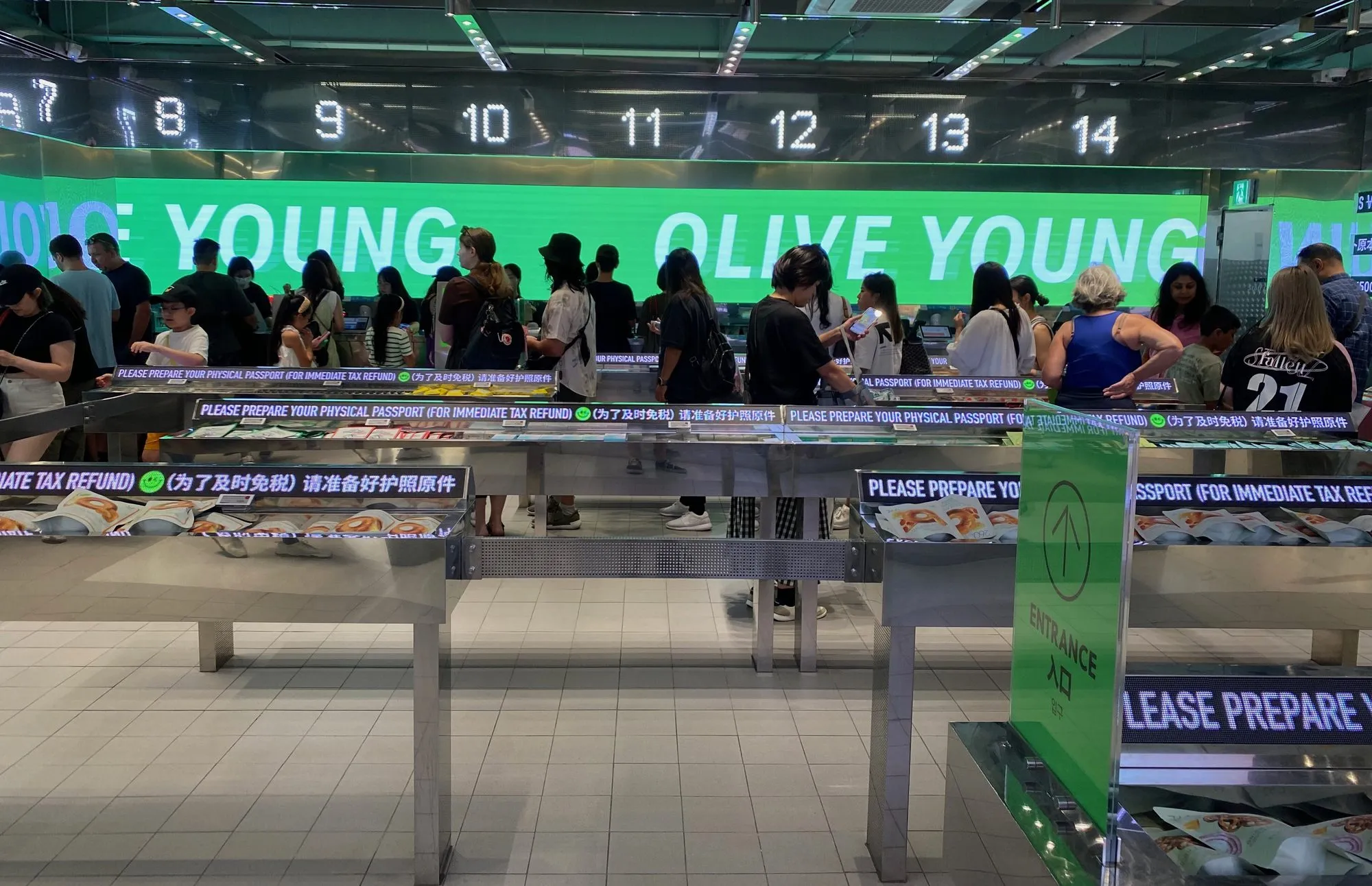
Korea Tax Refund: How to Get the Tax Back on Your Olive Young Haul
The ₩15,000 minimum, the instant discount at the till and its limits, the airport kiosk, and the liquids rule that decides which line you stand in. Checked against Korean law, Korea Customs and Incheon Airport.
K-Beauty
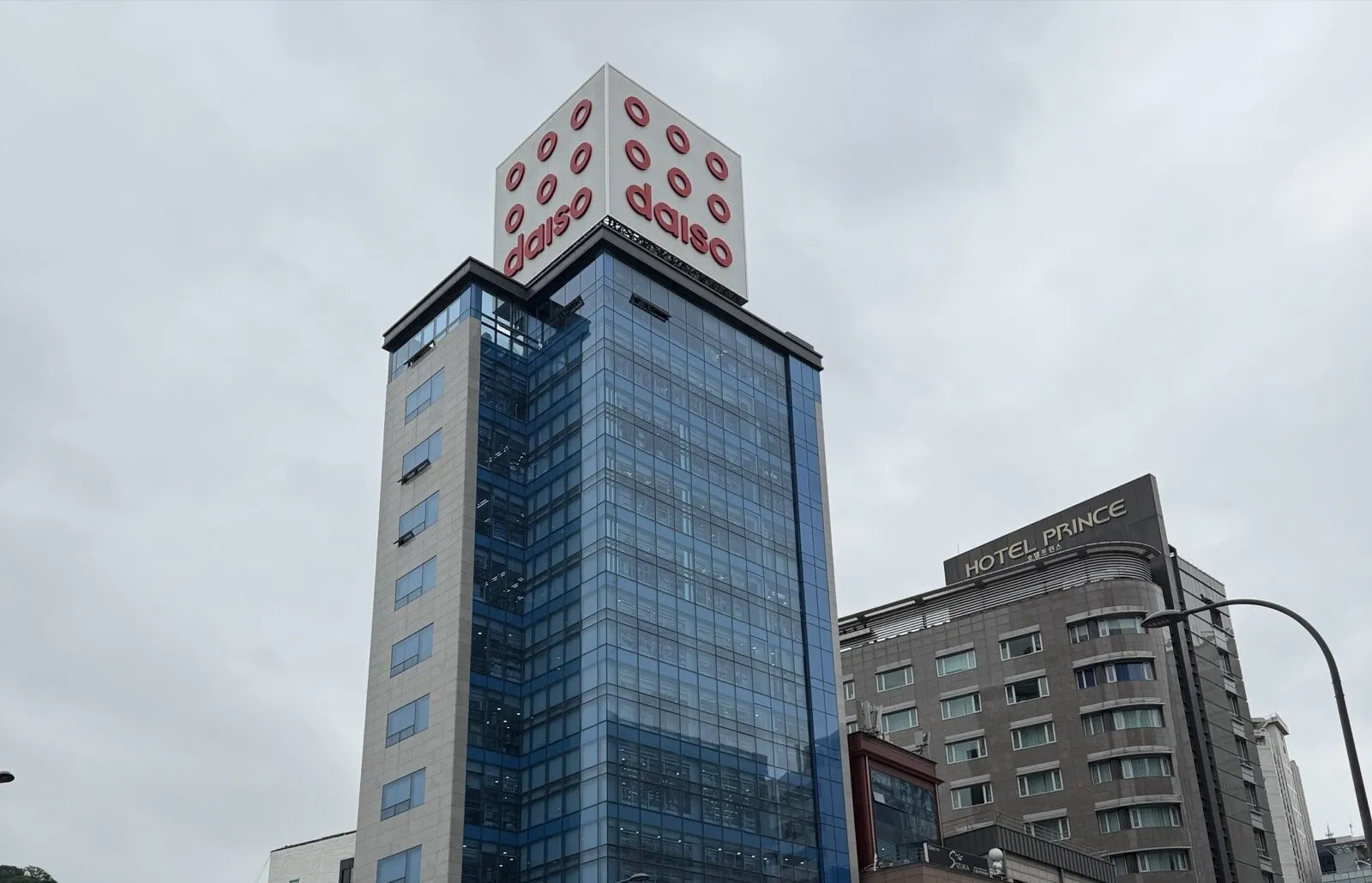
Daiso Korea for Skincare and Makeup: Prices, Stores and Tax Refunds
Six fixed prices from ₩500 to ₩5,000, the Seoul stores that give tax refunds, the 12-storey Myeongdong tower, Daiso's first beauty-focused store, and what Daiso's beauty range includes.
K-Beauty
How to Read Korean Cosmetics Labels
Find the use-by date, tell it apart from the manufacturing date, and keep the ingredient list before throwing the box away. A shopping guide to the small Korean print.
Steve OH edits Seoulpin. Steve runs Standardpin, a Seoul-based web studio that also builds websites for clinics; that work has no effect on whether or how any clinic appears here. Articles are drafted with AI assistance from the sources listed and reviewed by Steve before publishing. How we work