T-money and the Seoul Subway: One Card, Every Ride
What to buy, how to load it, whether your own credit card opens the gate, and when the Climate Card pass beats pay-as-you-go, checked against Tmoney, Seoul Metro and the city's own pages.
Seoul’s subway is one of the easiest in the world to ride and one of the more fiddly to pay for. The gates read Korean transit cards, not your bank card, and the machine that sells you a card may want cash. The fix is a T-money card: credit-card sized, around ₩3,000, good on the subway, city buses and taxis with a card reader. Everything else here sits on top of that card; none of it replaces it.
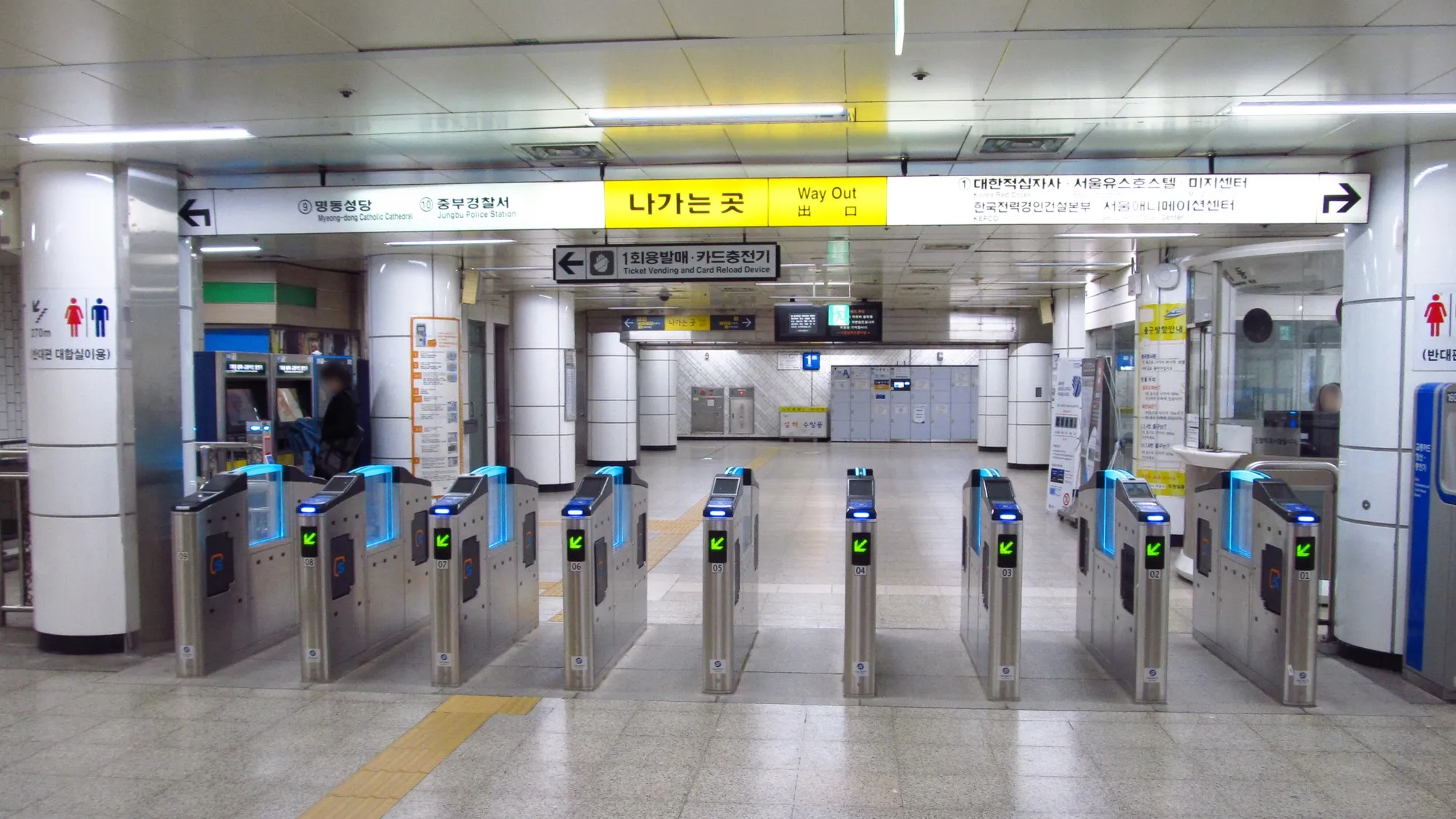
Buy a T-money card, and bring won to load it
Convenience stores on Tmoney’s list (GS25, CU, 7-Eleven, Emart24) sell the cards and load them at the counter; station machines reload them too. Tmoney’s foreigner guide is plain about the medium: top-ups are in Korean won cash, in ₩1,000 steps, ₩1,000 to ₩90,000 at a time, and a card holds no more than ₩500,000. VisitKorea puts the card itself at ₩3,000 to ₩5,000, depending on the design.
What changed this year is narrower than it sounds. Since 17 March 2026, the newer ticket machines at 273 stations on Lines 1–8 accept foreign-issued Visa and Mastercard cards, but for two things only: single-journey tickets and Climate Card short-term passes, with a service charge the city puts at 3.7% on average. A plain T-money card still loads with cash. Get some won at the airport before you go looking for a train.
Can you just tap your own credit card?
Not yet, on the subway or the bus. Seoul’s “open-loop” plan, tapping a Visa or Mastercard as in London, puts compatible readers on the Line 1–8 gates in 2027. Tmoney, which runs the fare system, said on 17 September 2026 that it will test card payment through the end of 2026 and start with Seoul city buses in 2027.
iPhones get a workaround: since July 2025, a T-money card can live in Apple Wallet and pass the gates in Express Mode. Tmoney says the MobileTmoney app’s Foreigner mode tops up through Apple Pay with Mastercard, American Express, UnionPay or JCB cards; Visa isn’t on its list. Its Apple Pay guide pays refunds only to a Korean bank account in your own name, so load small amounts. Holding a Visa? Carry the plastic card.
How transfers work
Seoul charges by distance, not by vehicle. With a transit card, the first 10 km of a whole journey costs one base fare, whether you ride the subway, a bus or both; if you change modes, the higher base fare applies. Then it’s ₩100 for every further 5 km. As of 4 October 2026, the base fares are ₩1,550 on the subway and ₩1,500 on a Seoul city bus. A transfer counts if you board within 30 minutes of getting off (60 minutes between 9 p.m. and 7 a.m.), up to four transfers in one journey. Two catches:
- Tap off when you leave a bus. Skip it and the chain breaks: the next ride is charged as a new trip, and the system collects the base fare you missed.
- The same route doesn’t count. Getting back on the same bus line is not a transfer.
A single-journey ticket costs ₩1,650 for the first 10 km plus a ₩500 deposit, which a refund machine returns when you hand the card back. It works on the subway only, with no bus transfer. It’s for the day you’ve lost your T-money card, not a plan.
The Climate Card short-term pass
Seoul’s unlimited pass is the one product here that can beat T-money on price, and only if you ride a lot. As of 4 October 2026: ₩5,000 for one day, ₩8,000 for two, ₩10,000 for three, ₩15,000 for five, ₩20,000 for seven, plus ₩3,000 for the physical card. At the ₩1,550 subway fare, counting a journey with transfers as one trip, the one-day pass pays off on your fourth trip, the three-day pass on your seventh and the seven-day pass on your thirteenth. The card adds about two trips the first time; rides over 10 km bring the numbers down.
The rules that matter, from the city’s page (updated 1 October 2026):
- Where it works: subway lines within Seoul and Seoul-licensed city, town and night buses. Not the Sinbundang Line, GTX, airport buses, wide-area buses or stations outside Seoul; get off outside the city and staff collect the fare. Since 1 October, stations in Gimpo, Goyang, Gwacheon, Guri, Seongnam, Hanam and Namyangju are out. At Gangnam, use the Line 2 gates, not Sinbundang’s.
- The airport exception: board in Seoul and you may get off at Incheon Airport Terminal 1 or 2. You can’t board there, so it won’t get you into the city when you land. This means the all-stop train: the express needs its own ticket, scanned at the gate.
- Timing: a pass starts the day you load it and runs to the last train. No loading ahead.
- Phones: the mobile version is Android-only and needs identity verification through a phone line in your own name; Apple Pay isn’t supported. Most visitors want the physical card, sold at the new Line 1–8 ticket machines and at convenience stores near Line 9, Ui-Sinseol and Sillim line stations.
- Not included: taxis, Ttareungyi bikes and the Hangang Bus.
- Refunds: assume none. You must register the card on Tmoney’s Card & Pay website and apply before the pass ends; you get what you loaded minus fares actually used and ₩500, paid to a Korean bank account or in person at Tmoney’s head office.
The 30-day Climate Card ended on 1 October 2026. Its replacement, the Climate Pass, is for registered Seoul residents, not visitors.
Tourist cards
Tmoney says the Korea Tour Card has been discontinued; existing cards still get the Tmoney Travel Card’s partner perks. The Tmoney Travel Card (₩4,000, at convenience stores and the Incheon Airport bus ticket office) rides exactly like T-money and adds discounts at partner attractions and shops. The Travel Card+ (₩6,000) adds WOWPASS payment and currency exchange. Buy one if you’ll use the discounts; for riding alone, plain T-money does the same job.
Tmoney still lists Mpass, a foreigner day pass good for up to 20 rides a day on Seoul-area subways, Seoul buses and the AREX all-stop train: ₩15,000 for one day up to ₩64,500 for seven, ₩3,000 less after 5 p.m., in won cash only. That includes a ₩5,000 deposit, ₩4,500 of it back when you return the card. It is issued only at Tmoney Town by Seoul Station Exit 10, weekdays 9 a.m. to 6 p.m.
| Card | What it costs (as of 4 Oct 2026) | Foreign credit card? | Where it works | Money left over |
|---|---|---|---|---|
| T-money | About ₩3,000, plus what you load | No; load with won cash | Subway, buses, taxis nationwide; shops showing the mark | Refunded, minus ₩500 |
| Tmoney Travel Card | ₩4,000, plus what you load | No; loads like T-money | As T-money, plus partner discounts | As T-money |
| Climate Card short-term pass | ₩3,000 card, plus ₩5,000–₩20,000 a pass | Yes, at new Line 1–8 machines (about 3.7%) | Seoul subway and Seoul buses; no taxis | Assume none |
| Single-journey ticket | ₩1,650 and up, plus ₩500 deposit | Yes, at new Line 1–8 machines | One subway trip | Deposit back at the machine |
Getting your money back
Shops that sell or reload T-money refund the balance in won cash, keeping ₩500; the card price isn’t refunded. VisitKorea says balances over ₩50,000 go only to Tmoney Town near Seoul Station Exit 10, and partial refunds are available only there and at subway service centres. Better: load small amounts and spend the last at a convenience store.
Taxis and convenience stores
T-money pays in taxis with a card reader. As of 4 October 2026, a standard taxi starts at ₩4,800 for the first 1.6 km, with a late-night surcharge of 20% (10–11 p.m. and 2–4 a.m.) or 40% (11 p.m.–2 a.m.). The 20% foreign-passenger surcharge you may read about applies only to the International Taxi service. At convenience stores, T-money pays like cash wherever the terminal takes it; Apple Pay T-money is transit-only.
On your first ride
- Get Korean won at the airport; you’ll need cash to load a T-money card.
- Buy the card at a convenience store and have it loaded at the counter.
- One card per person. A card can’t be shared at the gate.
- Tap in and tap out. On buses, tap when you get on and when you get off.
- Changing lines or modes? Board within 30 minutes (60 after 9 p.m.) to keep the transfer.
- More than three trips a day within Seoul? Price the Climate Card pass, and load it the morning you start.
- On your last day, spend the balance or refund it, minus ₩500.
More Practical Seoul
Practical Seoul
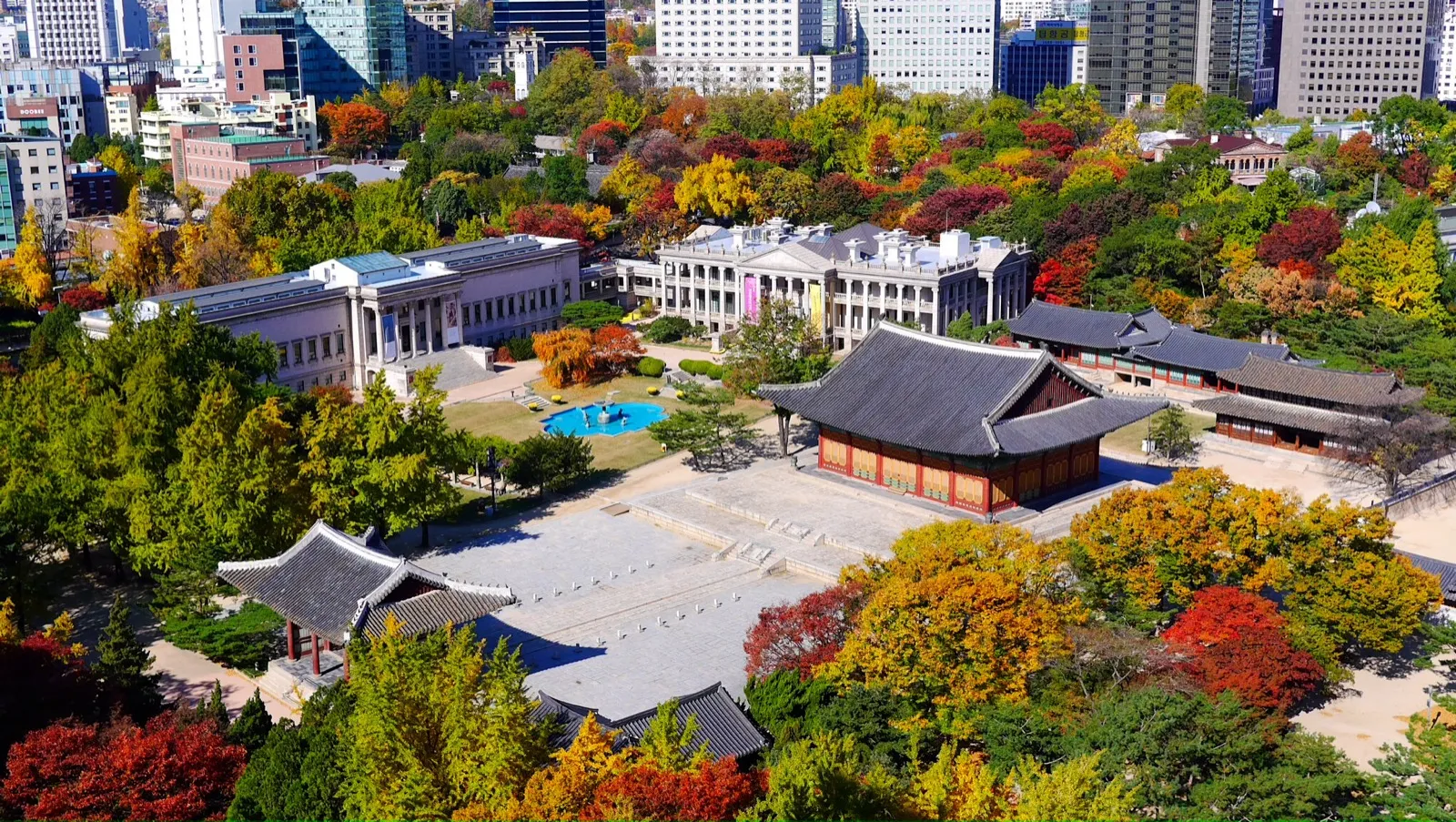
Seoul Autumn Foliage: When It Peaks and Where to Go
When Seoul's leaves turn this year, and a one-day route through free palaces and ginkgo streets you can reach by subway.
Practical Seoul
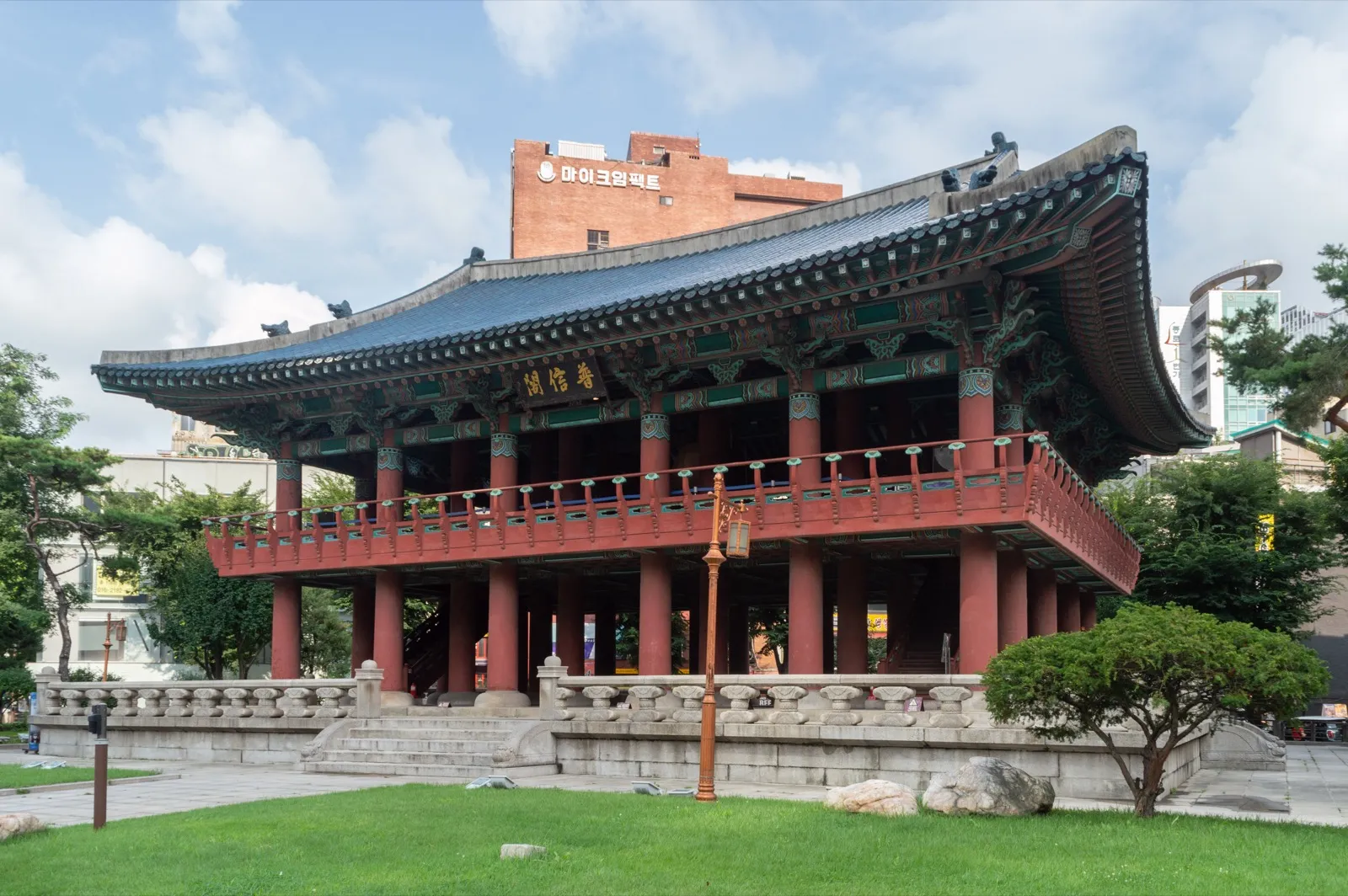
Seoul in December 2026: Lanterns, a ₩1,000 Ice Rink and the Midnight Bell
The Seoul Winter Festival opens on December 11 with lanterns on Cheonggyecheon and a Christmas market at Gwanghwamun, the Seoul Plaza ice rink opens on December 18, Christmas Day is a Friday holiday, and Bosingak's bell rings 33 times at midnight on December 31. Dates, hours, prices and how to get home after the countdown.
Practical Seoul
Seoul in November 2026: Free Palaces, Peak Foliage and CSAT Day
The palaces and Jongmyo are free until November 15, the leaves on Bukhansan have been at peak since October 26, and flights will be adjusted during the exam's English listening test on November 19. Dates, hours and the big exhibitions on.
Steve OH edits Seoulpin. Steve runs Standardpin, a Seoul-based web studio that also builds websites for clinics; that work has no effect on whether or how any clinic appears here. Articles are drafted with AI assistance from the sources listed and reviewed by Steve before publishing. How we work