Bukchon Hanok Village Visiting Hours and the Red Zone Fine
When tourists may walk the Red Zone, who can stay after 5 p.m., how the ₩100,000 fine is actually issued, what the Orange and Yellow zones mean, and why tour buses now stop outside the village.
You can visit Bukchon’s Red Zone, the lanes of Bukchon-ro 11-gil, every day from 10 a.m. to 5 p.m. From 5 p.m. to 10 a.m. the next morning, sightseeing there is banned, and the Jongno-gu Office can fine a tourist ₩100,000, foreign visitors included. The fine has been in force since March 1, 2025, but it is not automatic: patrol officers warn you first and fine you only if you ignore them. The rest of Bukchon has no enforced hours; the district only asks visitors to keep quiet and, in the Yellow Zone, to come between 10 a.m. and 5 p.m. too.
When can tourists visit Bukchon Hanok Village?
Every day, tourists may be in the Red Zone from 10 a.m. to 5 p.m.; elsewhere in Bukchon there are no enforced hours. The Red Zone covers about 34,000 square metres of lanes around Bukchon-ro 11-gil, where homes see the heaviest tourist traffic. Visit Seoul lists the same 10 a.m. to 5 p.m. window and says the village is open 365 days a year.
Jongno-gu designated Bukchon a special management area on July 1, 2024, under the Tourism Promotion Act, which lets a district limit tourist visiting hours by ordinance. The whole area is divided into zones, and only two rules carry a fine:
| Zone | Where | What applies | Fine |
|---|---|---|---|
| Red Zone | Bukchon-ro 11-gil area | No tourist visits 5 p.m. to 10 a.m. | ₩100,000, since March 1, 2025 |
| Orange Zone | Bukchon-ro 5ga-gil and Gyedong-gil area | No set hours; etiquette signs and guidance | None |
| Yellow Zone | Bukchon-ro 12-gil area | Visitors asked to come 10 a.m. to 5 p.m.; monitoring | None |
| Chartered-bus zone | Bukchon-ro, Bukchon-ro 5-gil, Bukchon-ro 4-gil, Changdeokgung 1-gil (about 2.3 km) | No chartered buses, at any time | ₩300,000 to ₩500,000, charged to the bus, since January 1, 2026 |
The zone locations and measures come from Jongno-gu’s designation notice, which describes the Orange Zone as a mix of homes and shops with heavy foot traffic, and the Yellow Zone as an area under watch that could be moved up to Orange or Red if needed. For the Yellow Zone, the district’s FAQ adds that it asks visitors to come between 10 a.m. and 5 p.m. there too, without a fine. On the ground, the district has put up signs marking the Red Zone; in the Orange and Yellow zones the signs are about etiquette. The exact boundaries are drawn on the Smart Seoul Map that the district links to.
The Seoul city notice also asks that Sunday be a “rest day” for the alleyways. That is a request, not part of the fined rule.
Will I actually be fined for being in Bukchon after 5 p.m.?
Only if you are sightseeing in the Red Zone and keep doing it after being warned. Walking through on your way somewhere else is not sightseeing. Jongno-gu’s fine guideline sets out the steps:
- District enforcement officers (북촌보안관, “Bukchon sheriffs”) give at least two verbal warnings and explain the rule.
- If you still do not comply, they record the violation and check your ID. A foreign visitor shows a passport or alien registration card; officers may photograph the passport or write down its number, your nationality and your name.
- You get an advance notice on the spot and can submit a written objection within the stated period.
- The district then decides and sends the fine notice. Foreign visitors are told to pay on the spot or before leaving Korea. You can appeal the final fine in writing.
The fine is ₩100,000 for a first, second or third violation. The district says it can reduce the amount by up to half under the fine table in the Jongno-gu tourism ordinance.
No fines have been reported so far. Jongno-gu’s mayor at the time said in a September 29, 2025 interview that not a single fine had been issued in the rule’s first year or so, and a Korean news report on October 7, 2026, still put the count at zero. The district’s FAQ says most visitors have followed the rule since November 2024. Plan to be out of the Red Zone by 5 p.m.; if an officer asks you to leave, leave.
What counts as sightseeing in the Red Zone?
Taking photos or video of the scenery or buildings, standing around looking, and wandering the lanes without going to a shop all count. The guideline calls these “tourism acts”, and they are what an officer looks for, judged from how you behave, where you go in and out, and, if needed, by asking you.
Who can be in the Red Zone after 5 p.m.?
Anyone may walk through the Red Zone after 5 p.m. on the way somewhere else; what is banned is sightseeing there. The people below may also enter during restricted hours, without registering anywhere. Residents are fully exempt; everyone else can still be fined if they start sightseeing:
- Residents whose registered address (Korean ID or alien registration card) is in the Red Zone.
- Residents’ family and friends visiting a home there. With the resident they go straight in; alone, an officer may check with the resident.
- Guests staying at accommodation in the Red Zone, including hanok stays. Show your booking confirmation. Long-stay guests do not count as residents.
- Customers of shops in the Red Zone, such as cafés, stores, museums and workshops. Say where you are going, or show a receipt.
- People who work there.
- Vehicles that are not there for sightseeing.
A hanok-stay guest photographing the lanes at 8 p.m., or a café customer lingering for pictures afterwards, is treated as a tourist.
What does Bukchon ask of visitors at any hour?
Visit Seoul asks for “silent tourism” across the village, because people live in these houses:
- Keep noise down (no loud voices, horsing around or filming), especially around 31 Gahoe-dong.
- Do not litter.
- Keep groups to 10 people or fewer.
- Do not use microphones, megaphones or loudspeakers.
- Do not photograph or film inside houses, even if a door is open.
Visit Seoul adds that the city’s walking-tour stops in the Gahoe-dong 31 and 33 area are being phased out.
Can tour buses still drive into Bukchon?
No. Since January 1, 2026, chartered buses with 16 or more seats are banned around the clock, weekends and holidays included, from Bukchon-ro, Bukchon-ro 5-gil, Bukchon-ro 4-gil and Changdeokgung 1-gil. Jongno-gu enforces it with CCTV cameras, and the bus operator pays ₩300,000 for a first violation, ₩400,000 for a second and ₩500,000 for a third. Commuter, school and village buses, and vehicles carrying disabled passengers, can be approved as exceptions.
If you are on a group tour, your bus can drop you off only at one of three points the district opened in November 2025, according to its press release: in front of the National Museum of Modern and Contemporary Art on Samcheong-ro, opposite Changdeokgung on Donhwamun-ro, or by the west gate of Tapgol Park on Samil-daero. It may stop there for up to five minutes and then park at the Gyeongbokgung car park (48 bus bays) or Tapgol Park (2). The district names those two car parks as the main access points for coach passengers, about a 10 to 30 minute walk from Bukchon. The ban does not apply to you on foot, by taxi or by city bus.
What time should I visit Bukchon Hanok Village?
Go between 10 a.m. and about 4 p.m., so you are out of Bukchon-ro 11-gil before 5 p.m. without hurrying. If you want lanes in the early morning or the evening, stay outside the Red and Yellow Zones and keep to the same quiet rules. If you are staying in a Red Zone hanok, keep your booking confirmation on your phone and save the photos for daytime. Gyeongbokgung and Changdeokgung sit on either side of the village, so Bukchon fits between a morning at Gyeongbokgung and a timed entry to the Changdeokgung Secret Garden.
How do I get to Bukchon Hanok Village?
Take Seoul Subway Line 3 to Anguk Station. From Exit 3, walk straight towards Gyedong for about five minutes to the Bukchon Culture Center at 37 Gyedong-gil, a 1921 hanok that explains the neighbourhood’s history. It is closed on Mondays and open Tuesday to Friday 9 a.m. to 6 p.m. (Wednesday until 8 p.m.) and weekends 9 a.m. to 5 p.m. From Exit 1 it is about a seven-minute walk to the Bukchon Village Information Center (+82-2-2148-4161), in front of the Seoul Museum of Education in the grounds of Jeongdok Public Library.
Could the Bukchon rules change?
Possibly. Jongno-gu is running a study of the special management area from May to November 2026, covering visitor numbers, local business and the views of residents, merchants and tourists, and has said it will use it to fix gaps in the system, according to its September 10 press release. Merchants have asked for later visiting hours in summer, and the district has said it could consider flexible hours based on the study’s results, according to an August 2026 report. As of October 13, 2026, the hours and fines above are unchanged.
More K-Culture
K-Culture
Changdeokgung Secret Garden Tickets and Entry Times
The garden needs its own timed ticket on top of palace admission, and the timed entry is at an inner gate 15 minutes' walk from the main gate. How to book, what it costs, the English sessions and how early to arrive.
K-Culture
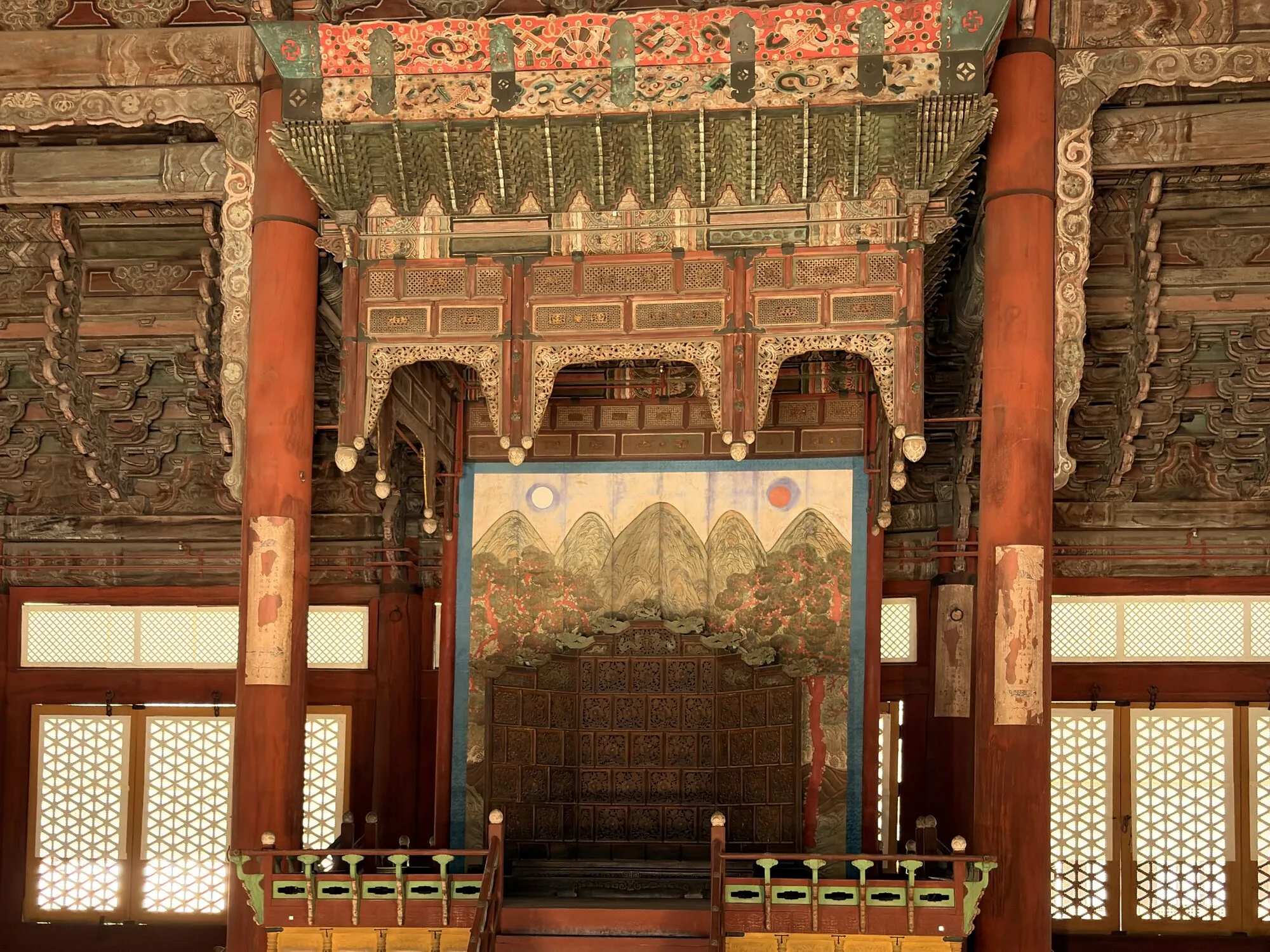
Deoksugung: The Palace Where Korea Tried to Become a Modern Empire
Why a Joseon palace has a neoclassical stone hall, the buildings worth your time, the free English tours, the Seokjojeon museum you can only see with a guide, the guard change at Daehanmun, and the late hours that let you visit after dark.
K-Culture
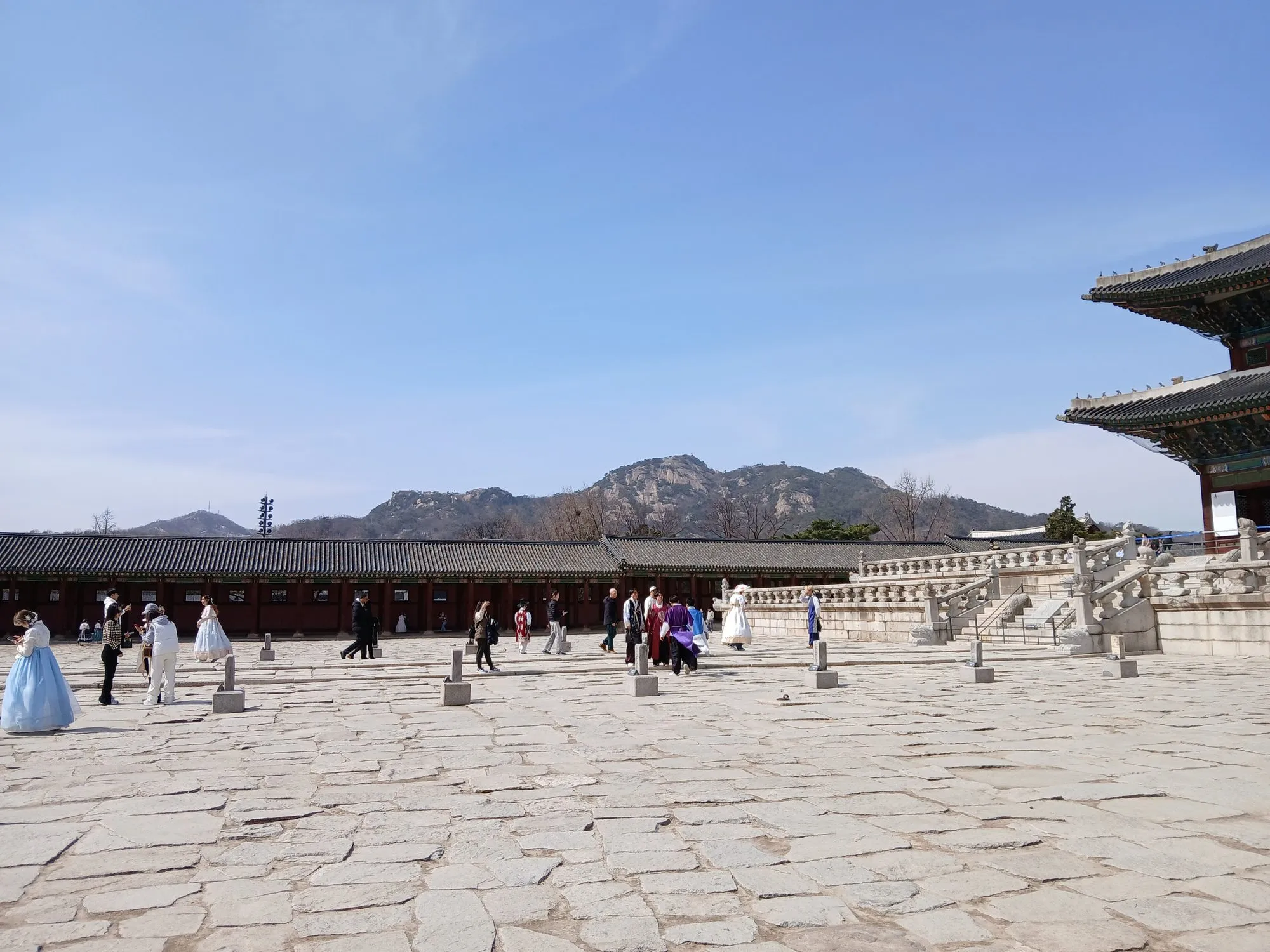
Gyeongbokgung in Hanbok: What Gets You In Free, and What Doesn't
The dress code behind free palace entry, what Seoul's royal palaces and Jongmyo charge everyone else, when the guards change, how night-viewing tickets work, and how to judge a hanbok rental before you pay.
Steve OH edits Seoulpin. Steve runs Standardpin, a Seoul-based web studio that also builds websites for clinics; that work has no effect on whether or how any clinic appears here. Articles are drafted with AI assistance from the sources listed and reviewed by Steve before publishing. How we work