How a Jjimjilbang Works: A First-Timer's Guide to Korean Spas
What the ticket includes, where you are naked and where you are not, how the wristband key pays for everything, sleeping overnight, scrubs and tattoos, with four Seoul facilities that publish their fees.
A jjimjilbang is a Korean bathhouse with a shared, co-ed sauna floor on top. You pay once at the front desk, ₩15,000 to ₩22,000 for a standard adult ticket at the four Seoul facilities below, and get a uniform, towels and a numbered key, usually a wristband. You bathe naked in the single-sex bath after showering, then put on the uniform for the shared sauna rooms, rest areas and snack bar, where 24-hour places let you sleep. Extras such as snacks and massage chairs usually go on the key, and you pay for them when you leave.
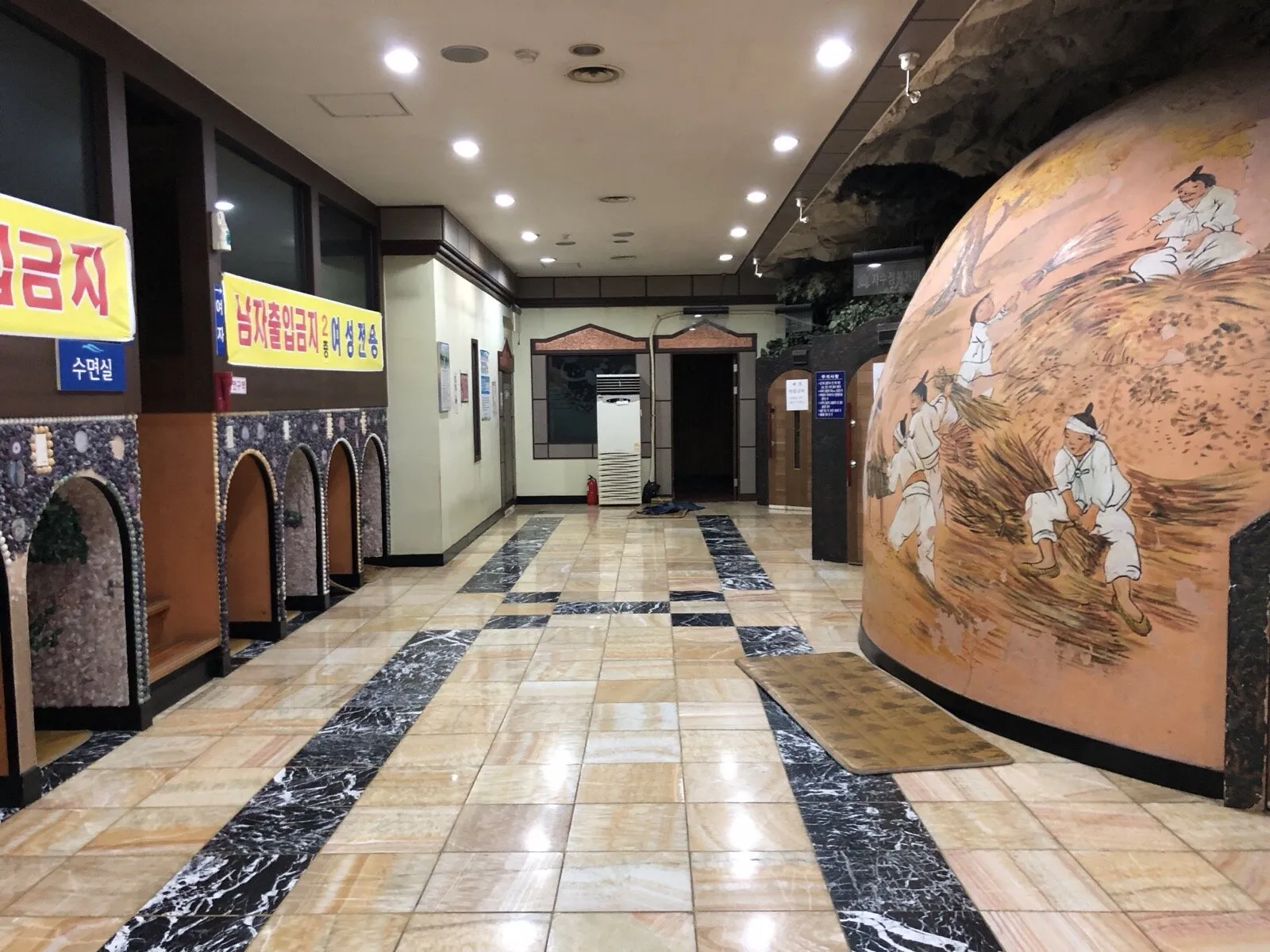
What should you bring to a jjimjilbang?
Bring your own shampoo and skincare: admission covers the uniform and towels (Visit Seoul), but none of the four facilities’ fee pages below promises shampoo or skincare. If you need travel-size skincare, Olive Young and Daiso both sell it. If you will be there after 10 p.m., carry your passport: Riverside Spa Land may ask for ID at night and turns away anyone, adult or not, who cannot show it.
What do you say at the front desk of a jjimjilbang?
Say jjimjil (찜질) for the full ticket, or mogyok (목욕) for the bath only; the desk may ask which you want (Korea Tourism Organization). Mogyok is the single-sex bath alone, and jjimjil adds the co-ed sauna rooms and rest areas. The price differs: at Riverside Spa Land an adult pays ₩13,000 for the bath only and ₩15,000 for jjimjil in the daytime. For a first visit, buy jjimjil: the bath-only ticket does not include the kiln rooms or rest areas.
With a jjimjil ticket you receive a uniform, a towel and a locker key, often a wristband. Prices are posted at the counter: the national hygiene rules (Annex 4 of the Enforcement Rule of the Public Health Control Act) require every bathhouse to display its fee table.
Where do your shoes and bags go?
Shoes go into the shoe locker with your key’s number, then everything else into the changing-room locker with the same number, in the single-sex changing room (KTO). Keep the key on your wrist or ankle the whole time: it also pays at the snack bar, massage chairs, coin karaoke and photo booths, and you settle everything when you hand it back at the counter (KTO).
Do you have to be naked in a jjimjilbang?
Yes in the bath, no anywhere else. The bathing area and its changing room are separated by sex, and you bathe without clothes or a swimsuit; in the shared areas you wear the uniform.
Undress, shower in the bath, soak in the pools to warm up, dry off, then put on the uniform and go up to the shared floor (KTO). Shower thoroughly before you get into any pool. Whether to wear underwear under the uniform is up to you; even Koreans disagree on it.
Children follow a fixed rule: from age 4 (48 months), the hygiene rules bar them from the opposite sex’s bath and changing room, and Riverside Spa Land applies this to boys in the women’s bath. Every guest changes in a single-sex changing room before reaching the shared floor, so a child of 4 or older needs an adult of their own sex with them.
What are the shared sauna rooms like?
They are co-ed rooms at different temperatures, from an ice room to rooms above 60°C, and everyone wears the uniform inside, as the hygiene rules require in a co-ed sweating room. Expect a traditional kiln room (bulgama), steam rooms, and clay, salt or charcoal rooms; Riverside Spa Land lists ten rooms, including a pine-wood kiln, a salt room, an igloo room and a women-only clay kiln.
Start in the cooler rooms, around 30 to 40°C, move up gradually, and stay no more than about 20 minutes in rooms above 60°C (KTO). Each sweating room must post a caution notice, and the people it names include young children, pregnant women and anyone who has drunk alcohol in the past two hours. Bathhouses must also refuse entry to anyone too drunk to use the facility normally.
The towel wrapped like ram horns on your head (Koreans call it yangmeori, “sheep head”) is a familiar scene in Korean media; nobody expects you to do it.
What do you eat at a jjimjilbang?
The classic order is sikhye, a sweet rice drink, with baked eggs (KTO). Snack bars also sell fish cake, fried chicken, tteokbokki, cup noodles and ice cream, and some also serve seaweed soup (miyeokguk) or a roasted-grain drink (misutgaru). Riverside Spa Land bans outside food and drink.
How much is a Korean body scrub (seshin)?
Expect around ₩30,000 for a basic scrub (seshin, 세신, also called ttaemiri): that is what one bathhouse in Suwon and one in Gwangju charged in a May 2025 Chosun Ilbo report, and none of the four Seoul facilities below publishes its own scrub price. At the Suwon bathhouse, adding oil or a massage took it to ₩60,000 to ₩120,000 or more. The scrub is paid separately and done in the bath area by an attendant of your own sex: the hygiene rules allow only men to work in a men’s bath and only women in a women’s bath. Spa Lei lists a 30-minute body scrub and longer combinations with an oil massage, without prices. Soak first so your skin is soft, and agree the price with the attendant before you lie down.
How do you check out?
Go back to the changing room, shower off the sweat, and drop the uniform and towels in the return bin; then hand your key in at the counter and pay for whatever you charged to it (KTO). If you went past the hours your ticket includes, the extra time is added then.
Can you sleep overnight in a jjimjilbang?
Yes, at a 24-hour jjimjilbang, on a mat in a rest area or sleeping room, but it is not a hotel. The hygiene rules forbid bathhouses from setting out bedding for lodging and allow only large towels and pillows for a nap; rest rooms have TVs and comics that run all night, and sleeping rooms have mats and pillows (KTO).
What a night costs depends on how each place counts time:
- Riverside Spa Land charges ₩17,000 for jjimjil if you enter between 8 p.m. and 5 a.m. (₩15,000 from 5 a.m. to 8 p.m.), includes 15 hours, then adds ₩1,000 an hour.
- Club K Seoul charges ₩17,000 on weekdays and ₩19,000 at weekends for 12 hours, ₩30,000 for 24 hours, and ₩2,000 for each extra hour. A package with a private room is ₩27,000 on weekdays and ₩29,000 at weekends for 12 hours.
- Spa Lei (women only) charges ₩22,000 and adds ₩2,000 an hour after 8 hours.
Worked out from those tables, a weekday night from 10 p.m. to 8 a.m. comes to ₩17,000 at Riverside Spa Land or Club K Seoul and ₩26,000 at Spa Lei.
Two rules catch travellers out. Riverside Spa Land does not let you go out and come back: leaving ends your visit. And under-19s (as Korea’s Youth Protection Act defines them) face a night curfew: the hygiene rules make 24-hour jjimjilbang keep them out during hours set by the city within 10 p.m. to 5 a.m., unless a parent or guardian comes along or has signed a consent form. Riverside Spa Land applies 10 p.m. to 5 a.m., accepts only a legal guardian in person, not a signed form, and may ask anyone for ID; Club K Seoul applies the same hours and accepts a consent form.
Can you go to a jjimjilbang with tattoos?
Yes: no Korean law bars tattooed guests, and none of the four facilities below mentions tattoos on the fee and rules pages cited here. The hygiene rules make bathhouses refuse only people with an infectious disease or too drunk to use the facility, and the Minor Offenses Act’s tattoo clause covers deliberately showing a menacing tattoo on a road, in a park or in another public place to cause disgust. A facility can still set its own policy.
Which jjimjilbang in Seoul should you go to?
Pick by what you need: Riverside Spa Land at Gangbyeon Station is open 24 hours and its night ticket includes 15 hours, Club K Seoul in Gangnam is open 24 hours and sells a private-room package, Spa Lei near Sinsa Station is women only, and Supsok Hanbang Land in Seodaemun has outdoor charcoal kilns but closes at 10 p.m. All four list their fees online; we have not visited them.
| Facility | Address and access | Hours | Adult fee |
|---|---|---|---|
| Riverside Spa Land (강변스파랜드) | 45 Guui-gangbyeon-ro, Gwangjin-gu; Gangbyeon Station (Line 2) Exit 4, opposite Dong Seoul Hotel | 24 hours, every day | Jjimjil ₩15,000 (5 a.m.–8 p.m.), ₩17,000 (8 p.m.–5 a.m.); bath only ₩13,000; 15 hours included |
| Club K Seoul (클럽K서울) | B1, 524 Seolleung-ro, Gangnam-gu | 24 hours, every day | Jjimjil ₩17,000 weekdays, ₩19,000 weekends for 12 hours; 24 hours ₩30,000 |
| Spa Lei (스파레이), women only | B1 entrance, 5 Gangnam-daero 107-gil, Seocho-gu; Sinsa Station Exit 5, 200 m towards the Riverside Hotel | 24 hours, every day | ₩22,000; ₩2,000 an hour after 8 hours |
| Supsok Hanbang Land (숲속한방랜드) | 75-7 Bongwonsa-gil, Seodaemun-gu | 6:30 a.m. to 10 p.m. every day (charcoal kilns 8 a.m. to 9 p.m.) | Charcoal kilns ₩17,000, bath only ₩11,000 (adults and middle-school students) |
Notes on each:
- Riverside Spa Land: children aged 7 and under pay ₩11,000 for daytime jjimjil and ₩13,000 at night. Phone +82-2-455-3737.
- Club K Seoul: every jjimjil ticket includes the uniform. A ₩13,000 bath-and-café ticket gives 5 hours but rest only in the café area, and the uniform costs ₩2,000 extra with it. Phone +82-2-563-1145.
- Spa Lei: the bathhouse is for women only. Its kiln sauna is heated from 5 a.m. and opens at 10 a.m. Phone +82-2-545-4002.
- Supsok Hanbang Land: the charcoal kilns are outdoors, each at a different temperature, and you can grill sweet potatoes or rice cakes at the fire (KTO). The KTO advises socks and cotton gloves in the hottest kiln, kkottang, to avoid burns; its page still lists an older ₩15,000 fee. It closes at night, so it is a day visit, not an overnight option. Phone +82-2-365-2700.
Many older English guides still send visitors to Dragon Hill Spa in Yongsan or to Itaewon Land. Sisa Journal reported in March 2026, from Seoul’s bathhouse licence records, that both closed during the pandemic years.
To get there, Naver Map finds each facility by its Korean name, and a T-money card covers the subway.
More from Seoulpin
K-Culture
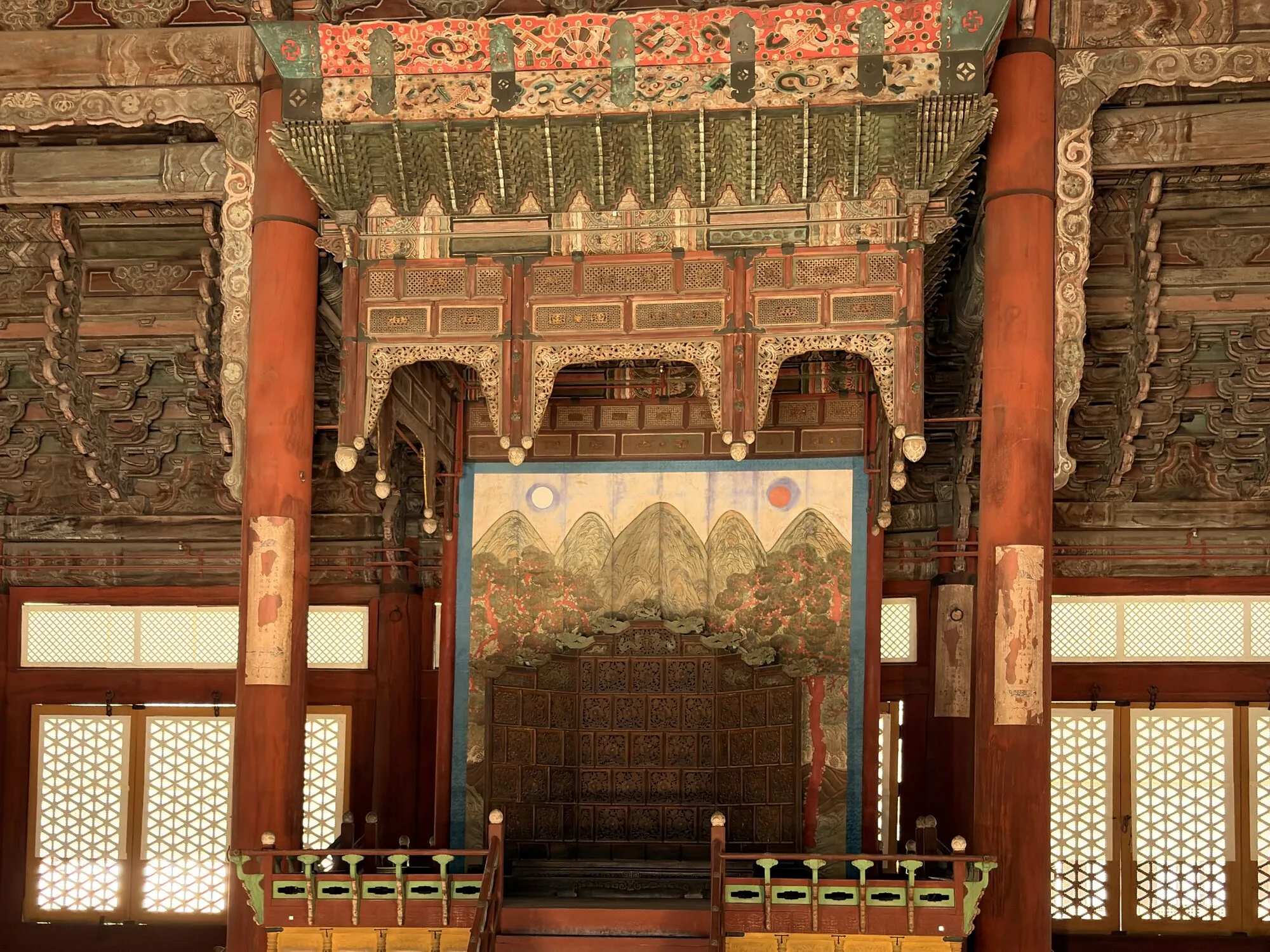
Changdeokgung Secret Garden Tickets and Entry Times
The garden needs its own timed ticket on top of palace admission, and the timed entry is at an inner gate 15 minutes' walk from the main gate. How to book, what it costs, the English sessions and how early to arrive.
K-Culture
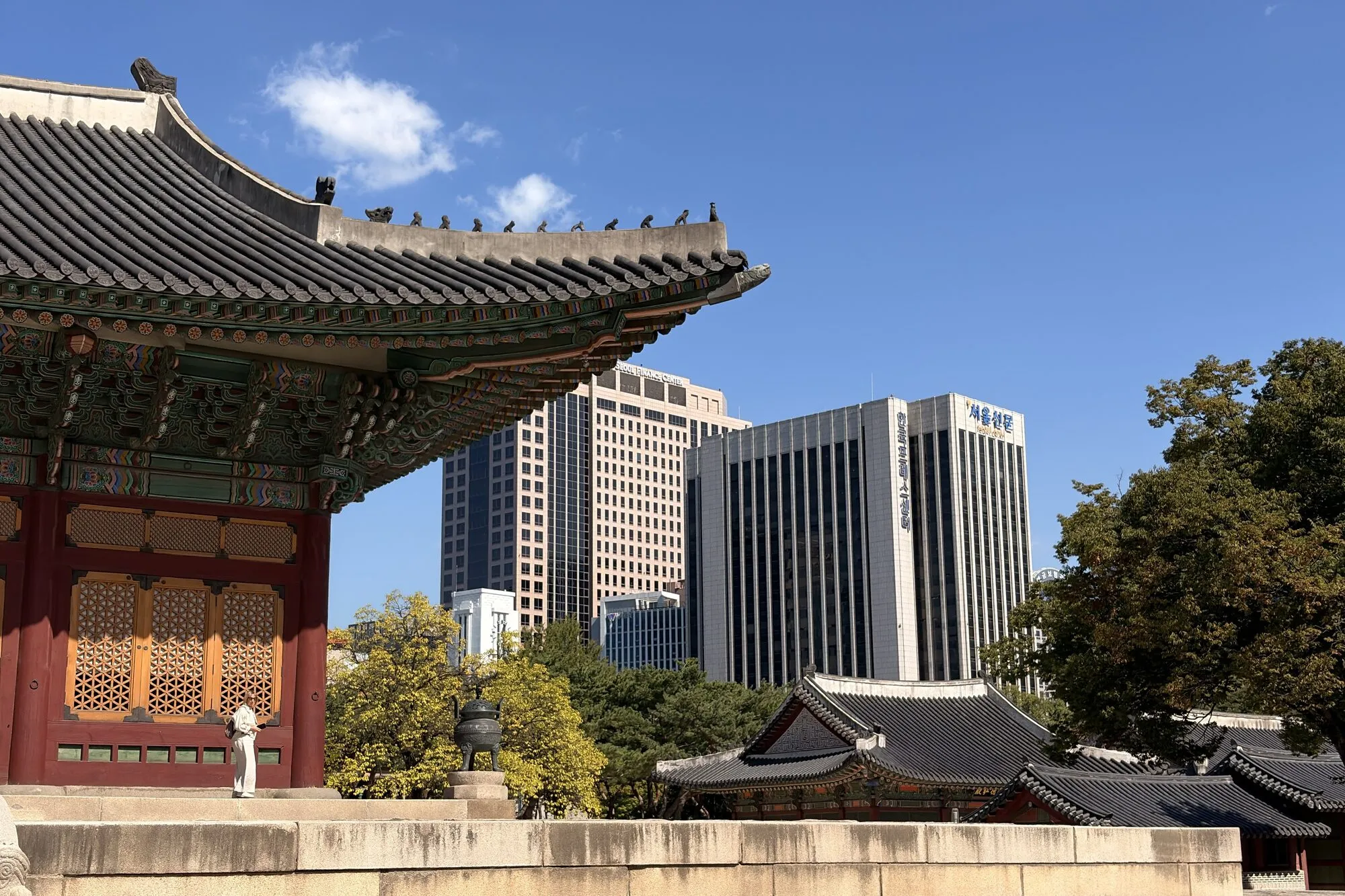
Deoksugung: The Palace Where Korea Tried to Become a Modern Empire
Why a Joseon palace has a neoclassical stone hall, the buildings worth your time, the free English tours, the Seokjojeon museum you can only see with a guide, the guard change at Daehanmun, and the late hours that let you visit after dark.
Neighborhoods
City Hall to Deoksugung to the Seoul Museum of Art: A Half-Day Walk That's Free on Wednesdays
Seoul City Hall's new basement gallery, the palace that now opens free every Wednesday, the stonewall road and a free city art museum, all within a few minutes of City Hall Station. Hours, closing days, tours and the order to walk it in.
Steve OH edits Seoulpin. Steve runs Standardpin, a Seoul-based web studio that also builds websites for clinics; that work has no effect on whether or how any clinic appears here. Articles are drafted with AI assistance from the sources listed and reviewed by Steve before publishing. How we work