How to Ride the Seoul Subway
Pay ₩1,550 with a T-money card, find your station by number, leave by the right exit and catch the last train home.
Tap a transit card on the gate reader going in and again going out, and the Seoul subway charges you by distance: ₩1,550 for the first 10 km for an adult with a card, then ₩100 for every further 5 km up to 50 km. Get a T-money card on day one. A single-journey ticket from a station machine costs ₩100 more per ride, plus a ₩500 deposit you get back after the trip. Find your line by its colour and your station by its number, and change lines inside the station without tapping out. Central stations get their first trains at about 5:30 a.m. On weekdays the last trains leave between about 11 p.m. and 1 a.m. On weekends and public holidays they leave about an hour earlier.
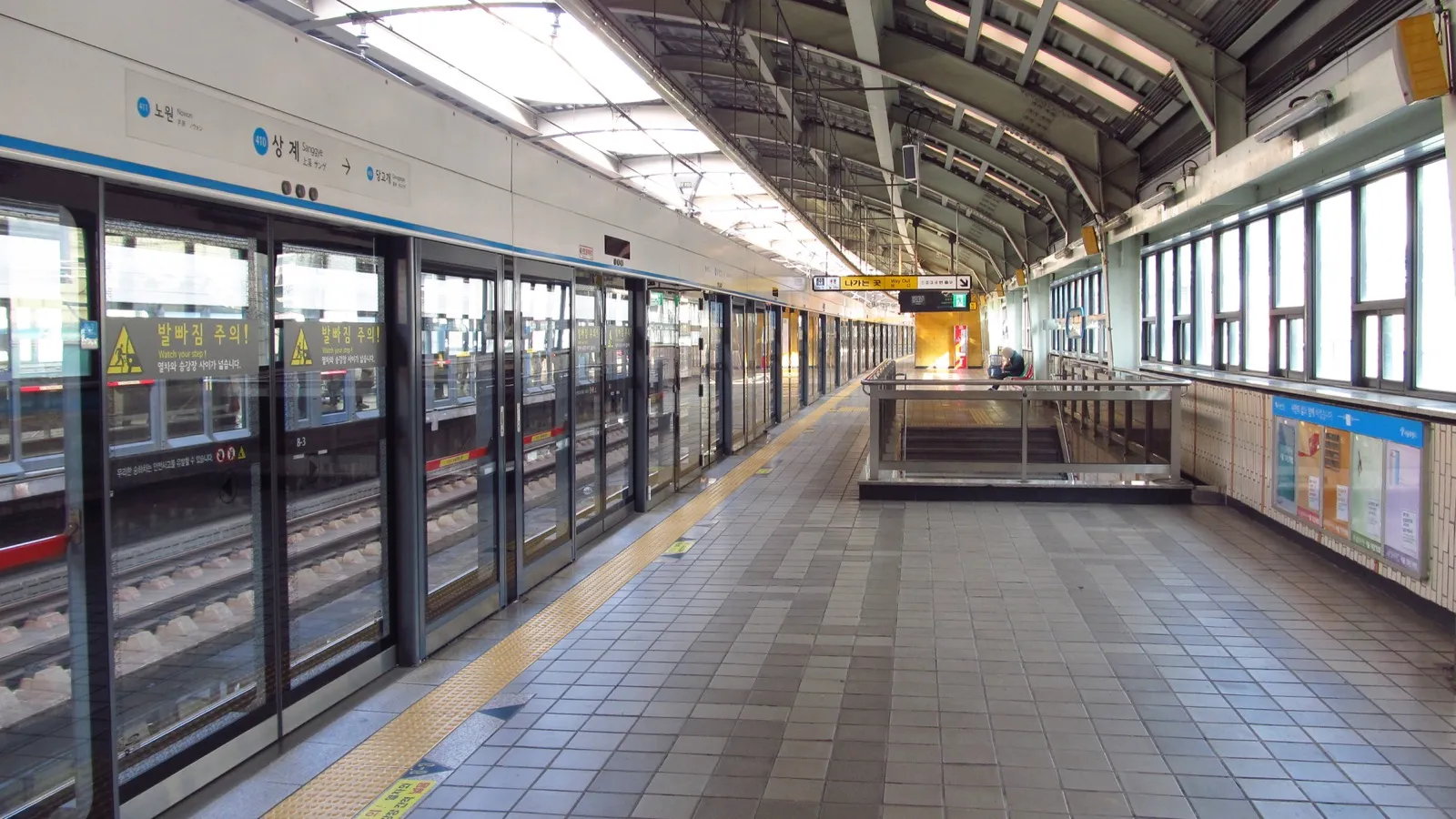
How much does a subway ride cost in Seoul?
An adult pays ₩1,550 with a transit card for any trip up to 10 km, which covers most rides across central Seoul. Seoul Metro’s fare table adds ₩100 for every 5 km from 10 to 50 km, and ₩100 for every 8 km beyond that. A 20 km ride costs ₩1,750, and a 30 km ride ₩1,950. The fare is worked out from the shortest route between the two stations you tap, so a detour doesn’t cost you more.
| Rider | Transit card, first 10 km | Single-journey ticket, first 10 km |
|---|---|---|
| Adult (19 and over) | ₩1,550 | ₩1,650 |
| Youth (13 to 18) | ₩900 | ₩1,650 (no youth discount) |
| Child (6 to 12) | ₩550 | ₩550 |
| Under 6 | Free, up to three with one adult | Free, up to three with one adult |
A new T-money card charges the adult fare. To get the youth or child fare, register the card with the rider’s date of birth at a convenience store or a subway station information center, showing the card and the rider’s ID. The discounted fare starts three business days after you register, so do it on your first day.
Two discounts are worth knowing. If you tap in with a card before 6:30 a.m., the base fare is 20% off (₩1,240 for an adult), as long as you aren’t transferring from another bus or train service. And three separately run lines add a surcharge on their own sections: the Sinbundang Line (₩700 to ₩2,200 for an adult, depending on the sections you ride), the Uijeongbu LRT (₩200) and the AREX section between Cheongna International City and Incheon Airport, which has its own fare scale.
Should I buy a single-journey ticket or a card?
Use a card. A T-money card works on the subway, buses and taxis, costs ₩100 less per ride and keeps your bus transfers free. Your own Visa or Mastercard won’t open the gates yet. Our T-money card guide covers where to buy and load a card, the 2027 plan for tapping your own card, the Apple Wallet workaround and which passes might save you money. A single-journey ticket is the fallback for a day when you’ve lost your card or only need one ride.
To buy a single-journey ticket, choose English at the bottom of the ticket machine’s screen, then “Single-Journey” on the left. Find your destination by station number (Search Route, then Search Station Number) or by the first letter of its name. Choose how many tickets you want and pay the fare plus a ₩500 deposit per ticket. Tap the ticket on the card reader on the right side of the gate. After you exit, put the ticket into the Deposit Refund Device near the gates to get your ₩500 back.
The machines take won cash. Since March 17, 2026, the newer machines at 273 stations on Lines 1 to 8 also take foreign-issued Visa and Mastercard credit and debit cards for single-journey tickets, with a service charge averaging 3.7%.
A single-journey ticket works only on the subway, with no transfer to a bus. If you lose or damage it, you lose the deposit. You can claim the deposit any time, but return the ticket straight after your ride: the cards are reused and often run short.
Each person needs their own card or ticket. The gates charge each rider by distance, so one card can’t pay for two people.
How do subway-to-bus transfers work?
With a T-money card, a subway ride and a bus ride you board within 30 minutes (60 minutes between 9 p.m. and 7 a.m.) count as one journey, priced by total distance. Tap your card when you get off the bus too, or the next ride starts a new fare. Our T-money card guide has the full rules.
How do I read line colours and station numbers?
Each line has its own colour, and the station numbers on signs are printed in that colour too. Inside a station, follow the signs and coloured strips on the walls for the line you want. Station names are signed in Korean, English and Chinese.
On Lines 1 to 9 in central Seoul, the station number starts with the line number, and the rest gives the station’s place on the line. Myeong-dong is 424 (Line 4) and City Hall on Line 2 is 201. The number is the quickest way to find your destination on a ticket machine, and it tells you which line you’re on when two stations have similar names.
Pick your platform by the next station, not the line’s end. Platform signs list the stations ahead in that direction. On Line 2, a loop through Hongik University, City Hall, Dongdaemun History & Culture Park, Jamsil and Gangnam, the inner circle (내선) runs clockwise and the outer circle (외선) anticlockwise. Naver Map tells you which one to take. On Line 9, express trains skip stations that local trains stop at, so check that your stop is an express stop before you board one.
How do I change lines?
Follow the signs in the colour of your next line. You change lines inside the station without going through the gates again.
If you tap in on the wrong platform at a station where each direction has its own gates, go back out and tap in on the right side. Seoul Metro doesn’t charge the base fare again if you tap the same card within 15 minutes at the same station, and since June 20, 2026 neither do the Korail-run lines. It works with T-money and other transit cards, not single-journey tickets, on most lines in and around Seoul. The privately run lines, such as AREX and the Sinbundang Line, are the exception.
Which exit should I take?
Use the exit number your directions give you, not just the station name. Exits are numbered, and at a big station they come up on different streets. For Gyeongbokgung Palace, get off at Gyeongbokgung Station on Line 3 and take Exit 5. For Bukchon Hanok Village, get off at Anguk on Line 3 and take Exit 2, then walk about 10 minutes. For Cheonggyecheon, take Exit 4 or 5 at Euljiro 3-ga. Our Myeongdong guide gives the exits for the shopping streets. Pick your exit number before you leave the platform, then follow the signs for it.
When do the first and last trains run?
On weekdays, the first trains at central stations leave at about 5:30 a.m. The last trains leave between about 11 p.m. and 1 a.m., depending on where they’re going. On weekends and public holidays the last trains leave about an hour earlier. Seoul Metro’s timetables for two central stations show the pattern, and Naver Map gives the times for your own station on the day:
| Station | First train, weekdays | Last train, weekdays | Last train, weekends and holidays |
|---|---|---|---|
| City Hall, Line 2 | 5:32 a.m. (outer circle), 5:39 a.m. (inner circle) | 12:51 a.m. (outer, to Hongik Univ.), 12:58 a.m. (inner, to Euljiro 1-ga) | 11:51 p.m. (outer), 11:58 p.m. (inner) |
| Myeong-dong, Line 4 | 5:33 a.m. (north, to Jinjeop), 5:43 a.m. (south, to Oido) | 12:50 a.m. (north, to Hansung Univ.), 12:57 a.m. (south, to Seoul Station) | 11:48 p.m. (north), 11:57 p.m. (south) |
The last train out of a station often runs only part of the line. At Myeong-dong on a weekday night, the 12:57 a.m. southbound train goes only as far as Seoul Station. The last train through to Oido leaves at 11:08 p.m. When you’re out late, look up the last train to your own station, not just the last train on your line. If you miss it, our taxi guide explains how to get a cab late at night.
When is rush hour on the Seoul subway?
Avoid weekdays from about 7 to 10 a.m. and 5 to 8 p.m., when trains are packed. Seoul Metro’s usual peak service runs from 7 to 9 a.m. and 6 to 8 p.m., and news reports say it extended peak service on Lines 2 and 7 to 7 to 10 a.m. and 5 to 8 p.m. in April 2026. Line 7 is very crowded at commuting times. With big luggage, ride mid-morning, mid-afternoon or after 8 p.m.
Which seats should I leave empty, and what else is expected?
Leave the seats at each end of the car empty unless you’re elderly, disabled, pregnant or travelling with a small child. On Lines 1 to 8, the seats at both ends of each car are for passengers with mobility needs. In the middle row of seven seats, the two end seats are kept for pregnant women. The end seats are yellow and the pregnancy seats pink. Leave the pink seats free even if no one nearby looks pregnant: they are also meant for women in early pregnancy.
A few more habits locals expect:
- Let people off first. Stand to the side of the doors, then board after everyone has got off.
- Backpacks in front or on the floor. A bulky bag on your back takes up the space of another person in a crowded car.
- No open drinks or strong-smelling food. Finish your coffee before you board.
- Pets travel in a closed carrier, fully covered so the animal can’t be seen.
For an emergency in a station, use the emergency telephone on the platform or call the Seoul Metro Customer Service Center at 1577-1234.
What if I lose something or my card runs out?
For things left on Lines 1 to 8, call 1577-1234 or go to the lost-and-found center for your line: City Hall (Lines 1 and 2, 02-6110-1122), Chungmuro (Lines 3 and 4, 02-6110-3344) or Wangsimni (Lines 5 and 8, 02-6311-6765; Lines 6 and 7, 02-6311-6766). After hours, call 1577-1234 or ask at the nearest station.
If your card balance is too low when you try to leave, use the fare adjustment machine next to the exit gates. It tops up both T-money cards and single-journey tickets.
How do I get from the airport to the subway?
From Incheon Airport, the AREX all-stop train connects with the subway at eight stations, including Gimpo Airport, Hongik University, Gongdeok and Seoul Station, and you pay with the same T-money card. Our Incheon Airport to Seoul guide compares it with the AREX express, the airport limousine buses and taxis. Gimpo Airport is on Line 5 and Line 9 as well as AREX.
Which app should I use?
Use Naver Map. It gives transit routes in English with real-time arrivals and directions for where to board and get off, plus an English subway map with first and last train times. Our Naver Map and Kakao T guide explains how to set it up in English, and why Google Maps falls short in Korea.
More Practical Seoul
Practical Seoul
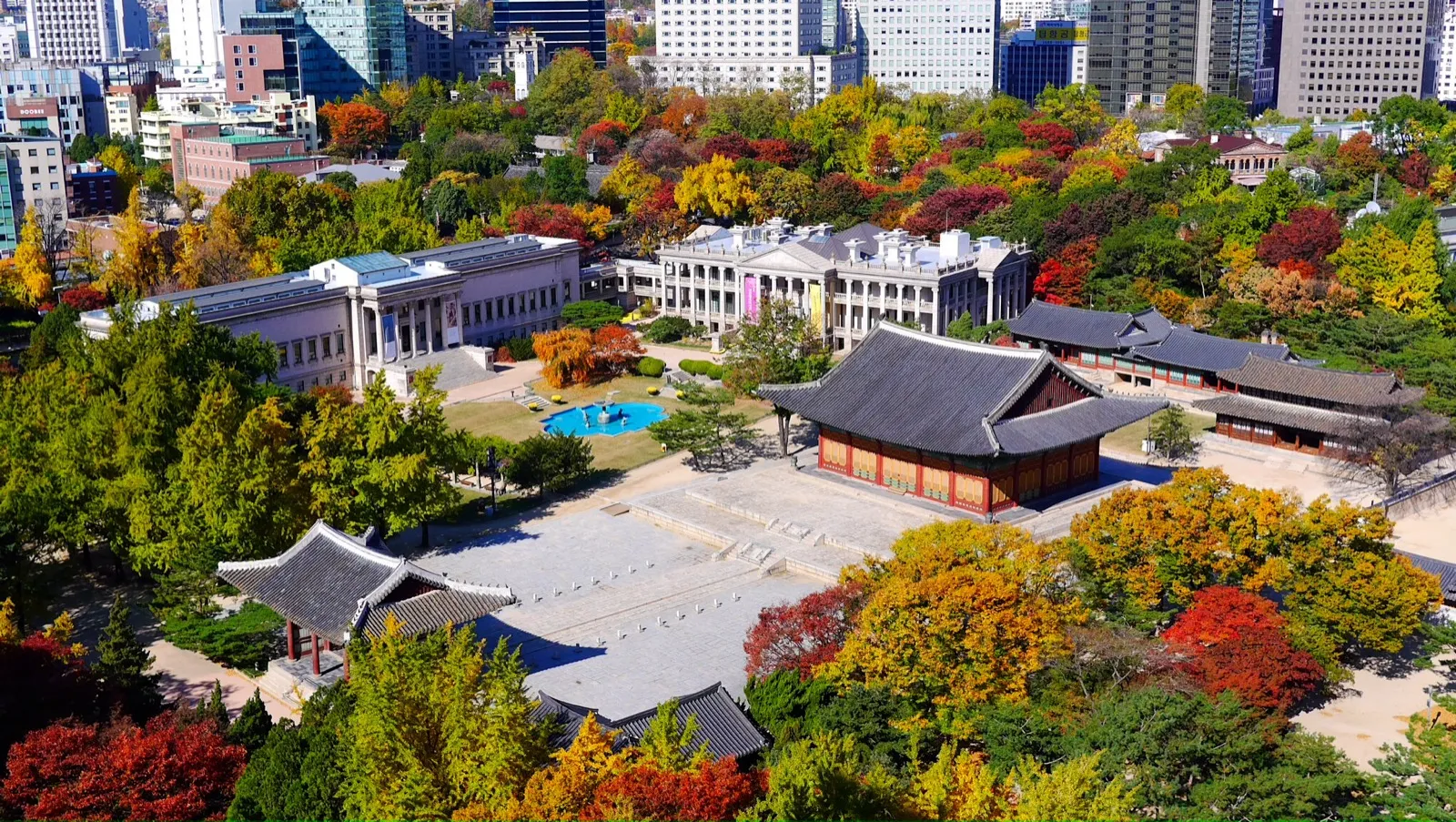
Seoul Autumn Foliage: When It Peaks and Where to Go
When Seoul's leaves turn this year, and a one-day route through free palaces and ginkgo streets you can reach by subway.
Practical Seoul
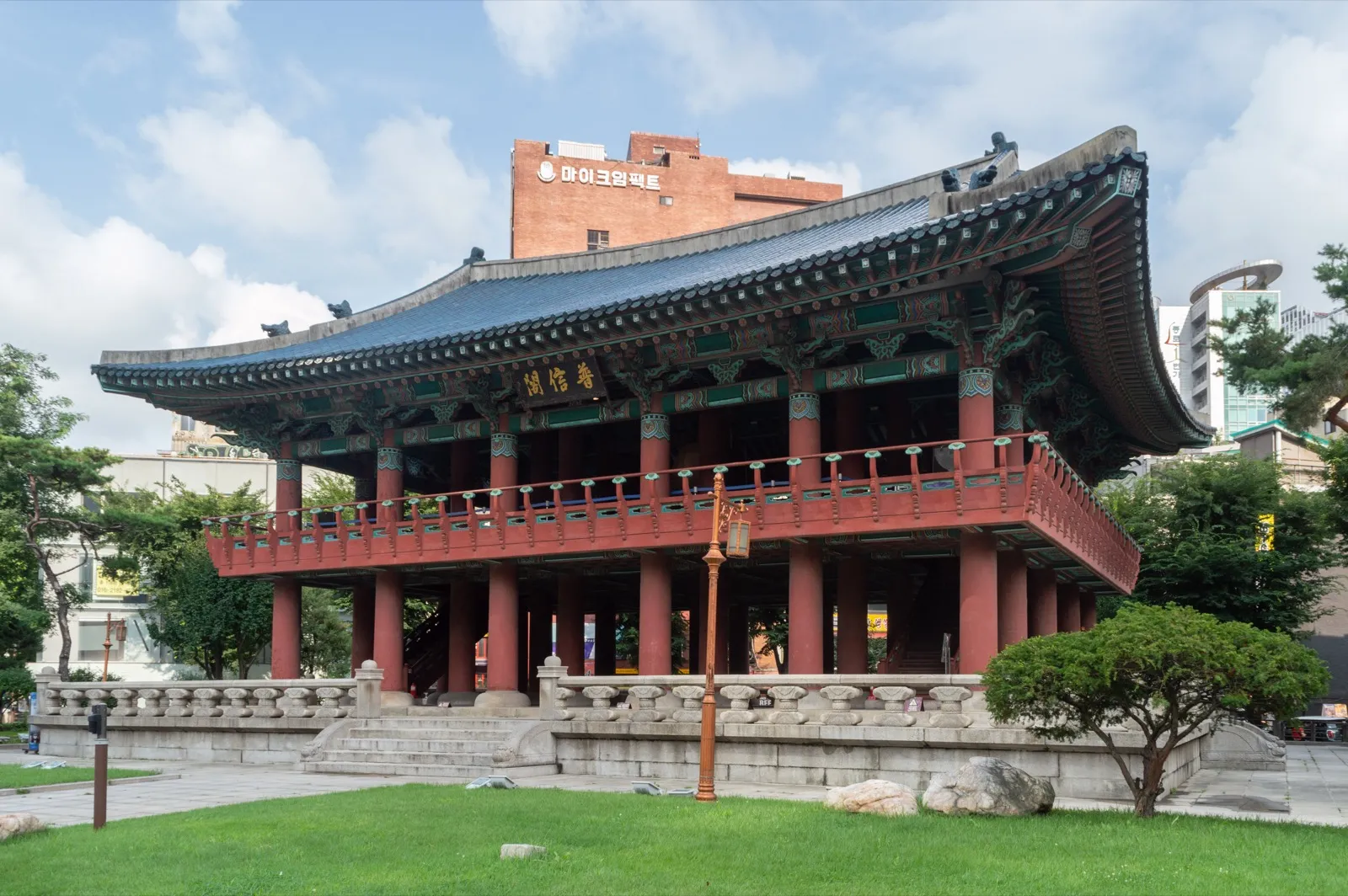
Seoul in December 2026: Lanterns, a ₩1,000 Ice Rink and the Midnight Bell
The Seoul Winter Festival opens on December 11 with lanterns on Cheonggyecheon and a Christmas market at Gwanghwamun, the Seoul Plaza ice rink opens on December 18, Christmas Day is a Friday holiday, and Bosingak's bell rings 33 times at midnight on December 31. Dates, hours, prices and how to get home after the countdown.
Practical Seoul
Seoul in November 2026: Free Palaces, Peak Foliage and CSAT Day
The palaces and Jongmyo are free until November 15, the leaves on Bukhansan have been at peak since October 26, and flights will be adjusted during the exam's English listening test on November 19. Dates, hours and the big exhibitions on.
Steve OH edits Seoulpin. Steve runs Standardpin, a Seoul-based web studio that also builds websites for clinics; that work has no effect on whether or how any clinic appears here. Articles are drafted with AI assistance from the sources listed and reviewed by Steve before publishing. How we work