Jeonju Hanok Village in a Day from Seoul
Jeonju works as a day trip: the KTX takes about an hour and 40 minutes each way. Which trains and buses to take, how to reach the Hanok Village from the station, what Gyeonggijeon and the other sights charge and when they close, and the last trains back.
Yes, Jeonju works as a day trip from Seoul. The KTX from Yongsan Station reaches Jeonju Station in about 1 hour 40 minutes, and a standard adult seat costs ₩31,600. From the station, city bus 119 runs to the Jeondong Cathedral, Hanok Village stop in about 25 minutes, or a taxi costs about ₩7,000–8,000. Leave Seoul by 9 a.m. and take a train back between about 7:30 and 9:45 p.m., and you get at least eight hours in Jeonju: enough for the Hanok Village, Gyeonggijeon Shrine (₩3,000 for adults), Jeondong Catholic Cathedral and the view from Omokdae.
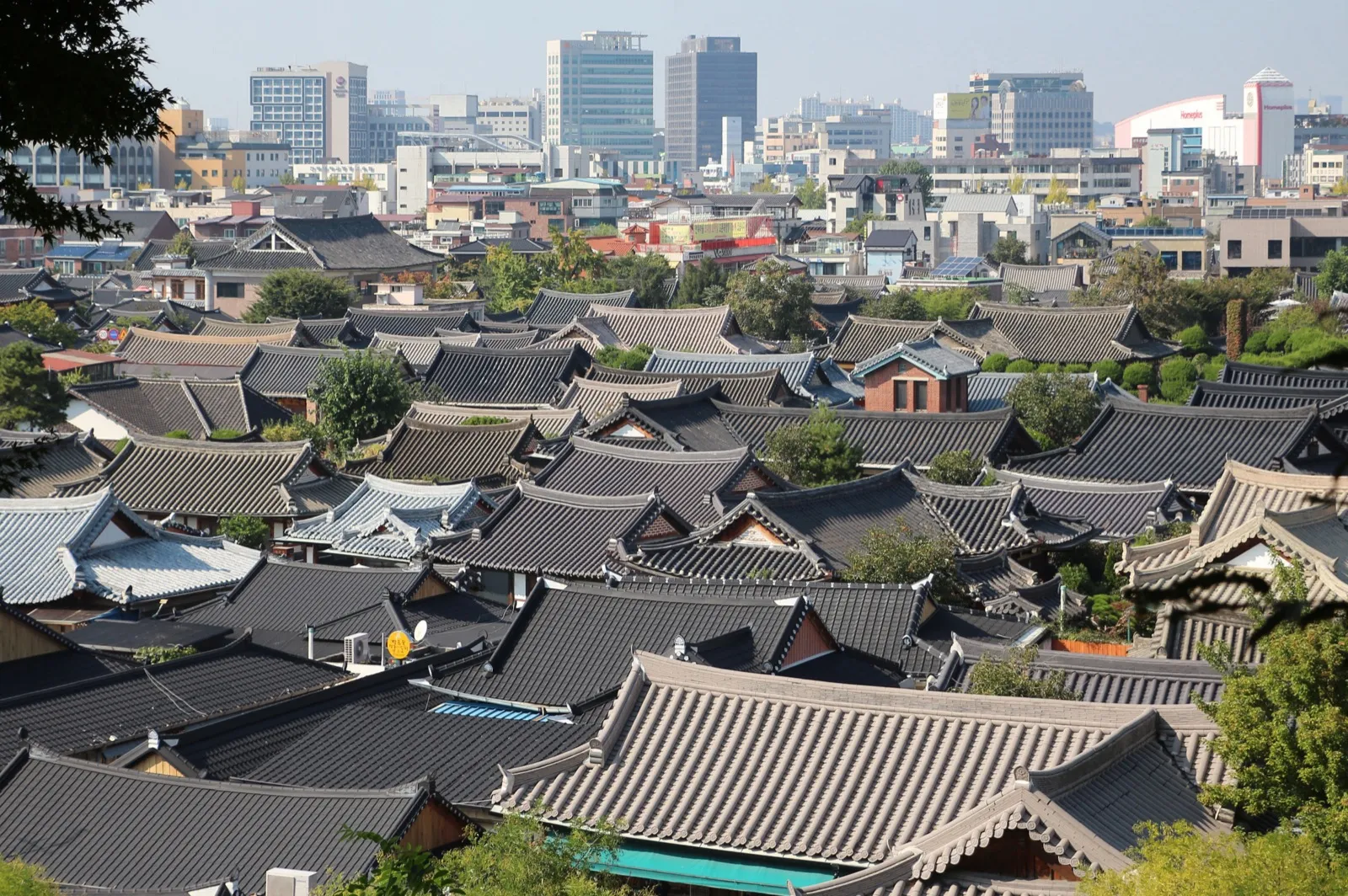
Checked against Korail, KOBUS, Jeonju city and the Korea Tourism Organization on October 16, 2026; times in the suggested plan are our own allowances.
How do I get from Seoul to Jeonju by KTX?
Take a KTX from Yongsan, Seoul or Suseo Station to Jeonju Station; Yongsan has the most departures. Since September 1, 2026, SRT trains from Suseo have run as KTX under Korail, the government announced, so all high-speed trains to Jeonju now appear in one search in the KORAIL+ app.
Korail’s fare table and timetable from September 1, 2026 give these standard adult fares to Jeonju:
| From | Standard seat | First class | Daily trains to Jeonju |
|---|---|---|---|
| Yongsan | ₩31,600 (₩31,000 on trains via Seodaejeon) | ₩45,800 (₩45,000 via Seodaejeon) | About 20, the first at 5:08 a.m. |
| Seoul Station | ₩31,900 (₩31,300 via Seodaejeon) | ₩46,300 (₩45,400 via Seodaejeon) | Some trains start here and call at Yongsan 7 to 12 minutes later |
| Suseo | ₩30,400 | ₩44,100 | 4, at 6:39 a.m., 10:20 a.m., 1:09 p.m. and 7:08 p.m. |
Most trains take 1 hour 28 minutes to 1 hour 48 minutes from Yongsan. A few run via Seodaejeon and take 2 hours 20 minutes to 2 hours 30 minutes, for example the 7:13 a.m. from Yongsan, which arrives at 9:41. If a train shows a journey of over two hours when you book, that is the reason; for a day trip, pick a faster one.
Morning trains that run every day and suit a day trip:
| Departs | Arrives Jeonju |
|---|---|
| Seoul 6:44 a.m., Yongsan 6:53 a.m. | 8:40 a.m. |
| Suseo 6:39 a.m. | 8:22 a.m. |
| Yongsan 8:40 a.m. | 10:21 a.m. |
| Seoul 9:45 a.m., Yongsan 9:53 a.m. | 11:35 a.m. |
| Suseo 10:20 a.m. | 12:06 p.m. |
How do foreign visitors book the KTX to Jeonju?
Book on Korail’s website or the KORAIL+ app; the ticketing guide says sales open at 7 a.m. two months before the travel date and you pay by credit card. Jeonju city’s transport guide adds that Korail’s foreign-language booking needs only your passport details and an email address, with no Korean phone number, and takes Visa and Mastercard cards issued abroad.
The same city guide warns that Jeonju trains sell out on weekends, public holidays and in festival months, especially May and September to October, and that often only standing tickets are left at the station. Book the outbound and return trains together as soon as your date is fixed, because the return train is what limits your day.
Is the bus from Seoul to Jeonju cheaper than the KTX?
Yes: most buses are deluxe (udeung) at ₩23,900, still well below the KTX’s ₩31,600, and only about six a day from Seoul are standard class at ₩16,400, the first at 9:30 a.m. The bus takes about 2 hours 40 minutes instead of 1 hour 40. Express buses leave Central City Terminal in Seoul (the Honam line side of the Seoul Express Bus Terminal) for Jeonju Express Bus Terminal, and KOBUS gives 2 hours 40 minutes as its estimate for the 202.6 km. Buses run all day: KOBUS listed 125 departures from Seoul and 120 from Jeonju for October 17, 2026, the first from Seoul a deluxe bus at 5:30 a.m.
| Bus class | Adult fare | Departures from Seoul on October 17, 2026 |
|---|---|---|
| Deluxe (udeung) | ₩23,900 | 78 |
| Premium | ₩31,000 | 30 |
| Express (standard) | ₩16,400 | 6, at 9:30 a.m., 11:35 a.m., 2:45 p.m., 5:10 p.m., 7:10 p.m. and 9:20 p.m. |
| Night deluxe (from 10 p.m.; the last leaves at midnight) | ₩28,600 | 8 |
| Night premium (same hours) | ₩37,200 | 3 |
From Jeonju, standard-class buses to Seoul leave at 9:40 a.m., 12:30 p.m., 2:20 p.m., 4:30 p.m. and 7:30 p.m., and one night standard bus costs ₩19,600; the rest are deluxe or premium.
Jeonju city’s guide says the KOBUS website accepts only Korean payment methods (domestic bank transfer and Korean mobile payment), so buy at the terminal counter or kiosk, which take foreign credit cards and won. The bus stops once at a motorway service area for about 15 minutes. Traffic can stretch the bus well past 2 hours 40 minutes, so for a day trip we suggest the train, at least for the return.
How do I get from Jeonju Station to the Hanok Village?
Take city bus 119 from the Jeonju Station Cheotmajung-gil (전주역첫마중길) stop at the station and get off at Jeondong Cathedral, Hanok Village (전동성당.한옥마을), 14 stops later. The Hanok Village’s directions put the ride at about 25 minutes, or ₩7,000–8,000 by taxi (calling one with Kakao T). They list ten routes from the Jeonju Station bus stop to the cathedral stop: 112, 79, 508, 536, 542, 545, 546, 101, 119 and 999. Any bus showing 전동성당 on its route gets you there, and 119 is the most frequent of the three below.
Of those routes, the Jeonju Transportation Information Center shows these three stopping at both:
| Route | Runs (at its first stop) | Interval |
|---|---|---|
| 119 | 5:50 a.m. to 10 p.m. | 10–29 minutes |
| 79 | 6 a.m. to 10:20 p.m. | 20–49 minutes |
| 999 | 6:22 a.m. to 10:07 p.m. | 35–90 minutes |
Route 119 also runs in the other direction, from the Jeondong Cathedral stop to Jeonju Station, so it covers the return. An adult fare is ₩1,650 by transport card and ₩1,700 in cash, according to the city’s fare announcement. Your T-money card works, as long as it has credit; a Seoul Climate Card pass does not (see our T-money guide). Jeonju’s transport card page says to board at the front door, tap again when you get off at the back, and that tapping off gives you up to two free transfers within 30 minutes. For live bus times on your phone, use Naver Map (our guide).
If you come by express bus, routes 79 and 999 stop at Express Bus Terminal, Bulgyo Hoegwan (고속버스터미널.불교회관) on their way to the Hanok Village. The city puts that ride at about 15 minutes, or ₩5,000–6,000 by taxi.
Where can I leave my bag in the Hanok Village?
In lockers at the tourist information centres in and next to the village, which the city lists with their lockers:
| Centre | Address | Lockers | Charge |
|---|---|---|---|
| Jeonju Tourist Information Center | 69 Girin-daero, basement | 54 | ₩500, refunded when you collect your bag |
| Hanok Village Tourist Information Center | 99 Girin-daero, behind the building | 23 | ₩500, refunded |
| Gyeonggijeon Traveler’s Lounge | 110 Jeondongseongdang-gil, ground floor | 17 | Free |
All three centres are staffed daily from 9 a.m. to 6 p.m., with a break from noon to 1 p.m., and offer English, Chinese and Japanese interpreting. Each locker can be used once a day for up to 24 hours; they go first come, first served and run out early on weekends. The Gyeonggijeon lounge’s lockers are inside the building, which opens 9 a.m. to 6 p.m.; if you are leaving after 6, use the lockers behind the Hanok Village centre or collect your bag first.
What are Gyeonggijeon Shrine’s opening hours and fees?
Gyeonggijeon is open daily from 9 a.m. to 7 p.m. through October and to 6 p.m. from November to February, with last entry an hour before closing; adults pay ₩3,000. The shrine is at 44 Taejo-ro, and the city’s page gives the hours for the whole year:
| Months | Open | Last entry |
|---|---|---|
| March to May, September to October | 9 a.m. to 7 p.m. | 6 p.m. |
| June to August | 9 a.m. to 8 p.m. | 7 p.m. |
| November to February | 9 a.m. to 6 p.m. | 5 p.m. |
Youths and military pay ₩2,000 and children ₩1,000 (less for Jeonju and Wanju residents). The Korea Tourism Organization lists children 6 and under and adults 65 and over as free. Admission is free for everyone on the last Wednesday of the month (Culture Day), and only the last Wednesday, even though the national Culture Day has been every Wednesday since April 2026. On the fourth Saturday, Jeonju’s Hanbok Day, the city gives 50% off, a discount the Jeonju City Council describes as being for visitors wearing hanbok. If you plan to rent hanbok, our Gyeongbokgung hanbok guide covers how to judge a rental shop.
Gyeonggijeon was built in 1410 to hold the portrait of King Taejo, founder of the Joseon dynasty, and was rebuilt in 1614 after the Japanese invasions (Visit Jeonju). The grounds include the main hall, the Jeonju archive that stored the Annals of the Joseon Dynasty, and the Royal Portrait Museum, which is free with a Gyeonggijeon ticket and whose only regular closing day is January 1.
Is Gyeonggijeon’s main hall open now?
No: the main hall (jeongjeon) area inside the inner gate is closed until December 17, 2026, while its painted dancheong exterior is redone, and the Royal Portrait Museum’s notice says the end date may be extended. There is no screen around the work, so you can watch the repairs from outside the closed area, and the rest of the grounds and the Royal Portrait Museum are open as normal.
Is there a free English tour in Jeonju Hanok Village?
Yes. The city’s daily walking tours need no reservation, cost nothing apart from admission where a site charges, and last about an hour. Two of the daily English tours start at Gyeonggijeon, and some of their sessions are also given in Chinese and Japanese:
| Tour | English | Also in Chinese and Japanese | Meeting point |
|---|---|---|---|
| Gyeonggijeon history tour | 11 a.m., 2 p.m. | 11 a.m., 2 p.m. | Inside Gyeonggijeon’s main gate |
| Hanok Village alleys tour (via Jeondong Cathedral) | 11 a.m., 3 p.m. | 3 p.m. | In front of the Gyeonggijeon ticket office |
The city notes that tours can be stopped or changed during weather warnings such as heavy rain or heat. For the Gyeonggijeon tour you still need a ₩3,000 ticket. Its listed route passes through the inner gate to the main hall, inside the area closed until December 17, 2026, so the tour cannot follow that part while the work lasts. The alleys tour goes from the ticket office to Jeondong Cathedral and on through the village, outside the closed area.
Can you go inside Jeondong Catholic Cathedral?
Yes, between 9 a.m. and 5 p.m., the hours on the city’s cathedral page, which notes they can change with the parish’s needs; the page lists no admission charge. It is a working parish church at 51 Taejo-ro. Within visiting hours, Mass is at 11 a.m. Tuesday to Friday, 4 p.m. on Saturday, and 9 a.m. and 10:30 a.m. on Sunday; go in outside those times.
The cathedral stands on the site where Korea’s first Catholic martyrs were executed in 1791. It was built from 1908 to 1914 to a design by Father Poisnel, and its foundations reuse stones from Jeonju’s demolished city wall.
Where can you see the Hanok Village rooftops from above?
From Omokdae, a low hill about 500 metres southeast of Gyeonggijeon at 55 Girin-daero, open all year. Neither the city’s page nor the Korea Tourism Organization lists an admission charge. Yi Seong-gye, later King Taejo, held a victory banquet here in 1380, and a stone carved with Emperor Gojong’s calligraphy was set up in 1900. A footbridge leads on to Imokdae. The city describes both as places to see the lit-up village after dark.
When is Jeonju Hyanggyo open?
9 a.m. to 6 p.m. March to October and 10 a.m. to 5 p.m. November to February, closed Mondays (and on the Tuesday when Monday is a public holiday) (Visit Jeonju). The old Confucian school stands at 139 Hyanggyo-gil on the village’s east side, and is worth adding in autumn, when its ginkgo trees turn gold.
What should you eat in Jeonju?
Jeonju bibimbap is the city’s signature dish, and many of the restaurants serving it are around the Hanok Village. It uses rice cooked in beef bone stock, Jeonju bean sprouts, hwangpo-muk (yellow mung bean jelly) and traditionally aged gochujang, with more than 30 ingredients in one bowl (Visit Jeonju). Many bibimbap restaurants are also around City Hall and the city’s three main markets.
How do you plan a day trip to Jeonju from Seoul?
Our suggested plan uses daily trains and the 3 p.m. English alleys tour. On Mondays the Hyanggyo is closed (and on the Tuesday after a Monday public holiday), so spend the 11 a.m. slot on Omokdae and Imokdae instead.
| Time | Plan |
|---|---|
| 8:40 a.m. | KTX from Yongsan, arriving Jeonju 10:21 a.m. |
| 10:30 a.m. | Bus 119 to the Jeondong Cathedral stop |
| 11:00 a.m. | Omokdae for the view over the roofs, then Jeonju Hyanggyo |
| 12:30 p.m. | Lunch; Jeonju bibimbap if you want the local dish |
| 2:00 p.m. | Gyeonggijeon grounds on your own (main hall area closed until December 17, 2026) and the Royal Portrait Museum |
| 3:00 p.m. | English alleys tour from the Gyeonggijeon ticket office, via Jeondong Cathedral (about an hour), then the alleys at your own pace |
| 6:15 p.m. | Bus 119 back to Jeonju Station (buses come every 10–29 minutes and the ride is about 25), or a taxi by 6:45 p.m. |
| 7:28 p.m. | KTX to Yongsan (9:15 p.m.) and Seoul Station (9:24 p.m.) |
If your bag is in the Gyeonggijeon lounge, collect it before 6 p.m. From November to February, Gyeonggijeon’s last entry is 5 p.m., so don’t push it past mid-afternoon.
If you want Omokdae after dark, book a later daily train back:
| Leaves Jeonju | Arrives |
|---|---|
| 7:57 p.m. | Suseo 9:44 p.m. (last train to Suseo) |
| 8:46 p.m. | Yongsan 10:36 p.m., Seoul 10:46 p.m. |
| 9:43 p.m. | Yongsan 11:31 p.m. |
| 11:11 p.m. | Yongsan 12:46 a.m. (last train) |
We’d book no later than the 9:43 p.m., so the 11:11 p.m. is your fallback if you miss it. The 11:11 p.m. means a taxi to the station and another from Yongsan (Kakao T guide).
What is Jeonju Hanok Village?
Jeonju Hanok Village is Korea’s largest traditional hanok district and the only one in the middle of a city, according to the village’s own page: 735 of its 947 buildings are hanok, in Pungnam-dong and Gyo-dong, and the district grew up from 1910.
If Jeonju feels like too long a day, Seoul has its own hanok district in Bukchon (visiting hours and the red-zone rules), and Suwon is a closer day trip (Suwon Hwaseong).
More Day Trips
Day Trips
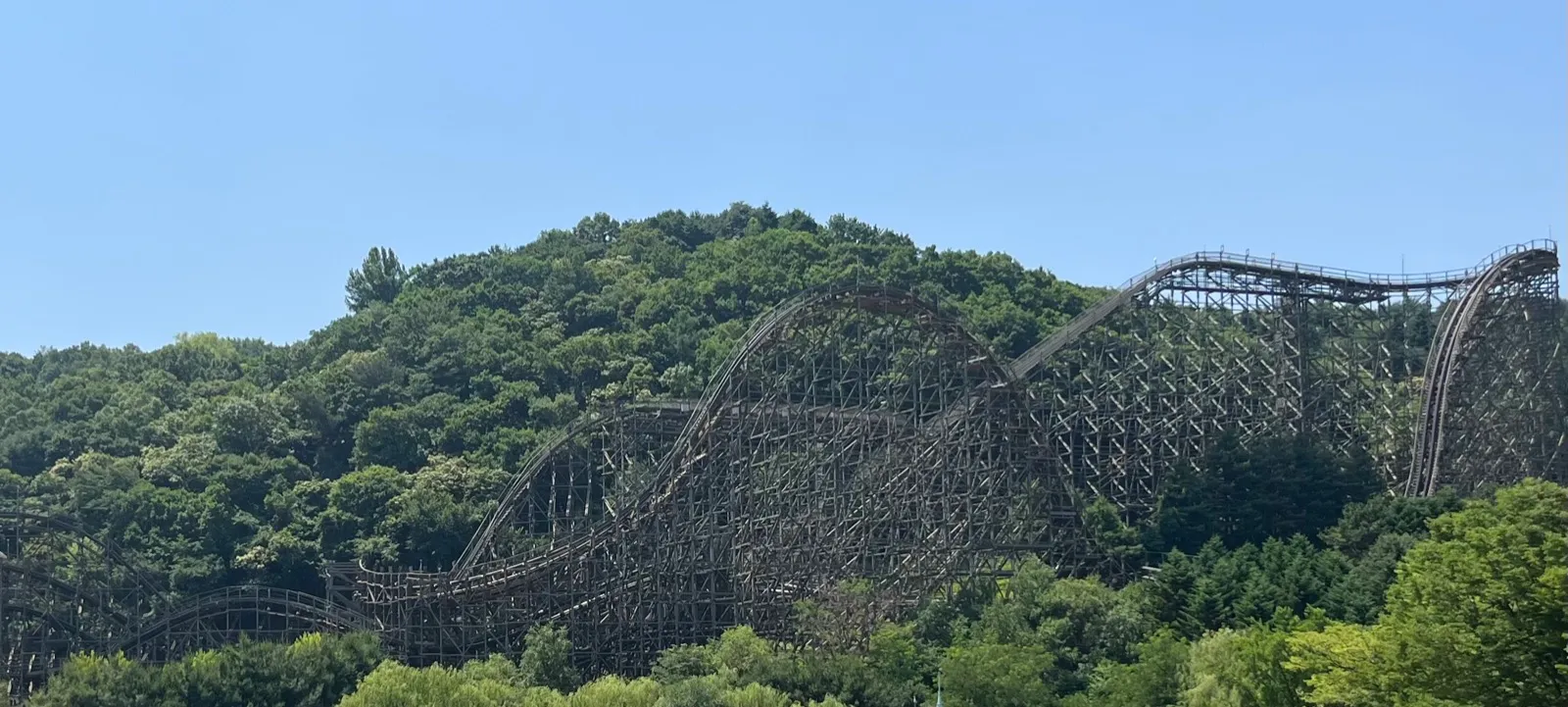
Everland as a Day Trip from Seoul
Which red bus to take from Gangnam, Jamsil or Seoul Station, what a day pass costs on Everland's page for international visitors, how the app's Smart Queue works, and how to get back to Seoul after the fireworks.
Day Trips
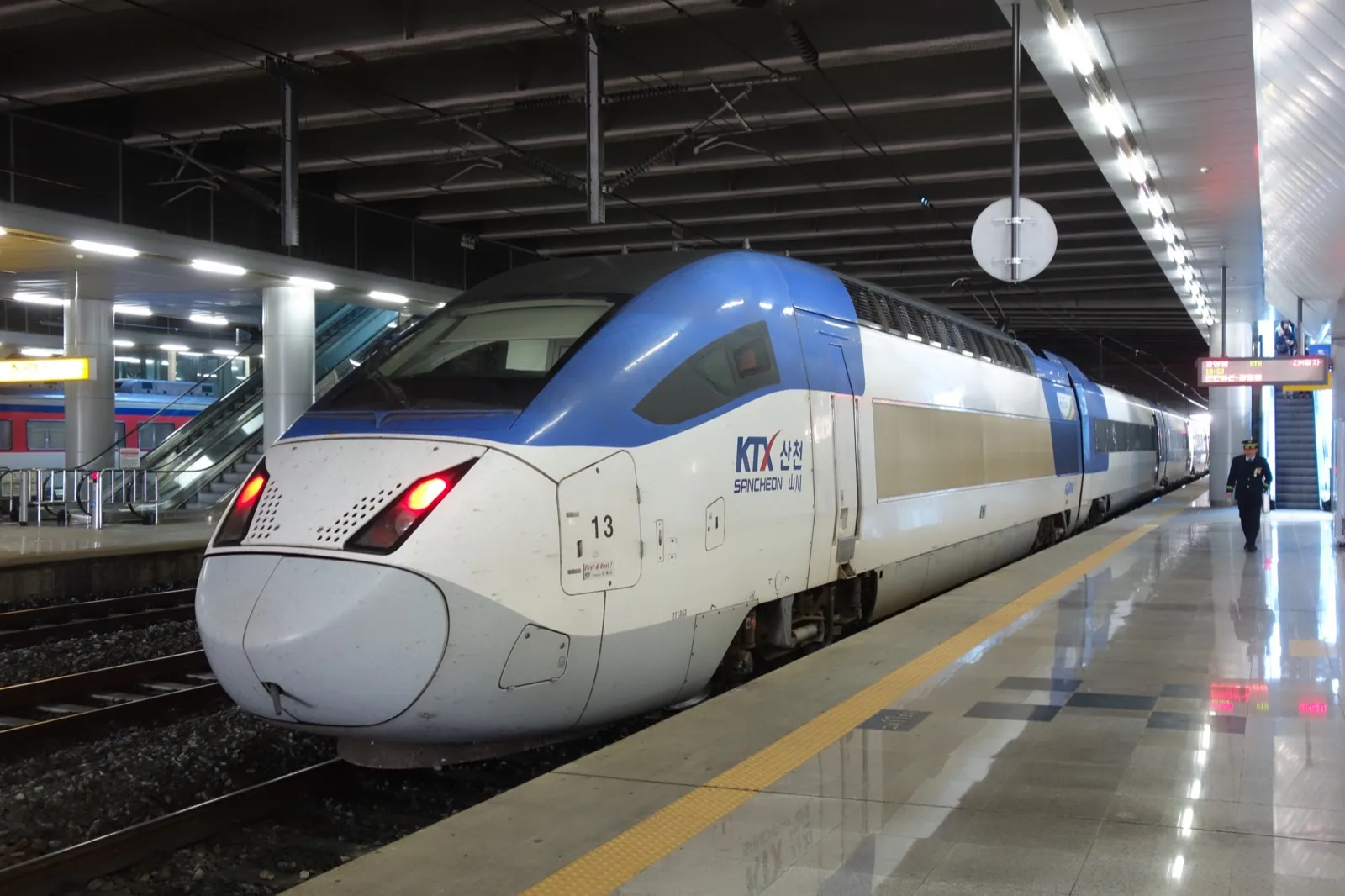
Seoul to Busan by KTX in a Day
Busan works as a day trip from Seoul: the KTX takes about 2 hours 20 minutes to 2 hours 50 minutes each way. Which station to leave from, what a seat costs, how to book as a foreign visitor, whether the KORAIL PASS pays off, the last trains back, and what you can reach in Busan by metro.
Day Trips
A Suwon Hwaseong Day Trip from Seoul
Suwon is about an hour from Seoul on Line 1 for ₩2,150, or 30 to 40 minutes on an intercity train. The fortress walls are free and the palace is ₩2,000; a tour tram, traditional archery and a tethered balloon (closed November to January) fill the rest of the day.
Steve OH edits Seoulpin. Steve runs Standardpin, a Seoul-based web studio that also builds websites for clinics; that work has no effect on whether or how any clinic appears here. Articles are drafted with AI assistance from the sources listed and reviewed by Steve before publishing. How we work