A Suwon Hwaseong Day Trip from Seoul
Suwon is about an hour from Seoul on Line 1 for ₩2,150, or 30 to 40 minutes on an intercity train. The fortress walls are free and the palace is ₩2,000; a tour tram, traditional archery and a tethered balloon (closed November to January) fill the rest of the day.
Suwon is about an hour from central Seoul. A Line 1 train from Seoul Station takes about 62 minutes to Suwon Station (53 on an express) and costs ₩2,150 with a transit card; an ITX-Saemaeul or Mugunghwa train from Seoul Station or Yongsan takes 31 to 40 minutes for ₩4,800 or ₩2,600 to ₩2,700. From Suwon Station Exit 4, city bus 11 or 13 runs to the Hwaseong Haenggung, Suwon Seongji stop. The fortress walls are free. Hwaseong Haenggung, the temporary palace inside them, costs ₩2,000 for an adult and is open 9 a.m. to 6 p.m.; arrive by 5 p.m. to be sure of getting in. See the palace in the morning, eat galbi or fried chicken at lunch and spend the afternoon on one section of the wall, not the whole circuit.
How to get from Seoul to Suwon: times and fares
Line 1 is the simplest way and an intercity train the fastest; from Gangnam, take the bus.
| Route | From | Time to Suwon Station | Adult fare |
|---|---|---|---|
| Line 1 | Seoul Station | about 62 min; express about 53 min | ₩2,150 (transit card) |
| Line 1 | Jonggak | about 66 min | ₩2,250 (transit card) |
| ITX-Saemaeul, ITX-Maeum or Saemaeul | Seoul Station or Yongsan | 31 to 40 min | ₩4,800 |
| Mugunghwa | Seoul Station or Yongsan | 32 to 40 min | ₩2,700 from Seoul Station, ₩2,600 from Yongsan |
| KTX | Seoul Station | 34 to 40 min | ₩7,500 |
Line 1 splits at Guro, and trains for Incheon or Dongincheon turn west there and never reach Suwon. Board a train showing Cheonan, Sinchang, Byeongjeom or Seodongtan; all of them stop at Suwon, and the faster express trains run to Cheonan or Sinchang. Korail’s Line 1 weekday timetable lists every departure. The fares above assume a T-money or other transit card; our T-money guide covers buying and topping one up.
Intercity trains save 20 to 30 minutes but need a ticket for a named train, booked the same way as a KTX (see our Busan day trip); the intercity timetable shows which trains stop at Suwon. Skip the KTX: only a few a day stop at Suwon, and from November 1 they take as long as an ITX-Saemaeul and cost ₩7,500.
From Gangnam, red direct-seat bus 3000 leaves from near Gangnam Station Exit 5 and runs straight to the Paldalmun stop, about five minutes’ walk from the office of the Suwon Cultural Foundation, which runs the palace. From Sadang, take red bus 7000 or 7001 to the Kyonggi University back gate, Suwon Museum stop and change to bus 700-2, 7-2, 60 or 1007 for the Hwaseong Haenggung, Yeomingak stop. The red buses charge ₩3,200 for an adult, by card or in cash.
How to get from Suwon Station to Hwaseong Haenggung
Take city bus 11 or 13 from Exit 4, in front of Novotel, to Hwaseong Haenggung, Suwon Seongji, then walk about five minutes. Keep the stop name 화성행궁, 수원성지 on your phone; for a map app, use the foundation’s office address, 11 Haenggung-ro, Paldal-gu, Suwon. From Exit 7, across the road, buses 60, 700-2, 7 and 7-2 run to the Hwaseong Haenggung stop.
How much Hwaseong costs and when the palace is open
The fortress is free and open around the clock every day; because it is an open site, you can walk it at night too. The palace is paid, and free fortress entry does not include it.
| Ticket | Adult | Youth or military | Child |
|---|---|---|---|
| Hwaseong Haenggung (with Hwaryeongjeon) | ₩2,000 | ₩1,500 | ₩1,000 |
| Integrated ticket: Haenggung, Suwon Hwaseong Museum, Suwon Museum | ₩4,000 | ₩2,500 | ₩1,000 |
The palace is open 9 a.m. to 6 p.m. every day of the year. Be at the gate by 5 p.m.: the foundation’s Korean page stops admission an hour before closing, though its English fee page says 5:30 p.m.
Palace admission is free if you wear hanbok, and on Culture Day, the last Wednesday of each month.
What Hwaseong Fortress and Haenggung are
Hwaseong Fortress was built from 1794 to 1796 under King Jeongjo and was inscribed on UNESCO’s World Heritage List in 1997. Its circuit measures 5,744 metres. The east is on flatter ground; the west climbs over Paldalsan.
Hwaseong Haenggung is a separate site inside the fortress: a temporary royal residence used during Jeongjo’s visits to his father’s tomb, which also served as an administrative office when the king was away.
What to do at Hwaseong besides walking the wall
The foundation runs a tour tram and an archery range at Yeonmudae, the fortress’s eastern command post, and a private operator flies a tethered helium balloon near Changnyongmun gate.
| Activity | Starts at | Hours | Adult fee | Not running |
|---|---|---|---|---|
| Hwaseong Eocha tour tram, about 30 min | Yeonmudae | departures every 20 min, 9:40 a.m. to 5 p.m.; none between 11:40 a.m. and 1 p.m. | ₩6,000 | Mondays; rain or snow |
| Traditional archery, 10 arrows | Yeonmudae | sessions every 30 min, 9:30 a.m. to 5:30 p.m. (5 p.m. from November to February); none from noon to 1 p.m. | ₩3,000 | rain or snow |
| Flying Suwon balloon | near Changnyongmun gate | weekdays 1 to 9:30 p.m.; weekends and public holidays 11 a.m. to 9:30 p.m. | ₩24,000 | strong wind or bad weather; closed November 2026 to January 2027 |
The Hwaseong Eocha is a road train styled on a royal carriage. It loops from Yeonmudae past Hwahongmun, Janganmun, Hwaseomun and Maehyanggyo and back, with recorded commentary in Korean. You can get off at Hwahongmun, Hwaseomun or Maehyanggyo, but you cannot board again; getting off at Hwaseomun leaves you on the western section of the wall, ready to walk on. Each departure has 36 seats. You can book online for dates up to the end of the following month, and seats left over go on sale at the Yeonmudae ticket office on the day. An online booking is not a ticket: collect a paper ticket at the Yeonmudae window before your departure time. Youth and military riders pay ₩3,500 and children from 36 months ₩2,000.
Archery at Yeonmudae takes place where King Jeongjo’s guard trained. A session is a short explanation, a lesson in stance and 10 arrows at a bear target, about 15 minutes in all, for up to 25 people aged 7 and over.
Flying Suwon rises 60 to 150 metres depending on the weather. At weekends and on public holidays tickets are sold only on site, you board in the order you bought, and sales can close early when the queue is long. Middle and high school students pay ₩22,000 and primary pupils ₩20,000. Online sales are suspended, and the balloon is closed from November 2026 to the end of January 2027 while it is replaced, with the reopening date depending on when the new one is imported.
How to plan a day at Hwaseong
Start with the palace while you have plenty of daytime admission left, eat near the palace or at Chicken Street (below), then pick one side of the wall for the afternoon. The foundation’s suggested courses include two one-hour routes:
- West, with the hill: Seojangdae, Hwaseomun and Janganmun, crossing Paldalsan.
- East, on flatter ground: Yeonmudae, Banghwasuryujeong and Janganmun. Start at Yeonmudae and you can shoot a round of arrows or take the tram first.
What to eat in Suwon: galbi and Chicken Street
Suwon’s dish is wanggalbi, “jumbo galbi”: grilled beef short ribs cut larger than elsewhere and seasoned with salt rather than soy sauce. Galbi restaurants are spread across the city, the older large ones clustered around business districts and tourist sites, and each seasons and serves it its own way. Our Korean BBQ guide covers ordering and grilling.
For something cheaper, Suwon Chicken Street is a 100-metre alley between Jeongjo-ro and the Suwoncheon stream where about ten independent shops, the oldest from 1970, fry whole chickens in large cauldrons. The menu is plain fried and seasoned chicken, and the shops fill up in the evening.
When is the last train back to Seoul?
On weekdays the last Line 1 train from Suwon that reaches Seoul Station leaves at 11:08 p.m. and arrives at 12:09 a.m.; on weekends and public holidays it leaves at 10:46 p.m. and arrives at 11:47 p.m. Later trains, until 11:49 p.m., run only as far as Guro.
The last intercity trains leave later: a Mugunghwa at 11:15 p.m. and an ITX-Saemaeul at 11:31 p.m. for Seoul Station, and a Mugunghwa at 11:23 p.m. for Yongsan. At the weekend, the 10:46 p.m. is your last direct Line 1 train to Seoul Station; book the 11:15 p.m. Mugunghwa as a back-up.
More Day Trips
Day Trips
Everland as a Day Trip from Seoul
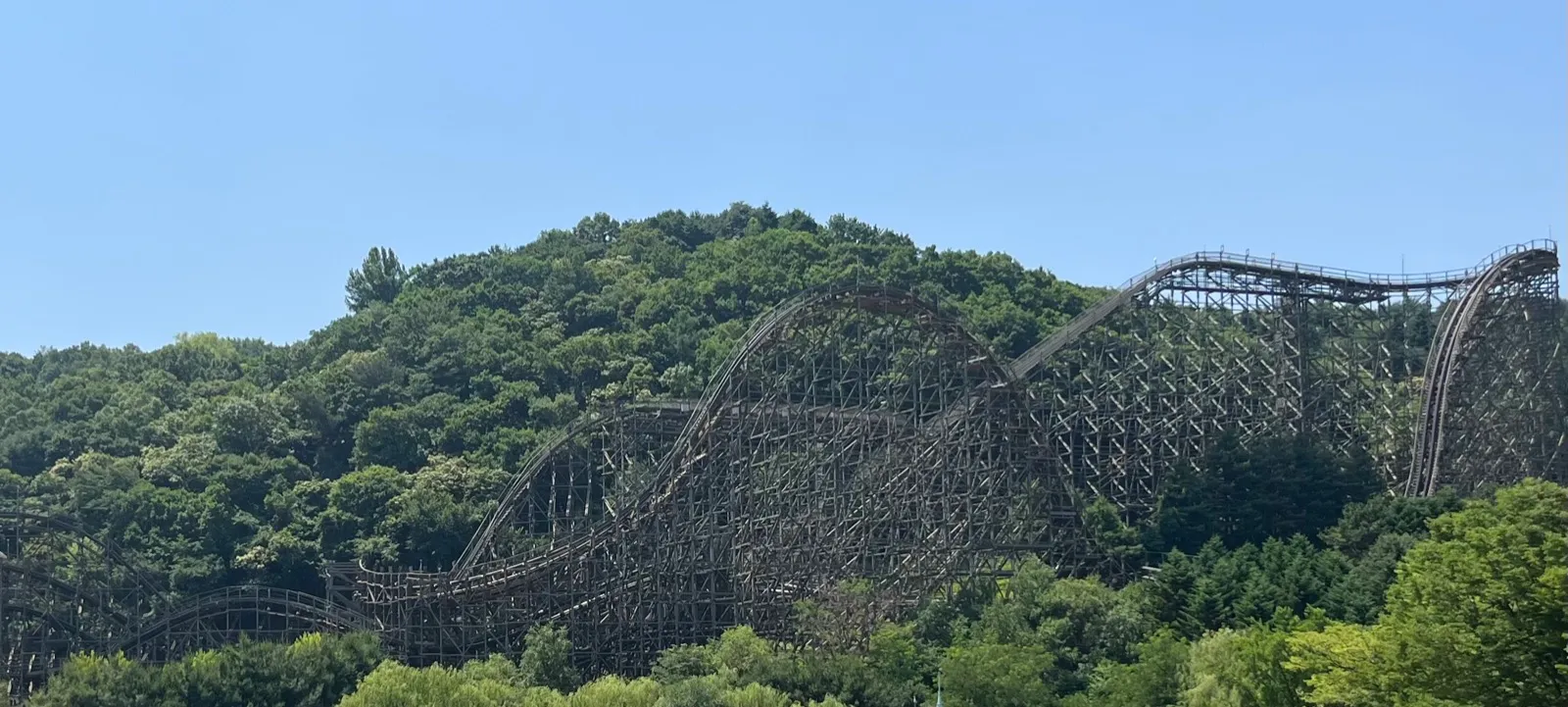
Which red bus to take from Gangnam, Jamsil or Seoul Station, what a day pass costs on Everland's page for international visitors, how the app's Smart Queue works, and how to get back to Seoul after the fireworks.
Day Trips
Seoul to Busan by KTX in a Day
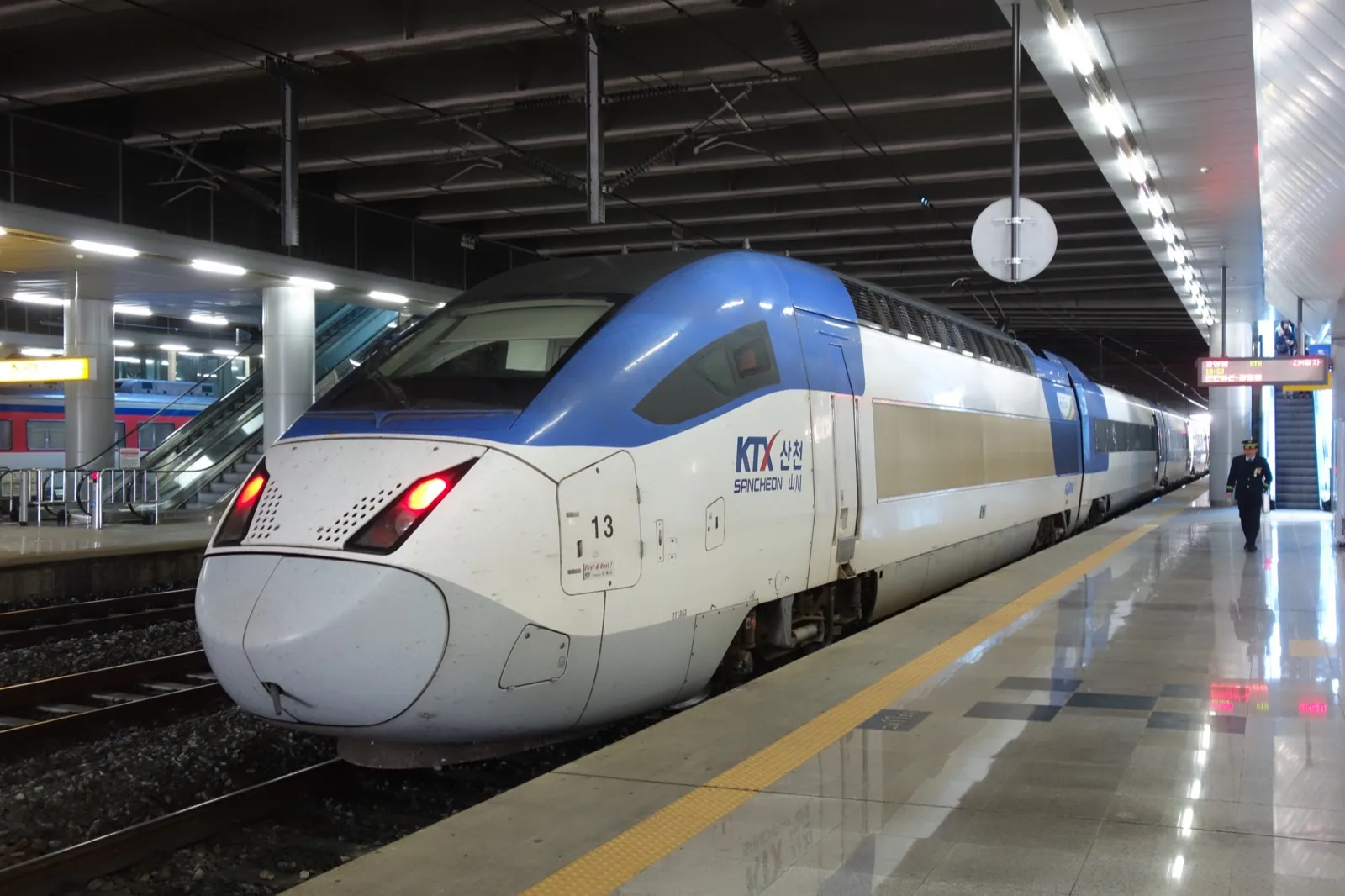
Busan works as a day trip from Seoul: the KTX takes about 2 hours 20 minutes to 2 hours 50 minutes each way. Which station to leave from, what a seat costs, how to book as a foreign visitor, whether the KORAIL PASS pays off, the last trains back, and what you can reach in Busan by metro.
Day Trips
A DMZ Day Trip from Seoul on Your Own
Paju City's shuttle bus from Imjingak, with train times from Seoul, fares, booking rules and Korail's separate tour to Dorasan Station.
Steve OH edits Seoulpin. Steve runs Standardpin, a Seoul-based web studio that also builds websites for clinics; that work has no effect on whether or how any clinic appears here. Articles are drafted with AI assistance from the sources listed and reviewed by Steve before publishing. How we work