How to Find Halal Food in Seoul
What the four official restaurant categories actually promise, how to check a Korea Muslim Federation certificate on the wall and online, where the official lists are, and which Korean dishes and labels hide pork.
Go to Itaewon: the streets around Seoul Central Mosque, 477 m from Exit 3 of Itaewon Station on Line 6, are Seoul’s main halal dining area, with Dongdaemun the other. Most restaurants there are Self-certified (a Muslim owner vouches for the food) or Muslim Friendly (some halal dishes, alcohol may be served), not certified. In October 2026, only one restaurant held an in-date certificate from the Korea Muslim Federation (KMF), Korea’s main halal certifier. So read what is on the wall, ask whether the meat is halal, and treat only an in-date halal certificate as settled.
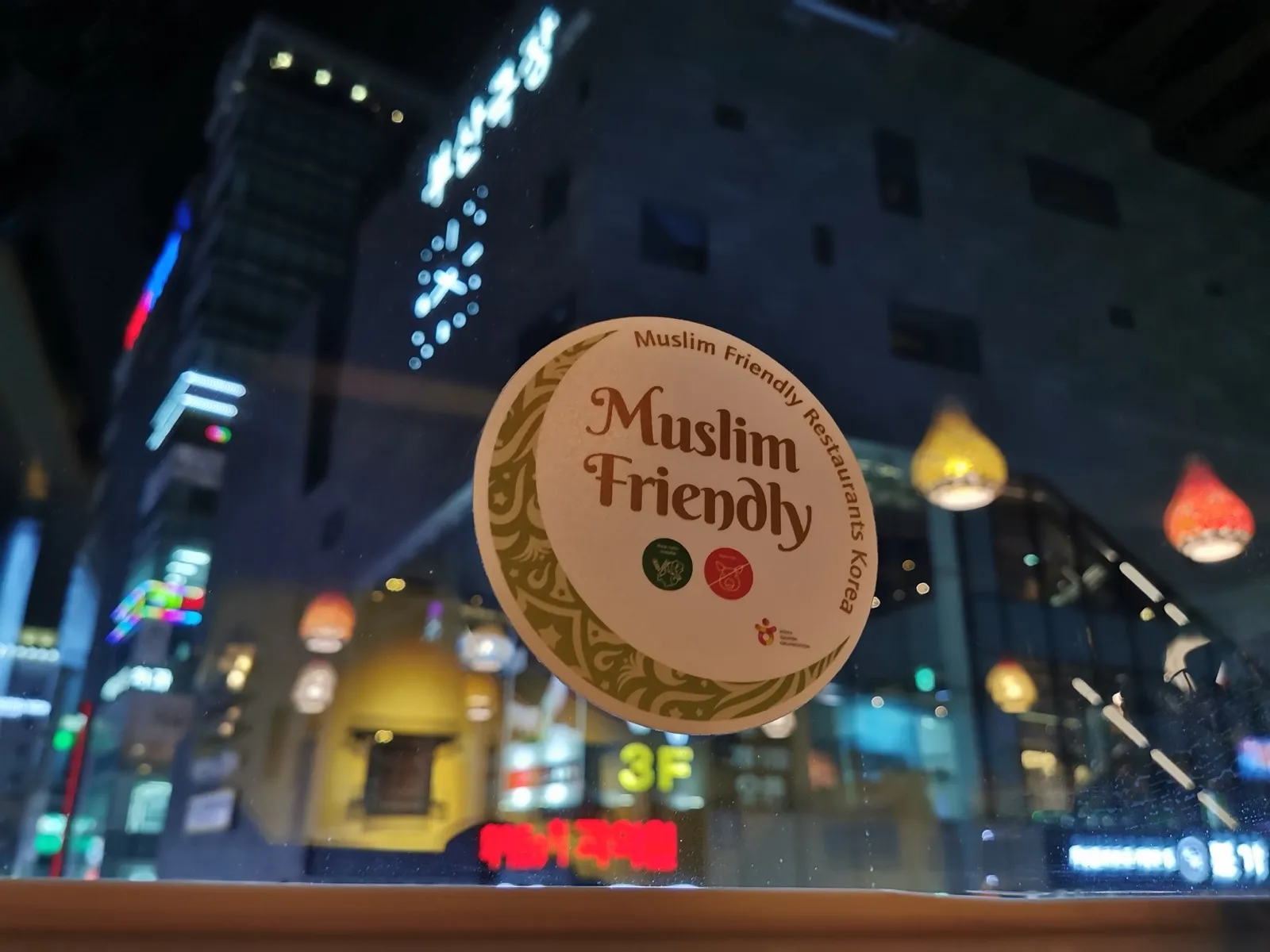
What do the Korea Tourism Organization’s halal categories mean?
The four categories tell you who vouches for the food, and only the first one is checked by someone outside the restaurant. The Korea Tourism Organization (KTO) uses them on its Muslim-friendly Travel page and in its restaurant guidebook.
| Category | Who vouches | Halal food | Alcohol | Pork |
|---|---|---|---|---|
| Halal Certified | An accredited certifier such as KMF; the guidebook also requires at least one Muslim manager or cook | Yes | No | No |
| Self-certified | The Muslim owner or cook | All food, by the owner’s own declaration | No | No |
| Muslim Friendly | The restaurant | Some dishes | May be sold | Not guaranteed; hotel buffets may serve pork |
| Pork-free | The restaurant | No halal menu | May be sold | Not used in cooking |
Inside each listing, small pictograms add detail: Muslim owner or chef, halal menu available, reservation required for the halal menu, alcohol-free and pork-free. The “reservation required” icon matters: at those places you get the halal menu only if you book it. Each guidebook entry gives a phone number; call ahead and ask for the halal menu (할랄 메뉴, halal menyu).
Our advice: treat Halal Certified as the only label that settles the question, Self-certified as a matter of trusting the owner, and Muslim Friendly or Pork-free as places to eat seafood or vegetable dishes after asking.
How do you check a KMF halal certificate?
Read three things on the certificate and match them with KMF’s list: the business name, the certificate number and the expiry date. KMF’s home page sends halal certification to HAI Korea (Korea Halal Industry Promotion Institute), which handles KMF halal certification from the mosque’s address. Its certification page links to the list of KMF-certified companies, which gives each certificate’s company name in Korean and English, category, issue and expiry dates, and number.
- Number. KMF numbers start with KMFHC, then usually the two-digit year of issue and a serial, for example KMFHC26- for a 2026 certificate. Certificates issued late in a year may carry the next year’s digits, so match the full number against the list.
- Dates. Restaurant certificates on KMF’s list run for one year, renewals included, so a restaurant certificate issued more than a year ago has lapsed unless a newer one hangs beside it. HAI Korea’s fee table prices product renewals for three years, but some renewals on the list run one year, so always read the expiry date itself.
- Category. Restaurants appear as 식당 (sikdang, restaurant). Search the list with the restaurant’s Korean or English name.
Almost all of the list is packaged foods and ingredients. Only four restaurants appear on it, and on October 21, 2026 only one of them, 주식회사남문 (NAMMOON, Inc.), held a certificate still in date, valid to March 16, 2027. The list gives no addresses. So expect most halal restaurants in Seoul to be Self-certified or Muslim Friendly, whatever their sign says, and ask. Certificates from other bodies also count under KTO’s definition, but you cannot match them against KMF’s list. Read the issuer’s name and the expiry date on the certificate itself, and if it has lapsed or shows no date, treat the restaurant as Self-certified.
Where are the official halal restaurant lists?
The fullest official list is KTO’s 118-page guidebook Muslim-Friendly Restaurants in Korea, a free PDF linked from the Muslim-friendly Travel page. The guidebook says its information is valid as of December 2021, and it will not be updated: KTO stopped classifying restaurants in 2022 because too few took part, the Korean business daily Hankyung reported in August 2024. The page’s own Restaurants list is empty, so use the PDF.
The guidebook lists 373 restaurants across Korea: 12 Halal Certified, 33 Self-certified, 243 Muslim Friendly and 85 Pork-free. Seoul has 9 of the 12 certified entries and 19 of the 33 self-certified ones, most of them in Yongsan-gu, the district that includes Itaewon. Each entry gives hours, a price range, phone number and GPS coordinates you can paste into Google Maps, and the book has street maps of Itaewon and Myeongdong, a list of prayer rooms and mosques, and a phrase sheet for restaurant staff.
Because the data dates from 2021, use the guidebook to find areas and candidates, then do the certificate check above when you arrive. Any certificate it lists from 2021 has had to be renewed at least once since.
The more current Seoul list is Salam Seoul Restaurant, a name the Seoul Tourism Association (STA), an industry association rather than a government body, gives to pork-free restaurants. STA’s Salam Seoul post of December 1, 2025 counts 151 of them across Seoul and links to the guide. Salam Seoul Restaurant is not a halal certification, so treat it like Pork-free: ask whether the meat is halal before you order a meat dish.
Korea.net, the government’s information portal, names two other tools Muslim visitors use: the Muslim Pro app for prayer times, the qibla direction, nearby halal restaurants and mosques, and the Korehalal Trip website for halal restaurants and Muslim-friendly accommodation. Both are private services, not official lists.
Where in Seoul is halal food easiest to find?
Itaewon is one of the two areas Korea.net names as having the most halal restaurants in Seoul, and Yongsan-gu, its district, has most of the KTO guidebook’s certified and self-certified Seoul entries. Its center is Usadan-ro, the street Korea.net calls “Muslim Street”, with Pakistani, Turkish, Indian and Middle Eastern restaurants. Just off it is Seoul Central Mosque, 39 Usadan-ro 10-gil, Yongsan-gu (용산구 우사단로10길 39), which Visit Seoul puts 477 m from Exit 3 of Itaewon Station on Line 6. Around the mosque are halal restaurants, a halal butcher, a halal supermarket, an Islamic bookstore and a travel agency.
For the mosque itself, prayer times, what to wear and where else to pray, see our guide to prayer rooms in Seoul.
Dongdaemun is the second area: the guidebook’s entries there cluster near Dongdaemun History & Culture Park Station (Lines 2, 4 and 5), close to the shopping malls, and Korea.net notes halal marts there as well as in Itaewon. From Myeongdong or Seoul Station, take Line 4 to Samgakji and change to Line 6 for Itaewon, two stops on; Naver Map gives the live route.
Myeongdong is in Jung-gu, which has more Muslim Friendly entries in the KTO guidebook than any other Seoul district, but more than half of them are hotel restaurants and buffets, so the buffet advice below applies. In Myeongdong, ask which dishes are halal before you order. The Myeongdong guide covers the area itself.
Is there halal food at Incheon Airport?
No restaurant at Incheon Airport is on an official list as halal certified. The KTO guidebook lists no Halal Certified or Self-certified restaurant there; its one airport-branch entry is a Muslim Friendly restaurant at 72 Gonghang-ro 424beon-gil, not in the passenger terminals. So eat in Itaewon before you head out. The airport’s prayer rooms are in our prayer room guide, and the airport transfer guide covers getting between the airport and the city.
What should you watch for in hotel buffets and “Muslim-friendly” restaurants?
Muslim Friendly is a menu promise, not a kitchen promise. KTO’s own note says that hotel restaurants and buffets in the Muslim Friendly category may serve dishes that contain pork, and the category allows alcohol. At a buffet, ask staff which dishes are halal and whether the meat is halal before you fill a plate.
The KTO guidebook’s phrase sheet is written for this. Show the Korean line:
| Say it | Korean | Meaning |
|---|---|---|
| Halal gogi yeyo? | 할랄 고기예요? | Is the meat halal? |
| Dwaeji gogi, ham, bacon ppaego juseyo. | 돼지고기, 햄, 베이컨 빼고 주세요. | Please leave out pork, ham and bacon. |
| Eumsige sul neochi maseyo. | 음식에 술 넣지 마세요. | Please don’t put alcohol in the food. |
| Gogi ppaego juseyo. | 고기 빼고 주세요. | Please leave out all meat. |
The sheet’s longer question to staff asks whether a dish contains pork or pork-derived items, naming bacon, sausage, lard, gelatin, shortening and emulsifier. Those are the ingredients to ask about.
Which Korean dishes hide pork or alcohol?
Many everyday Korean dishes contain pork even when the name does not say so:
- Kimchi jjigae (김치찌개). Aged kimchi boiled with large pork chunks.
- Sundae (순대). Pig intestines stuffed with pork blood, glass noodles and rice, sold at street stalls.
- Bindaetteok (빈대떡). A mung bean pancake whose batter includes pork.
- Budae-jjigae (부대찌개). A stew built on sausages and ham.
Dishes without pork are not halal by default either. Bulgogi and galbi-jjim are beef, and dak-bokkeum-tang is chicken, but the meat is halal only if the restaurant buys halal-slaughtered meat; the KTO guidebook classes such dishes as “meat-based food but no pork”, not halal. Ask about alcohol too: KTO’s phrase sheet includes a line asking the kitchen not to add it to the food. When nothing is certified, vegetable and seafood dishes are the safer order. For Korean barbecue, where pork is the default, see our barbecue ordering guide.
How do you read halal and pork labels at a convenience store?
Turn the package over and find the allergen box near the ingredient list: Korean labeling law requires it to name 돼지고기 (dwaeji gogi, pork) whenever pork, or an ingredient extracted from pork, is used, in any amount. A line such as 돼지고기 혼입 가능 means the product was made on a line that also handles pork.
A box without 돼지고기 means no pork, not halal: the allergen rule says nothing about how beef or chicken was slaughtered, or about alcohol. KMF’s list certifies named products from named factories, often by product code or English name, not whole brands, so a halal mark has to be on the package in your hand. Our convenience store guide explains the rest of the label, including the use-by date, and translates the common triangle kimbap fillings.
More Food & Drink
Food & Drink
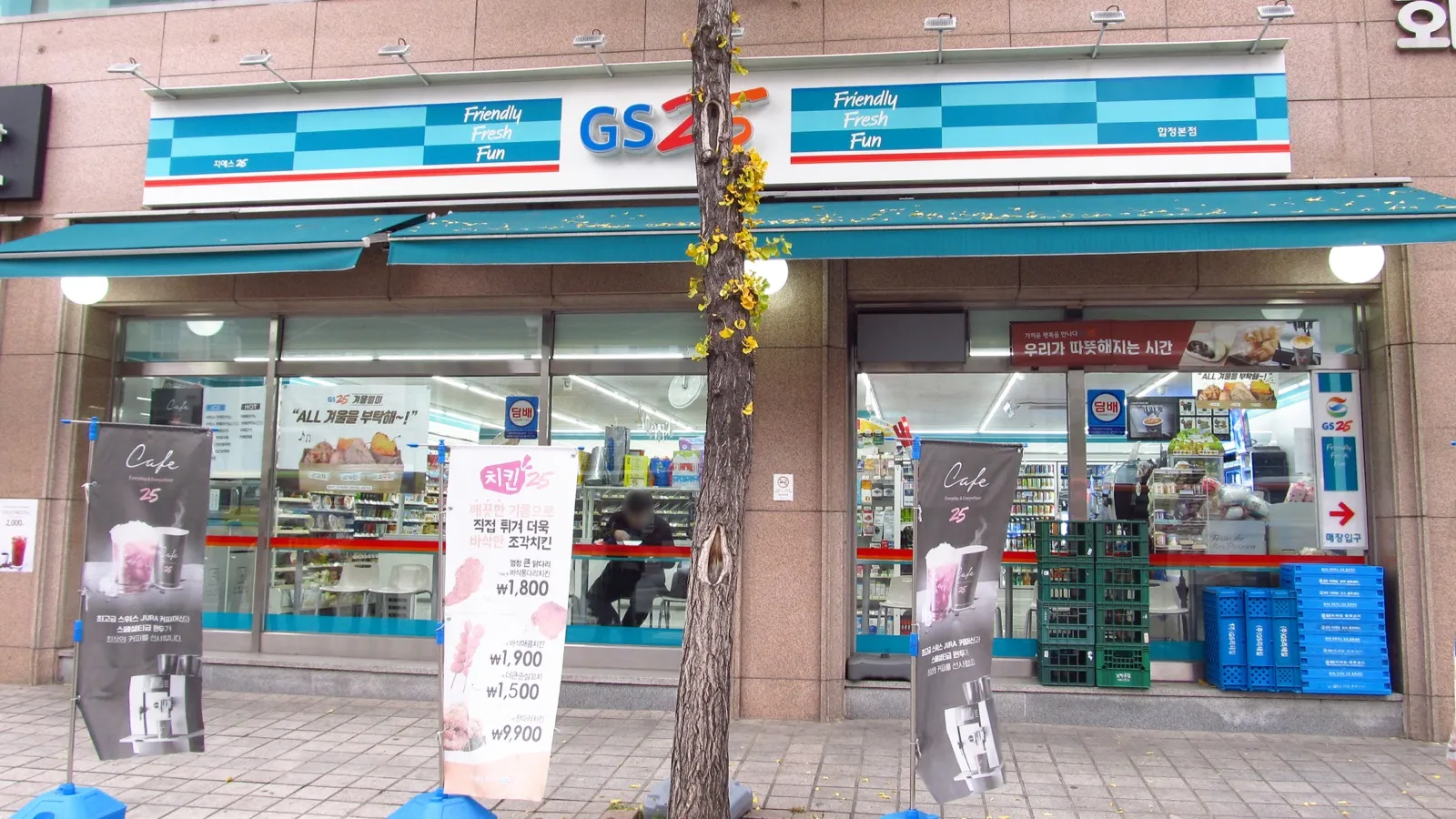
Korean Convenience Stores: How GS25, CU, 7-Eleven and emart24 Work
Paying by card, the hot-water station for cup ramyeon, opening a triangle kimbap, 1+1 and 2+1 deals, the age rule for beer, and the ATMs, parcel kiosks and tax refunds some branches add.
Food & Drink
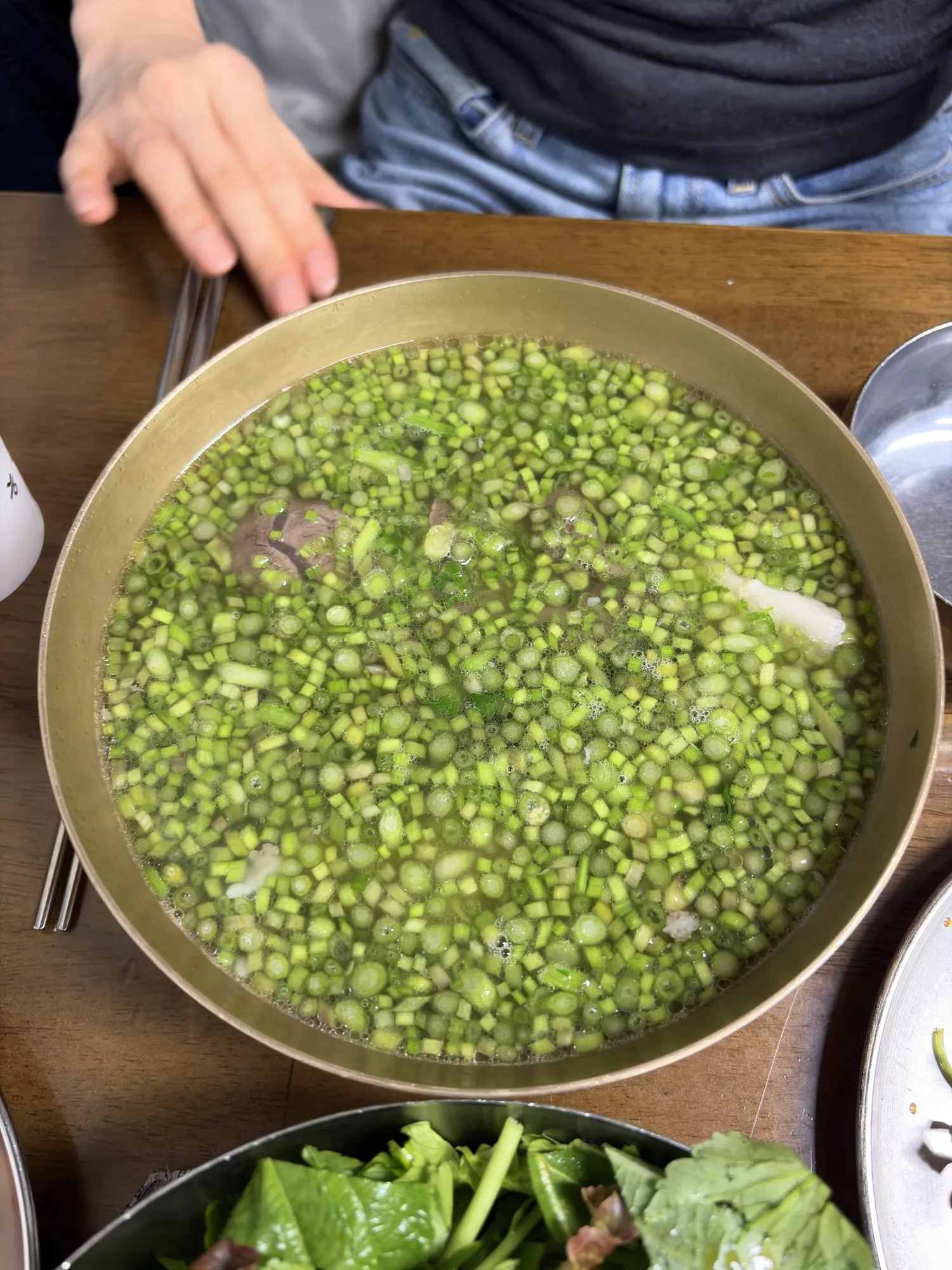
Neungdong Minari in Seongsu: Is the Minari Beef Soup Worth the Line?
I went on a Friday night in October and paid my own bill. How long the line really takes, what to order, what minari tastes like and who may not like it, prices, hours, takeout, and the walk from Seongsu Station Exit 4.
Food & Drink
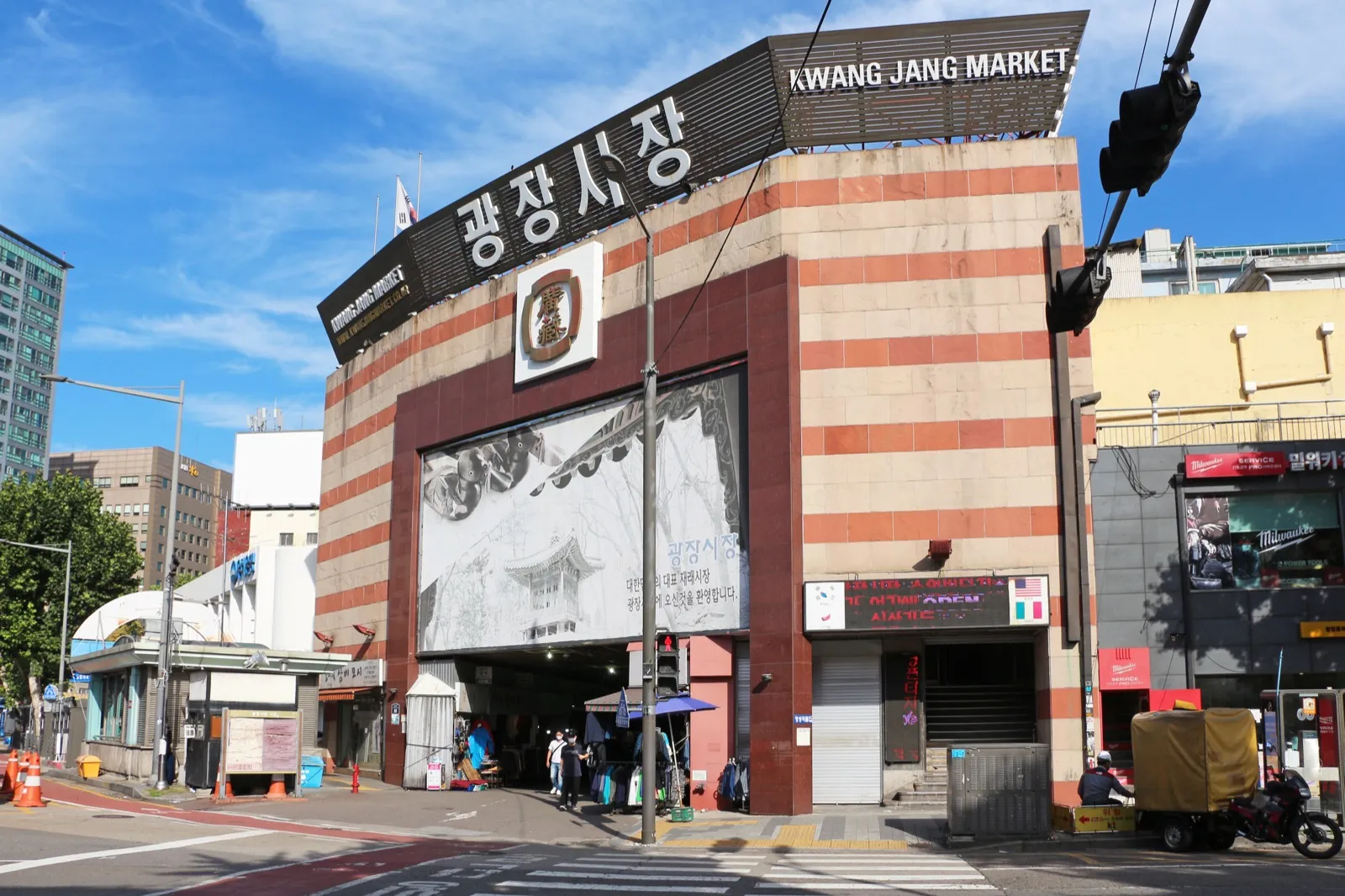
Gwangjang Market Street Food: Hours, Dishes and How to Order
Hours, the walk from Jongno 5-ga Station, what bindaetteok, mayak gimbap, yukhoe and kalguksu are, how the stalls work, and how to avoid being overcharged.
Steve OH edits Seoulpin. Steve runs Standardpin, a Seoul-based web studio that also builds websites for clinics; that work has no effect on whether or how any clinic appears here. Articles are drafted with AI assistance from the sources listed and reviewed by Steve before publishing. How we work