How to Avoid Pork and Alcohol in Korean Food
The Korean words that mean pork, lard, gelatin and alcohol on a package, what a restaurant's origin board tells you and what it leaves out, and where cooking wine and rice wine hide in everyday dishes.
In Korea, pork is easy to spot if you know where the law makes businesses write it. On packaged food, look in the allergen box beside the ingredient list for 돼지고기 (dwaeji-gogi, pork). On packaged food it must appear whenever pork, or anything taken from pork, is used, with a few narrow exceptions. In a restaurant, look at the menu or the origin board (원산지 표시판) on the wall: if 돼지고기 appears there, pork is cooked in that kitchen. Alcohol is harder, because no box flags it. Read the ingredient list for 주정, 에탄올, 알코올, 청주, 맛술 or 미림. In restaurants, assume that marinated meat and many sauces may contain cooking wine, and ask. The word list at the end puts all of these in one place.
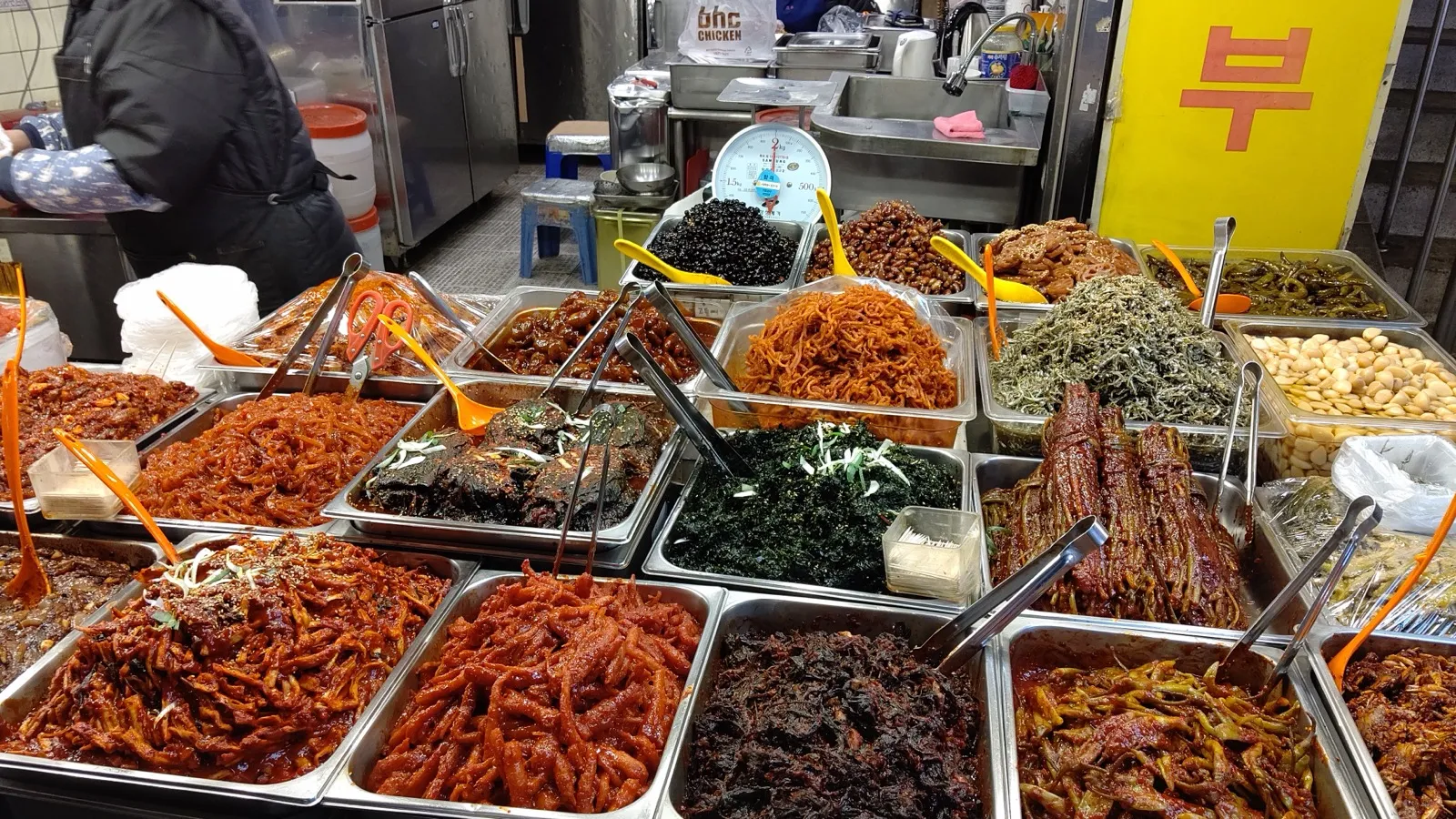
This guide is about reading labels and menus. For halal certificates, Muslim-friendly restaurant lists, Itaewon and the common Korean dishes that contain pork, see our guide to halal food in Seoul.
How do you spot pork on a Korean food label?
Turn the package over and read two places: the allergen box and the ingredient list (원재료명, wonjaeryomyeong). Pork is one of the allergens Korean law requires on packaged food, and the allergen rule covers three cases. Pork used as an ingredient. Anything obtained from pork by extraction or similar methods. Any ingredient that itself contains either of these. The box must name every allergen used, in any amount. A typical line reads 돼지고기 함유 (“contains pork”). Two exceptions matter. A single-ingredient food, or packaged or imported meat, may skip the box when the product name is the allergen itself, so a pack named 돼지고기 needs no box. And the box covers ingredients, not cross-contact: traces from a shared production line appear, if at all, as a separate line such as 돼지고기 혼입 가능성 있음 (“may contain pork”).
The ingredient list tells you where the pork comes from. Pork itself is 돼지고기. Lard is 돈지 (donji): the official labeling standard calls edible lard 식용돈지 and beef tallow 식용우지. Ham, sausage and bacon are written 햄, 소시지 and 베이컨.
Two words can hide pork in the ingredient list:
- 젤라틴 (jellatin, gelatin). The Ministry of Food and Drug Safety’s official blog explains that gelatin is extracted from the skin, bones and tendons of pigs or cattle. That is why so many jelly sweets carry 돼지고기 함유 in the allergen box. The ingredient list usually just says 젤라틴. So the allergen box usually tells you which animal it came from: 돼지고기 means pork, 쇠고기 means beef.
- 동물성유지 (dongmulseong yuji, animal fat). The labeling standard lets processed fats, shortening and margarine list the fats they are made from just as 식물성유지 (vegetable fat) or 동물성유지 (animal fat). Animal fat may be lard, tallow or another animal fat, so check the allergen box for 돼지고기 or 쇠고기.
On a packaged product with a full allergen box, no 돼지고기 means pork is not an ingredient. That is all it tells you. It does not cover traces from shared lines, a product named after the meat itself, or food sold unpackaged, such as a banchan stall’s side dishes. It does not make the product halal, and it says nothing about alcohol.
How do you spot alcohol on a Korean food label?
Read the ingredient list itself, because alcohol is not an allergen and gets no box. These are the words to look for:
- 주정 (jujeong). Ethanol for food use. The labeling standard lists 주정 as one of the alcoholic drink types, and it goes into cooking wines such as the mirim below.
- 에탄올 or 알코올. Both mean ethanol. On alcoholic drinks, the standard allows 에탄올 to be written as 알코올.
- 청주 (cheongju), 약주 (yakju), 탁주 (takju) or 막걸리 (makgeolli). Rice wines; the labeling standard lists 탁주, 약주 and 청주 among fermented alcoholic drinks, and makgeolli is a 탁주.
- 맛술 (matsul) or 미림 (mirim). Cooking wine. Lotte Chilsung’s Mirim, a common brand, is sold as a liquor. It is made from rice and 주정 and contains 14% alcohol.
- 주정처리제품 (jujeong cheori jepum, “ethanol-treated product”). The standard requires this phrase on noodles (fresh, cooked, dried or fried) that have been treated with ethanol.
Alcoholic drinks must state their alcohol content. Watch two claims that sound alike on drinks sold as alcohol-free beer. Under the labeling standard, any food other than an alcoholic drink that claims “no alcohol” (무알코올, mu-alkool, Alcohol free) or “no alcohol added” (알코올 무첨가) must add 성인용, “for adults”. A “non-alcoholic” claim (비알코올, bi-alkool, Non-alcoholic) must also say that the product contains less than 1% ethanol, as in “비알코올(에탄올 1% 미만 함유, 성인용)”. So 비알코올 may still contain up to just under 1% alcohol. If you avoid alcohol completely, skip anything labeled 비알코올.
Our convenience store guide shows where these labels sit on triangle kimbap and lunch boxes.
What does a restaurant’s origin board tell you about pork?
It tells you which meats the kitchen cooks. Korean law requires general restaurants, cafés, snack bars and fast-food outlets, delivery included, to label the country of origin of the beef, pork, chicken, duck, lamb and goat they serve. That includes processed meat such as ham, sausage and bacon. The list of meats is in Article 3 of the enforcement decree, and Easylaw explains it. Missing or wrong labels bring fines.
You will find the origin in one of two places, according to the quality service’s leaflet:
- On the menu, next to or below the dish name, in letters at least as large as the name. For example: 삼겹살(돼지고기 : 국내산), pork belly (pork: Korean).
- On an origin board titled 원산지 표시판, at least 29 × 42 cm. It hangs beside or under the largest menu board, or, if there is no board, where you can see it straight ahead as you walk in. A restaurant with a proper origin board may leave origins off the menu, so look for the board on the wall. Where every dish uses the same origin, the leaflet lets a restaurant make one statement for all its dishes, such as 우리 업소에서는 국내산 쌀과 국내산 돼지고기만을 사용합니다 (“we use only Korean rice and Korean pork”).
Read the board for the word 돼지고기 and for 햄, 소시지 or 베이컨 in brackets. The leaflet’s examples show pork in dishes whose names do not say so. Its pizza example reads 피자[햄(돼지고기 : 외국산)], pizza with ham (pork: imported). A beef-sounding dish can contain pork as well: its hamburger steak example reads 햄버그스테이크(쇠고기 : 국내산 육우, 돼지고기 : 미국산), with Korean-raised beef (육우, not hanwoo) and American pork. Where the board lists 돼지고기 at all, pork is in the kitchen, and you should ask about shared grills, pans and frying oil before you order a dish without it.
What does the origin board leave out?
Pork inside bought-in dumplings, sauces and ready-to-cook foods. The leaflet says meat used in 만두류 (dumplings), 소스류 (sauces) and 즉석조리식품류 (instant meals) is not covered. Its own example is a kimchi dumpling with 25% pork. The restaurant labels the kimchi’s cabbage and chili powder, but not the pork, because dumplings are not a processed-meat product. So a board without 돼지고기 does not prove a pork-free kitchen. Ask before you order dumplings, stews made with ready-made bases, and anything with a bought-in sauce.
The board says nothing about alcohol, and nothing about how beef or chicken was slaughtered. Beef marked 국내산 한우 is Korean hanwoo, and the label says nothing about halal slaughter; our Korean BBQ guide explains the beef labels.
Where does alcohol hide in Korean cooking?
Mostly in marinades and sauces, and nothing on the menu warns you. Korean cooks add rice wine or cooking wine to meat and seafood marinades. In recipes published by the Korean Food Promotion Institute in its Hansik magazine, a soy marinade for steamed pork takes a tablespoon of cheongju, and a duck bulgogi sauce and a stir-fried chicken dish both use cooking wine. So ask about any soy-marinated or braised meat, including bulgogi and galbi.
Some rice cakes and breads are made with makgeolli. The Encyclopedia of Korean Culture describes gijutteok, also called 증편 (jeungpyeon), as rice-flour dough mixed with makgeolli, left to ferment and then steamed. It notes that some cooks now raise it with yeast instead. A chef interviewed by the institute describes jeungpyeon fermented with makgeolli as popular for its sourdough-like texture. You cannot tell which method was used by looking, so read the label on packaged rice cakes for 막걸리, 탁주 or 주정, and ask at a rice cake shop.
In packaged food, alcohol can be part of the recipe or the processing. Look for 주정 and 주정처리제품 on fresh noodles, and for 맛술, 미림 or 청주 in bottled sauces and marinades.
To ask in a restaurant, show this line: 이 음식에 돼지고기나 술, 맛술이 들어가요? (I eumsige dwaeji-gogina sul, matsuri deureogayo?, “Does this dish contain pork, alcohol or cooking wine?”).
Which Korean words should you look for?
Save or screenshot this table and compare it with the label or the board.
| Korean | Romanization | Meaning | Where you see it |
|---|---|---|---|
| 돼지고기 | dwaeji-gogi | Pork | Allergen box, ingredients, origin board |
| 돼지고기 함유 | dwaeji-gogi hamyu | Contains pork | Allergen box |
| 돈지, 식용돈지 | donji, sigyong donji | Lard | Ingredients |
| 동물성유지 | dongmulseong yuji | Animal fat, possibly lard | Ingredients of shortening and margarine |
| 젤라틴 | jellatin | Gelatin, from pigs or cattle | Ingredients; check the allergen box |
| 햄, 소시지, 베이컨 | haem, sosiji, beikeon | Ham, sausage, bacon | Ingredients, origin board |
| 쇠고기 | soegogi | Beef | Allergen box, origin board |
| 원산지 표시판 | wonsanji pyosipan | Origin board | Restaurant wall |
| 주정 | jujeong | Food-grade ethanol | Ingredients |
| 에탄올, 알코올 | etanol, alkool | Ethanol, alcohol | Ingredients, drink labels |
| 주정처리제품 | jujeong cheori jepum | Treated with ethanol | Noodle packs |
| 청주, 약주 | cheongju, yakju | Clear rice wine | Ingredients, recipes |
| 탁주, 막걸리 | takju, makgeolli | Cloudy rice wine | Ingredients, rice cakes |
| 맛술, 미림 | matsul, mirim | Cooking wine | Ingredients, marinades |
| 소주 | soju | Distilled spirit | Drinks menu |
| 술 | sul | Alcohol, any alcoholic drink | Spoken questions |
| 무알코올(성인용) | mu-alkool (seonginyong) | “No alcohol” claim, for adults | Drinks |
| 비알코올 | bi-alkool | Non-alcoholic: under 1% ethanol | Drinks |
More Food & Drink
Food & Drink
How to Book a Group Dinner in Seoul for 10 or More
How to find a private room or group seating on Naver Map and CatchTable, what deposits and no-show penalties a restaurant can set for a group, how set menus and guaranteed headcounts work, which December nights fill first, and a Korean message you can send as it is.
Food & Drink
How to Book a Seoul Restaurant Without a Korean Phone Number
CatchTable Global, Naver with a passport check, a phone call in Korean or a remote waitlist: what each path asks of a visitor, how deposits and no-show charges work, and the Korean sentences to use.
Food & Drink
Korean Food in Seoul: What to Eat First
Fifteen everyday Korean dishes worth ordering on a first trip: what it is, how to eat it, what the common ones cost in Seoul, how spicy it is, and which ones hide pork, seafood or meat broth.
Steve OH edits Seoulpin. Steve OH is the English name of Myeong OH (오명), Seoulpin's registered publisher. Steve runs Standardpin, a Seoul-based web studio that also builds websites for clinics; that work has no effect on whether or how any clinic appears here. Articles are drafted with AI assistance from the sources listed and reviewed by Steve before publishing. How we work
Notes from readers who went