Korean Food in Seoul: What to Eat First
Fifteen everyday Korean dishes worth ordering on a first trip: what it is, how to eat it, what the common ones cost in Seoul, how spicy it is, and which ones hide pork, seafood or meat broth.
On a first trip to Seoul, eat bibimbap, a jjigae (stew) such as kimchi jjigae, seolleongtang or samgyetang, a bowl of naengmyeon, kalguksu or jjajangmyeon, and a round of gimbap and tteokbokki from a bunsik snack shop. These are everyday meals, and in September 2026 Seoul’s averages ran from ₩3,923 for a roll of gimbap and ₩8,846 for kimchi jjigae with rice to ₩12,000 for bibimbap and ₩18,269 for samgyetang. The mild orders are seolleongtang, samgyetang, kalguksu, jjajangmyeon, bulgogi and gimbap. The spicy ones are kimchi jjigae, tteokbokki and jeyuk bokkeum.
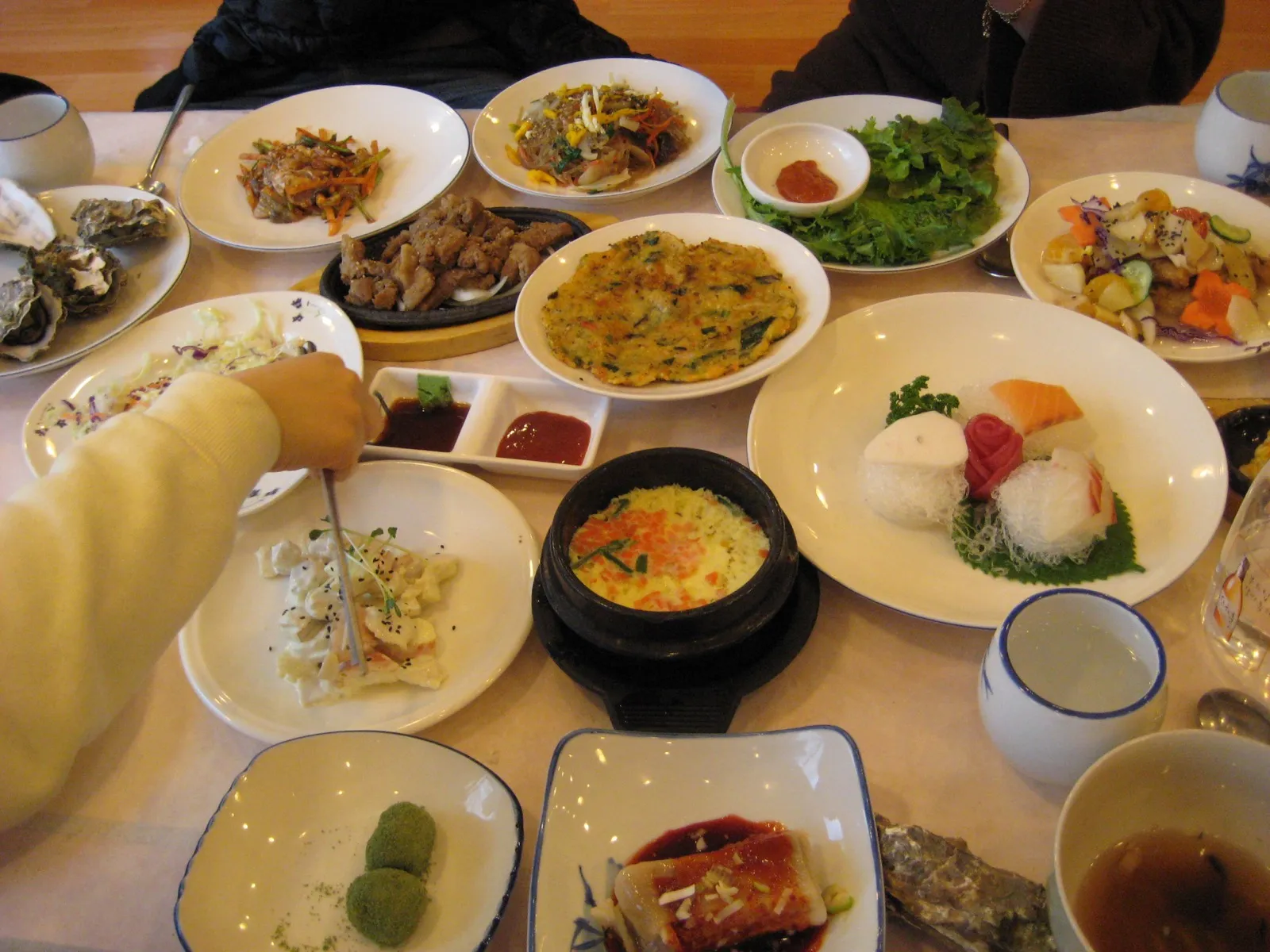
Which Korean dishes should you try, and what do they cost?
Start with this list. Prices are Seoul’s average for one serving in September 2026, from the government’s dine-out price survey (pick 2026년 9월 on the page to see them). Dishes with a dash aren’t in the survey.
| Dish | What it is | Seoul average | Spice | Watch for |
|---|---|---|---|---|
| Bibimbap (비빔밥) | Rice topped with vegetables and meat, mixed with chili paste | ₩12,000 | You choose | Meat, egg |
| Kimchi jjigae (김치찌개) | Aged kimchi stew | ₩8,846 with rice and sides | Spicy, sour | Pork |
| Doenjang jjigae (된장찌개) | Soybean paste stew | — | Mild | Clams |
| Sundubu jjigae (순두부찌개) | Soft tofu stew with seafood | — | Usually spicy (red) | Seafood, salted shrimp |
| Seolleongtang (설렁탕) | Milky beef bone soup | — | Mild | Beef, offal |
| Samgyetang (삼계탕) | Whole young chicken in soup | ₩18,269 | Mild | Chicken |
| Naengmyeon (냉면) | Cold buckwheat noodles | ₩12,692 | Mild, or spicy as bibim | Beef broth |
| Kalguksu (칼국수) | Knife-cut noodle soup | ₩10,038 | Mild | Chicken, anchovy or clam broth |
| Jjajangmyeon (짜장면) | Noodles in black bean sauce | ₩7,808 | Not spicy | Pork |
| Gimbap (김밥) | Rice and fillings rolled in seaweed | ₩3,923 a roll | Not spicy | Ham, egg, fish cake |
| Tteokbokki (떡볶이) | Rice cakes in chili sauce | — | Spicy | Fish cake |
| Bulgogi (불고기) | Marinated sliced beef | — | Sweet, not spicy | Beef |
| Jeyuk bokkeum (제육볶음) | Pork stir-fried in chili sauce | — | Spicy, sweet | Pork |
| Pajeon (파전) | Green onion pancake | — | Not spicy | Squid, clams, egg |
| Kimchi (김치) | Fermented cabbage, served with every meal | Side dish | Spicy | Fish sauce |
Kimchi jjigae is priced as baekban (백반), a set of the stew with rice and side dishes. The survey counts a roll of gimbap as one serving.
You won’t find all of these under one roof. Stew-and-rice sets like kimchi jjigae baekban are the staple of baekbanjip (백반집), ordinary restaurants that serve rice with side dishes; gimbap and tteokbokki are at bunsik shops; jjajangmyeon is at Korean-Chinese restaurants (중국집, junggukjip); and pajeon is the dish to order with makgeolli, unrefined rice wine.
How do you eat bibimbap?
Mix everything before you eat. Bibimbap is a bowl of rice under vegetables such as bracken, spinach and bellflower root, topped with stir-fried meat. You add gochujang (red chili paste) and stir it through with your spoon, so you set the heat yourself: add a little, taste, then add more. A soy-sauce version exists for those who avoid chili.
What is a jjigae, and which one should you order?
A jjigae is a thick stew boiled in a small pot, and Koreans eat it with a bowl of rice. Start with these three.
- Kimchi jjigae is aged, sour kimchi, often more than six months old, boiled with large chunks of pork. It is spicy and sour. Some versions use tuna or ham instead of pork, or add ramyeon noodles.
- Doenjang jjigae is a soybean paste stew with tofu, mushrooms, zucchini and clams. Its base is fermented soybean paste rather than chili, so it is the gentlest of the three.
- Sundubu jjigae is soft, unpressed tofu boiled with seafood, refreshing and savory. The tourism organization notes that even visitors unused to spicy food love it, though it is usually served red and hot.
Which Korean soups are mild?
Seolleongtang and samgyetang are the two safe choices when you want no chili at all, and with both you add salt at the table.
- Seolleongtang is beef knee, head meat, shank, brisket and intestines simmered until the broth turns milky. It began as a Seoul dish. Add salt, black pepper and chopped green onion, then tip your rice into the bowl and eat them together.
- Samgyetang is a whole young chicken stuffed with sweet rice, garlic, jujube and ginseng and simmered in water. Salt the broth, take the meat off the bones and eat it with a little salt. Koreans think of it as a summer dish, and at ₩18,269 on average it is the most expensive bowl on this list.
If you want a soup with heat, soegogi gukbap (쇠고기국밥) is beef and radish in a spicy broth with rice in the bowl. For the seaweed soup Koreans eat on birthdays, see our miyeokguk guide.
Which noodles should you try?
Try naengmyeon if you want something cold, kalguksu if you want something mild and hot, and jjajangmyeon for the cheapest filling bowl.
- Naengmyeon is buckwheat noodles in a cold broth made from beef brisket or shank, and it can taste bland at first. Mul naengmyeon (물냉면) is the version in broth. Bibim naengmyeon (비빔냉면) comes without broth, mixed with red chili paste sauce, and is the spicy one. Koreans eat it most in summer.
- Kalguksu means “knife noodles”: hand-rolled wheat dough cut with a knife and boiled in a broth of chicken, anchovies or manila clams, with potato, zucchini and green onion. The broth decides what is in it, so ask if you avoid seafood. For kalguksu in Myeongdong, see our Myeongdong Kyoja guide.
- Jjajangmyeon is Korean-Chinese food: pork, onion and squash stir-fried in black bean sauce over wheat noodles, sweet and savory rather than hot. Mix the sauce through the noodles before eating.
What is bunsik, and what do you order there?
Bunsik (분식) is Korea’s cheap snack food, served in small casual shops, at street stalls and at convenience stores. The word means “food made of flour”, but in practice it covers tteokbokki, gimbap, fried snacks, sundae and fish cakes, and because the plates are cheap, the usual move is to order several and share.
- Gimbap is rice, pickled radish, egg strips, fish cake, carrot and spinach rolled in a sheet of laver and cut into slices. Fillings such as tuna (chamchi gimbap) or cheese are named on the menu. At ₩3,923 a roll on average, it is the cheapest meal here, and you can buy it everywhere from bunsik shops to convenience stores and department store food halls.
- Tteokbokki is thin rice cake sticks stir-fried with red chili paste, cabbage and green onion, often with fish cake, and sometimes topped with melted cheese. It is the classic spicy street food. A soy-sauce version is not spicy.
- Eomuk (어묵), fish cake on a skewer, is boiled in anchovy broth and sold by the piece.
In winter, street carts sell hotteok, a fried dough pancake filled with sugar and nuts, and bungeo-ppang, a crisp fish-shaped pastry filled with red bean, crispest straight from the cart. For the stalls in Seoul’s best-known food market, see our Gwangjang Market guide. For triangle gimbap and ready meals, see our convenience store guide.
What are bulgogi, jeyuk bokkeum and pajeon?
Bulgogi is the safest meat dish for anyone wary of spice; jeyuk bokkeum is the spicy pork equivalent; pajeon is what you order with a drink.
- Bulgogi is thinly sliced beef in a marinade made with onion and pear, cooked with some broth so the meat stays tender and sweet.
- Jeyuk bokkeum is pork shoulder or neck marinated in red chili paste, chili powder, soy sauce, garlic, sugar and sesame oil and stir-fried over high heat with vegetables. It is a favorite to eat with rice.
- Pajeon is flour batter poured into an oiled pan and layered with scallions, squid and clams. Dip it in soy sauce with onion, and order makgeolli, Korean rice wine, alongside.
Grilled meat at the table is its own way of eating; our Korean BBQ guide covers the cuts, prices by the gram and how to wrap ssam.
How spicy is Korean food?
Much of it is not spicy at all, and the heat usually comes from gochujang or chili powder you can see. Red means spicy: a red stew, red sauce or red broth will be hot. Clear and white soups, soy-based dishes and black bean sauce are not. When a dish lets you add the chili paste yourself, as bibimbap does, add it a little at a time.
Kimchi comes with every meal and is spicy, but it is a side dish, so you can leave it. If you want to try one without the heat, nabak kimchi is a water kimchi that is not spicy. To ask for a dish less spicy, say “Deol maepge haejuseyo” (덜 맵게 해 주세요). If spice is a real problem, order from the mild dishes in the table rather than relying on the request.
Can vegetarians eat these dishes?
Some of them, but you have to ask, because Korean cooking often uses meat and fish broth and most restaurants have no separate vegetarian menu. Tell the server what you cannot eat, in Korean if you can: “Jeoneun chaesikjuuijaimnida. Gogi, saengseon, gyeran mot meogeoyo” (저는 채식주의자입니다. 고기, 생선, 계란 못 먹어요, “I am vegetarian. I can’t eat meat, fish or eggs”).
- Bibimbap works if you ask for it without meat and egg.
- Vegetable gimbap (야채김밥, yachae gimbap) is the vegan choice, but some shops still add ham, egg or crab stick, so ask for it without: “Haem, gyeran, matsal ppaejuseyo” (햄, 계란, 맛살 빼 주세요).
- Jeon (pancakes): standard pajeon has squid and clams, so order chaeso jeon (vegetable), gamja jeon (potato) or beoseot jeon (mushroom), and note some batters contain egg.
- Tofu stews usually contain salted shrimp, and kimchi is usually seasoned with fish sauce or salted seafood.
- Temple food, the cooking of Buddhist monks, uses no meat at all and is now served in restaurants outside temples too. Search 사찰음식 (sachal eumsik) on a map app to find these restaurants, or eat it at a temple on a templestay.
For pork and alcohol in sauces, labels and origin boards, see our guide to avoiding pork and alcohol, and for certified restaurants, our halal food guide.
How do you order and eat in a Korean restaurant?
Sit down, order from the menu or wall board, and press the call button on the table when you want the server. Most tables have one, and it is louder than you expect. Spoons, chopsticks and napkins are usually in a drawer built into the side of the table. To order by pointing, say “Igeo juseyo” (이거 주세요, “This one, please”), and show the Korean names in the table above.
Rice, soup and your spoon go in front of you, with the shared side dishes (banchan) between everyone. Eat them in any order and combination you like. Koreans eat rice and soup with the spoon, not chopsticks, and if chopsticks are hard for you, leaning on the spoon is fine. Side dishes and water are free, and you can ask for more with “Igeo deo juseyo” (이거 더 주세요). You usually pay at the counter as you leave, saying “Gyesan halgeyo” (계산할게요); there is no tipping. Our Korean BBQ guide covers ordering tablets and splitting the bill.
More Food & Drink
Food & Drink
How to Book a Group Dinner in Seoul for 10 or More
How to find a private room or group seating on Naver Map and CatchTable, what deposits and no-show penalties a restaurant can set for a group, how set menus and guaranteed headcounts work, which December nights fill first, and a Korean message you can send as it is.
Food & Drink
How to Book a Seoul Restaurant Without a Korean Phone Number
CatchTable Global, Naver with a passport check, a phone call in Korean or a remote waitlist: what each path asks of a visitor, how deposits and no-show charges work, and the Korean sentences to use.
Food & Drink
Myeongdong Kyoja in 2026: the New Main Branch, What a Korean Orders, and the Garlic Kimchi
I ate at the main branch on a Tuesday afternoon in November and paid my own bill. Where the main branch is now, how the kiosks work, what to order, and how spicy it gets.
Steve OH edits Seoulpin. Steve OH is the English name of Myeong OH (오명), Seoulpin's registered publisher. Steve runs Standardpin, a Seoul-based web studio that also builds websites for clinics; that work has no effect on whether or how any clinic appears here. Articles are drafted with AI assistance from the sources listed and reviewed by Steve before publishing. How we work
Notes from readers who went